
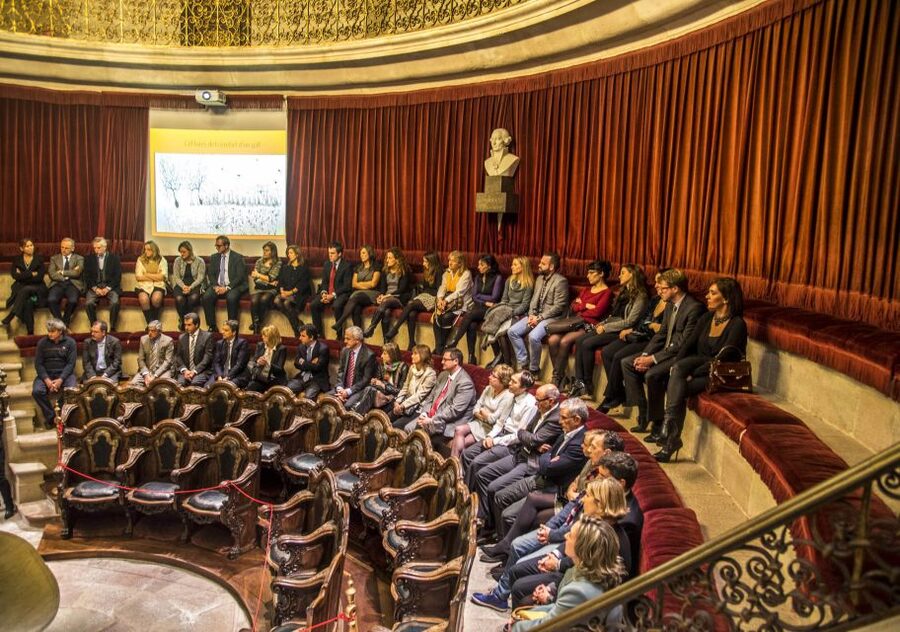
Reviewed · GUIDED
Guided Tour at Catalonia’s Royal Academy of Medicine
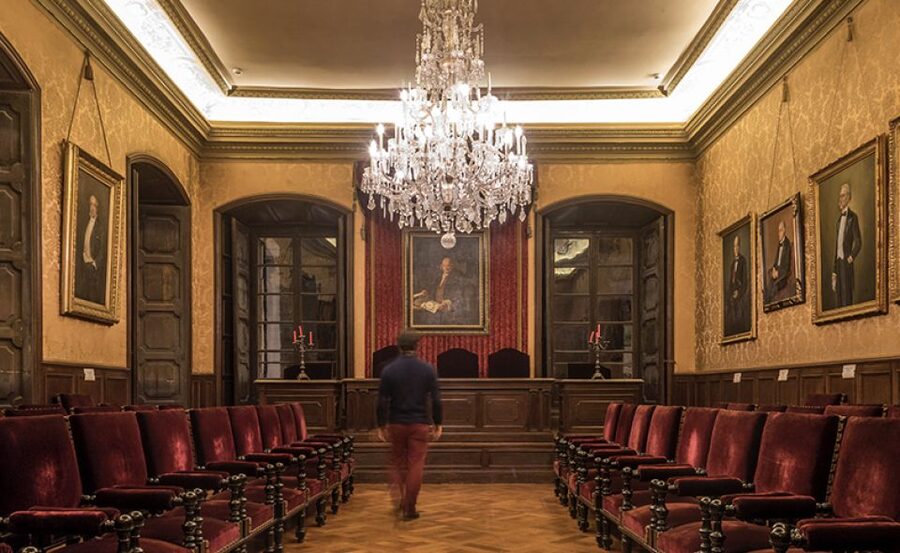
What makes this experience so interesting is the contrast: a neoclassical academy building in central Barcelona, with an anatomical amphitheater designed for surgeon training. It is not a museum display behind glass, it is history built into the space.
I like how the guide connects medicine and surgery to what you can see in the architecture, from seating to sight lines. I also like the way the story grows beyond famous doctors, bringing names like Santiago Ramón y Cajal into a place you can walk through.
One practical drawback to plan for: the visit includes steps, and it is not suitable for people with pre-existing medical conditions. If stairs are a problem for you, think twice before booking.
Key highlights you should care about
- Last anatomical amphitheater in Spain, built to train surgeons in the 18th century
- Ventura Rodríguez’s design, built for viewing and learning, not for decoration
- First X-ray experiment in Spain, tied to the Academy’s scientific legacy
- Real names, real links, including Pere Virgili, Antoni de Gimbernat, and Santiago Ramón y Cajal
- Walk the halls at an active historic address, right near Barcelona’s main hospital area
Entering Catalonia’s Royal Academy of Medicine on Carme Street

This guided tour puts you in one of Barcelona’s important neoclassical buildings, at Catalonia’s Royal Academy of Medicine on Carme Street 47. The setting matters because the Academy is not just a pretty facade, it was built to support learning, study, and professional training.
A key detail: the meeting happens at the Academy, but the main door stays closed between tours. The guide opens it about 5 to 10 minutes before your group starts, so you will want to arrive with enough time to get inside without rushing.
The tour is only 50 minutes, so you are not going to get lost in endless corridors. Instead, you get a focused route through the Academy’s spaces, guided by someone who can explain why this building looks the way it does and how medicine evolved around it.
Price and value for a 50-minute guided visit

At $16 per person for a 50-minute tour, the value comes from what is included. You get academy entrance fees, a live guide, and an audio guide available in multiple languages, so you are not paying extra to understand what you are seeing.
You should also consider the time factor. In Barcelona, the best short tours are the ones that give you a strong sense of place, not just a quick look at one room. This one is built around a specific, unforgettable space, then uses the rest of the Academy halls to explain the wider medical story.
If your schedule is tight, this is the kind of stop that fits neatly between bigger sights. And if you are a student, history fan, or just curious about how surgery and science turned into modern medicine, the Academy hits that sweet spot without dragging.
A few more ways to see Barcelona
- Barcelona: Park Guell Guided Tour with Skip The Line Entry
★ 4.7 · 17,563 reviews - Fast Track Sagrada Familia Guided Tour
★ 4.5 · 8,795 reviews - Park Guell Guided Tour with Skip the Line Ticket
★ 4.5 · 6,996 reviews
What the guided tour actually feels like
Expect a guided walkthrough that balances explanation with movement. You start by entering the Academy, then you spend time inside the most important rooms, including the anatomical amphitheater, plus time walking through the halls where the Academy’s identity is visible.
The experience is designed to connect history to space. You are not just hearing dates, you are seeing how a teaching layout helped surgeons train, how architecture supported learning, and why certain scientific moments mattered enough to be remembered here.
The group moves at a calm pace, but remember it is still an indoor visit in a historic building. Bring comfortable clothes and plan to spend much of the 50 minutes on your feet.
Venturing into Ventura Rodríguez’s anatomical amphitheater
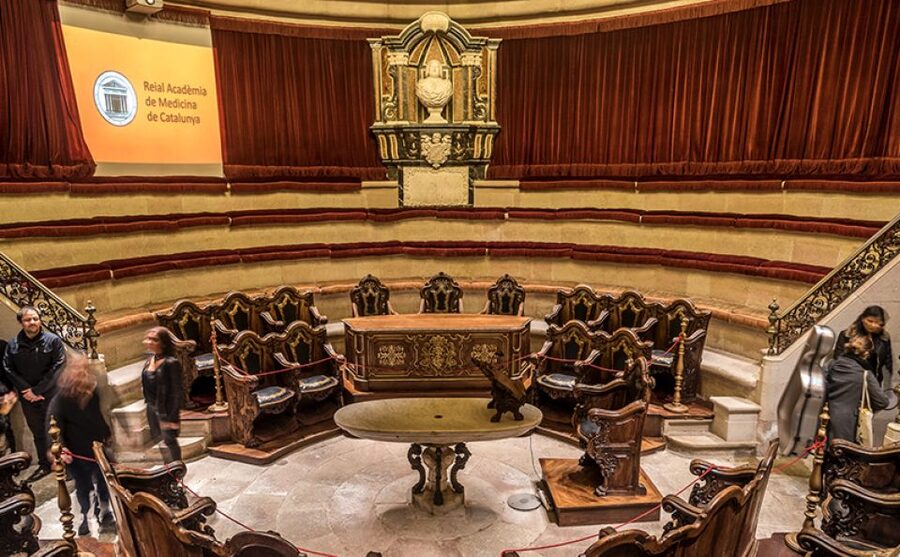
The center of the experience is the anatomical amphitheater built by Ventura Rodríguez. This is where the tour earns its reputation, because you get to see the layout intended for training surgeons during the 18th century.
What is so compelling here is that the amphitheater was built for a job. The design is tied to learning: seating arrangement, the way people could observe, and the purpose-built nature of the space. It helps you understand that surgery training was once deeply physical and spatial, not just theoretical.
This amphitheater is described as the last one remaining in Spain, and also among the oldest around Europe. That does not mean it is a fragile relic you only look at. It is a working-feeling room for understanding how medical training used to happen in real architecture.
The Academy’s medical story through famous names
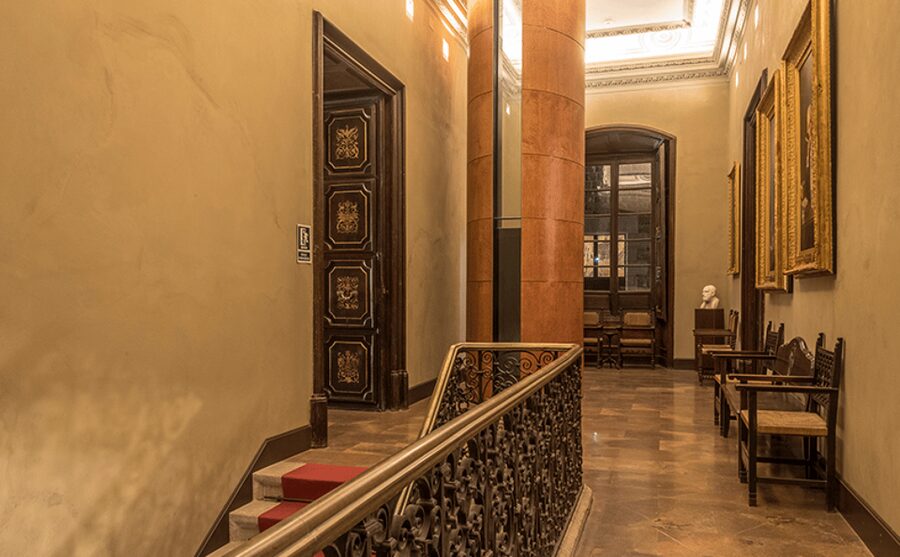
As you move through the Academy, the guide connects the building to major figures in Spanish medicine. You will hear about scientists linked with medicine and surgery, including Pere Virgili, Antoni de Gimbernat, and Santiago Ramón y Cajal.
What I like about this approach is that it puts names in context. When you hear these names in a place designed for training and discovery, the story stops being abstract. It starts to feel like a chain of ideas that traveled from teachers, to students, to experiments, all within institutions like this one.
If you end up with a guide like Alex, you are likely to get a lively explanation that makes the Academy’s purpose easy to follow. The best part of the guidance is how it keeps returning to the core theme: medicine and surgery are not just medical facts, they are tied to methods, spaces, and culture.
Another side of Barcelona worth booking on the same trip:
- Barcelona: Park Güell Admission Ticket
★ 4.4 · 76,534 reviews - Barcelona: Casa Batlló Entry with Self-Audioguide Tour
★ 4.7 · 25,359 reviews - Barcelona: 24 or 48-Hour Hop-On Hop-Off Bus Tour
★ 4.4 · 20,872 reviews - Barcelona in 1 Day: Sagrada Familia, Park Guell,Old Town & Pickup
★ 5.0 · 13,541 reviews
Walking the neoclassical halls and reading the building’s clues
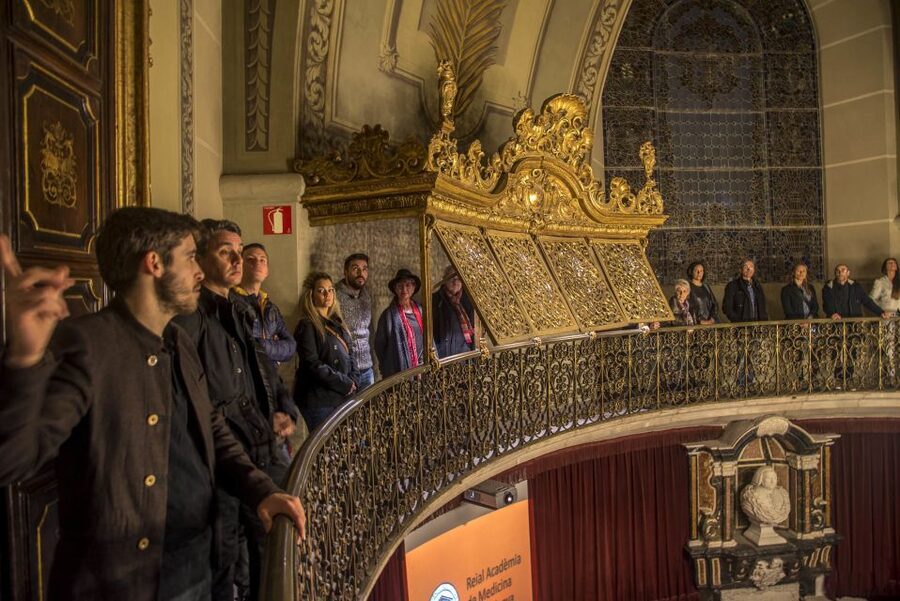
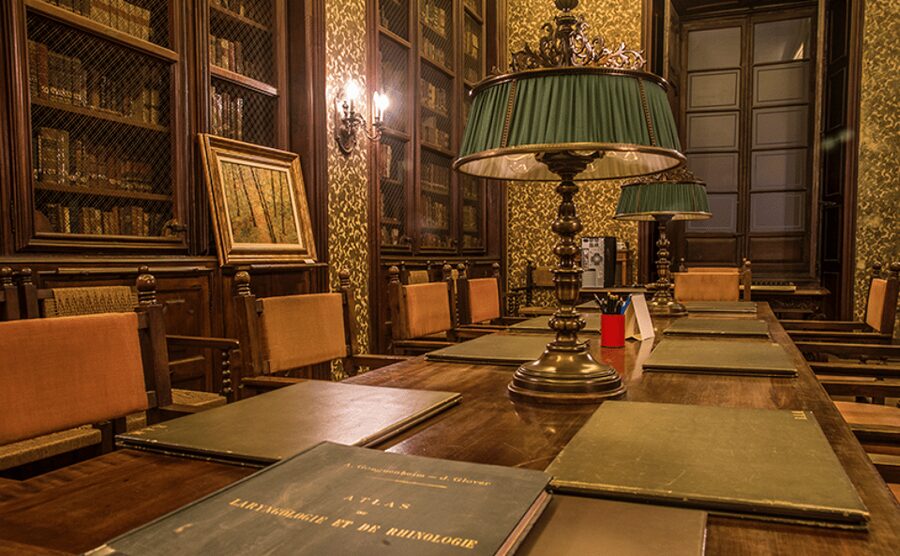
After the amphitheater, the tour continues through the Academy’s halls. This is where the building becomes more than a single highlight room. You start noticing how the Academy’s neoclassical identity frames the medical focus inside.
These spaces are part of the lesson. In many historic institutions, the architecture tells you how people were expected to behave and learn. Here, you see an academy that feels built for professional seriousness, while still being accessible enough for visitors to understand the story in human terms.
Also, the location adds extra meaning. The Academy sits next to the first and main hospital of Barcelona. That proximity helps explain why an academy like this mattered so much in the city’s medical ecosystem.
Spain’s first X-ray experiment, and why it belongs here
One of the most fascinating claims in the tour is that the first X-ray experiment took place in Spain. Hearing that in the setting of an anatomical teaching space creates a strong timeline effect.
You can think of it as the Academy following medicine from body study to new technology. Anatomy training was one chapter. X-rays represent another, where instruments changed what doctors could see and how quickly they could learn.
The tour does not need to turn into a science lesson to make the point. You just need the connection: the Academy is tied to major steps in how medicine progressed, and the building’s role in training makes those steps feel more grounded.
Languages, audio guide, and how to use them
The live tour guide is available in Spanish, Catalan, and English. On top of that, you also get an audio guide included, with options in Chinese, English, French, German, and Russian.
If you want the best experience, use the live guide for the big story, then use audio to catch anything you missed while moving. Since the tour is only 50 minutes, audio support is especially useful for staying fully connected instead of playing catch-up later.
Even if you are not fluent in the live language, it helps to have the audio guide there. It means you are not stuck relying only on what you can hear in the room, especially in a space with a busy sound environment.
Practical tips so the 50 minutes go smoothly
This is a short tour, so small choices matter. Here is what I would do to make it effortless.
First, arrive early and be ready for the door timing. The main entrance stays closed between tours, and your guide will open it about 5 to 10 minutes before start.
Second, plan for steps. The visit is not described as step-free, and there are steps as part of the experience. If you have mobility limits, check the situation carefully before you commit, since it is not suitable for people with pre-existing medical conditions.
Third, dress comfortably. You will be inside and moving between areas, and the tour expects normal walking and standing.
Finally, keep it clean. Alcohol and drugs are not allowed. It is a medical and academic space, so treat it like you would any professional institution.
Who should book this tour in Catalonia?
This tour is a great fit for people who enjoy architecture that has a job, not just a pretty facade. You will also like it if you care about the science side of history, because it links surgeons training to later experimentation like X-rays.
It is especially appealing if you:
- like the intersection of science and design
- want a shorter Barcelona cultural stop that still feels meaningful
- enjoy learning about medical pioneers in the real places connected to them
It may not be ideal if you need a fully step-free environment or if you have a medical condition that affects your ability to handle stairs or indoor movement. The tour is also not positioned for people with pre-existing medical conditions, so take that guidance seriously.
Should you book the Catalonia Royal Academy of Medicine tour?
I would book this if you want a compact tour that gives you a strong sense of place. For $16, you are paying for more than entry. You get a guided explanation tied directly to a rare room, the anatomical amphitheater by Ventura Rodríguez, and you get connected context about key figures like Pere Virgili, Antoni de Gimbernat, and Santiago Ramón y Cajal.
I would pass or at least think carefully if steps are a deal-breaker for you or if medical considerations affect your mobility. Also, if you only want large outdoor sights, this is very much an indoor architectural and medical story.
If your ideal Barcelona day includes one “serious” stop that still feels human and understandable, this is a smart pick. It is a rare chance to see how medicine literally shaped a building, and how a city preserved that connection.
FAQ
How much is the guided tour?
The price is $16 per person.
How long is the tour?
The duration is 50 minutes.
Where do I meet for the tour?
Meet at Catalonia’s Royal Academy of Medicine, Carme Street number 47, 08001 Barcelona. You need your confirmation email from Sternalia before the tour begins.
What languages are available?
The live guide is available in Spanish, Catalan, and English. The audio guide is included and available in 7 languages, including Chinese, English, French, German, and Russian.
Is the tour wheelchair accessible?
Yes, the activity is listed as wheelchair accessible. However, the visit includes steps, so plan accordingly.
Is it suitable for people with pre-existing medical conditions?
No, the tour is not suitable for people with pre-existing medical conditions.
Can I cancel for a full refund?
Yes, you can cancel up to 3 days in advance for a full refund.
Recently reviewed in Barcelona
- Barcelona: Citizen Segway Tour★ 5.0 · 53 reviews
- Cathedral of Barcelona Entrance Ticket – Optional Private Guide★ 4.0 · 114 reviews
- Sagrada Familia Private Tour in Barcelona★ 4.5 · 23 reviews
- Montjuïc Cemetery Walking Tour – Hidden Art, History & Views★ 5.0 · 62 reviews
- Barcelona Gracia Neighborhood Local Food & History Tour★ 5.0 · 92 reviews
- Castle of Montjuic- 3H Segway Tour★ 5.0 · 3 reviews
- Barcelona Old Town Tour With Optional Flamenco Show★ 5.0 · 42 reviews
- Guided private morning tour of La Pedrera with Casa Batlló ticket★ 5.0 · 14 reviews
Guided, compared.

Park Guell Guided Tour with Skip The Line Entry
Read our review →

Park Guell Guided Tour with Skip the Line Ticket
Read our review →

Montserrat, Girona & Costa Brava Guided Day Trip from Barcelona
Read our review →
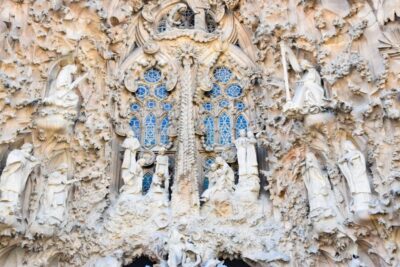
Sagrada Familia Guided Tour with Tower Access
Read our review →