
Reviewed · BIKE TOURS
Barcelona | StreetArt Bike Tour Moco Museum
If you like street art that feels human, this bike tour is a great way to see it up close without burning your feet. The route mixes big-name works like a Keith Haring mural with local graffiti legends, all explained by expert guides. I love how the art is tied to specific corners of Barcelona, not treated like random wall stickers.
Two more things I particularly like: you get guided story time at each stop, and the street scene is treated as something living and changing, so the tour aims to match what is actually on the walls when you go. One possible drawback: it is a bike tour, and it is not for you if you cannot comfortably ride for short stretches in city traffic.
Key things you will notice on this Barcelona street art bike ride
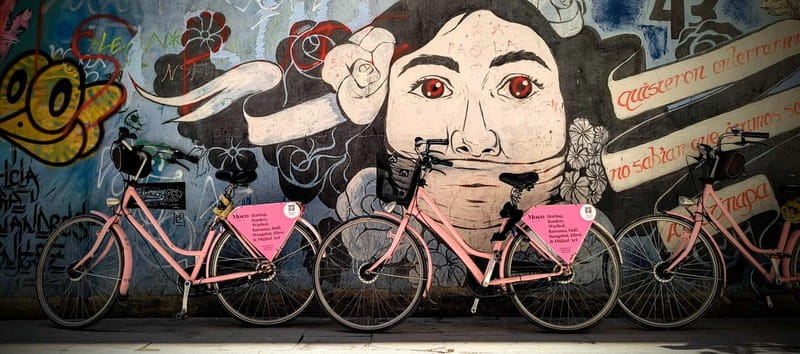
- Electric bike help on rolling city segments, with short ride legs between stops
- Keith Haring and other iconic pieces paired with local names and the messages behind them
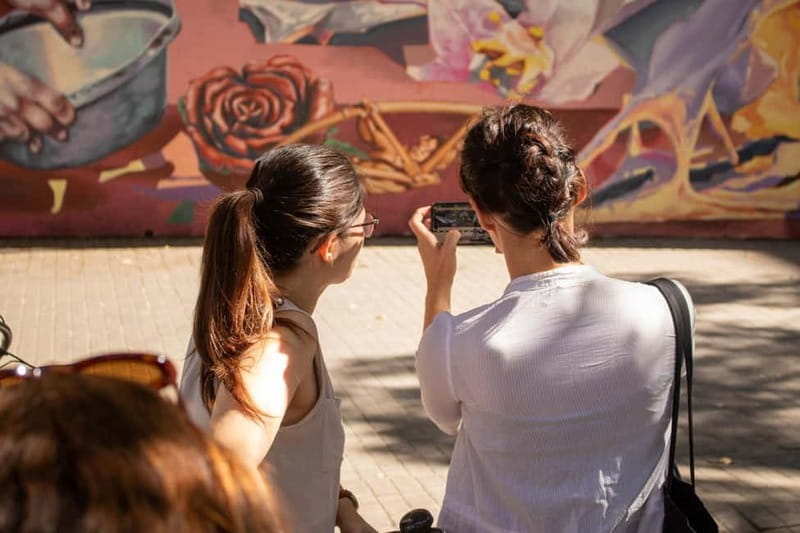
- Photo-stop style guiding, so you get time to frame the art and then hear the story
- Route variety across neighborhoods, from contemporary culture areas to Raval street art walls
- Rain or shine with poncho coverage, which matters in Barcelona because weather shifts fast
Meeting at Carrer dels Tallers 45, then getting rolling with an electric bike
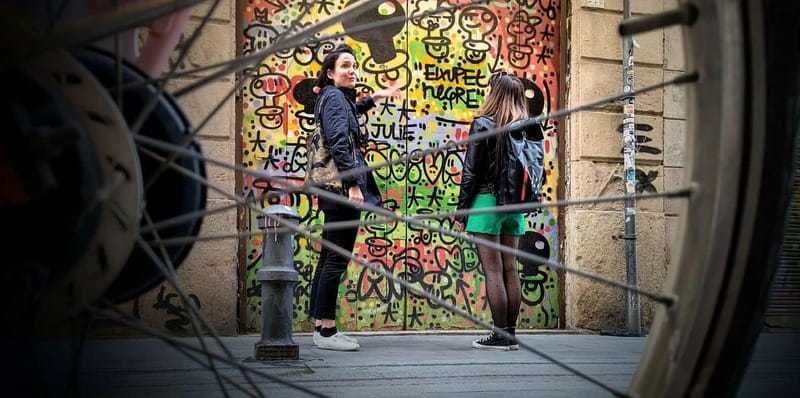
The whole experience starts at Carrer dels Tallers 45. Plan to arrive about 10 minutes early. You will meet by a palm tree and enter the passage where the team attends you. There is a short safety briefing first, then you are off.
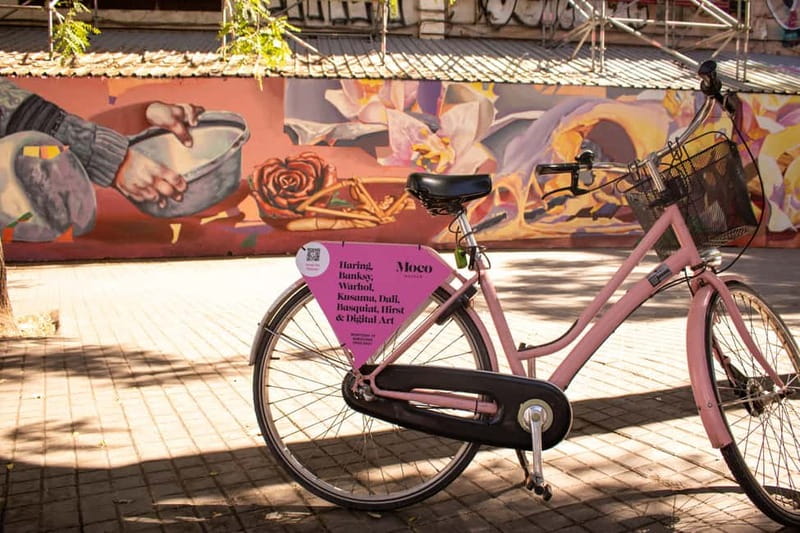
The bike setup is practical: you get one bike per person, a handlebar bag for small essentials, and a free bottle of water. The tour is designed around frequent picture stops, so carrying a heavy bag should not be necessary. They also note helmets are mandatory for children up to age 16. Adults can request one in advance for an additional cost, so if you want the extra protection, plan ahead.
A couple details matter for comfort. Sunscreen, a hat, and sunglasses are worth packing because you are outside for the full 2.5 hours. You are also told not to use headphones. That is a good rule for a street art tour, since it keeps you aware of your surroundings and helps you hear your English-speaking guide.
This is not a sit-and-stare museum tour. It is a ride-and-look experience, with the guide directing you stop to stop while you take in walls that would be easy to miss if you were walking without a plan.
More bike and e-bike tours in Barcelona:
- Barcelona 3-hour Bike or E-Bike Tour: Highlights and Hidden Gems
★ 5.0 · 1,429 reviews - Barcelona: 2.5-Hour Bike or E-Bike Historical Tour
★ 4.5 · 1,262 reviews - Barcelona E-Bike Photography Tour
★ 5.0 · 843 reviews
CCCB area and the contemporary start: Sant Jordi Sculpture & Skyline
The tour kicks into gear at the Centre de Cultura Contemporània de Barcelona (CCCB). You get a photo stop and a guided segment here, plus views along the way as you ride. This first area is a strong setup because it is where contemporary culture feels close to everyday street life, which is exactly what street art is doing.
You will also hear about the Sant Jordi Sculpture & Skyline as part of this opening stretch. I like when a tour starts with a “what you are seeing and why it matters” moment, because it tunes your eyes for the rest of the day. After this, the tour begins to move from the broader contemporary setting into specific murals and artists.
The upside of beginning at CCCB is that you are not thrown into the densest streets immediately. You get that early rhythm: ride a bit, pause for photos, then listen to the story behind the piece.
MACBA stop and the Keith Haring moment, plus Colp One Dog
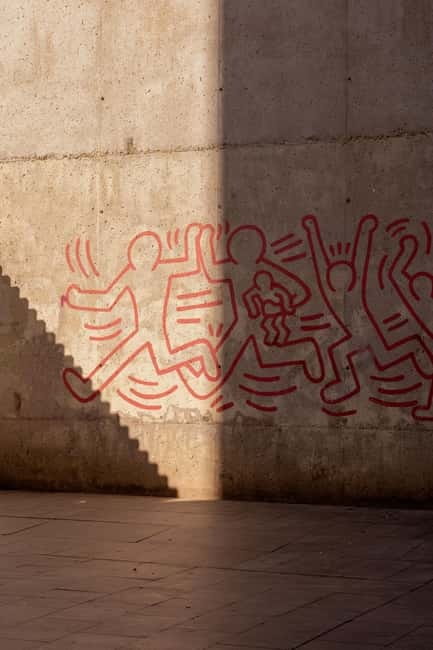
Next you head to the Museu d’Art Contemporani de Barcelona (MACBA) area. Here, the highlight is the MURAL DEL SIDA (KEITH HARING). You also see Colp One Dog nearby.
Keith Haring murals are instantly recognizable when you spot them, but the real value is how the guide frames the meaning. Street art is not just style. It is often a visual argument, a social message, or a response to a moment. When you learn the story behind what you see, the lines and characters stop feeling random and start feeling intentional.
A useful thing about this stop is the mix of big-name and local names. Seeing Keith Haring first gives you a loud cultural anchor. Then Colp One Dog adds a different flavor, reminding you that street art in Barcelona is both internationally recognizable and deeply rooted in local voices.
Sant Jordi to Raval energy: Xupet Negre, Feminist wall, Space Invader
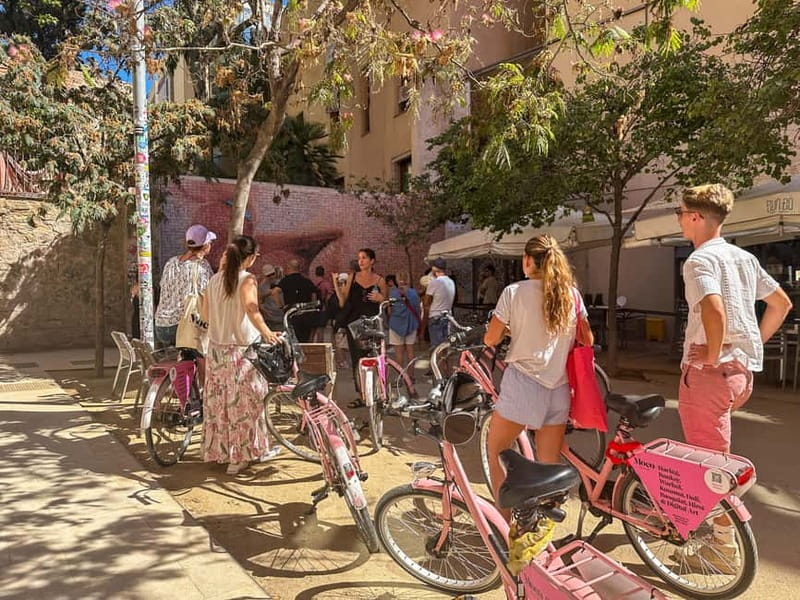
After the MACBA area, the tour shifts into streets like c/JOAQUIN COSTA and c/FERLANDINA. You are looking for pieces including Birdie Al Awan and El Xupet Negre (Negrelab). This is where the tour can feel like a time machine.
Xupet Negre is described as one of the city’s earliest graffiti works. That detail changes how you look at everything after it. Instead of treating street art as a trend that appeared recently, you start noticing how graffiti and mural language have evolved here.
Then you reach the Rambla del Raval, a stretch known for layered street art. This is where you find the Feminist wall, Space Invader, and work by Ana Eliza. The guide’s job is to connect each piece to its message, not just name the artist.
This is also a point where Barcelona’s “history meets today” vibe really clicks. You are not just riding past colorful walls. You are reading social signals and cultural identity across neighborhoods.
If you want one piece of advice, it is this: slow down your photo taking here and listen first. The story you get from your guide makes later pictures much more meaningful, especially for works tied to identity and activism.
Another side of Barcelona worth booking on the same trip:
- Barcelona: Park Güell Admission Ticket
★ 4.4 · 76,534 reviews - Barcelona: Casa Batlló Entry with Self-Audioguide Tour
★ 4.7 · 25,359 reviews - Barcelona: 24 or 48-Hour Hop-On Hop-Off Bus Tour
★ 4.4 · 20,872 reviews - Barcelona: Park Guell Guided Tour with Skip The Line Entry
★ 4.7 · 17,563 reviews
c/AURORA and Ágora Benítez, then Paral·lel modern art stops
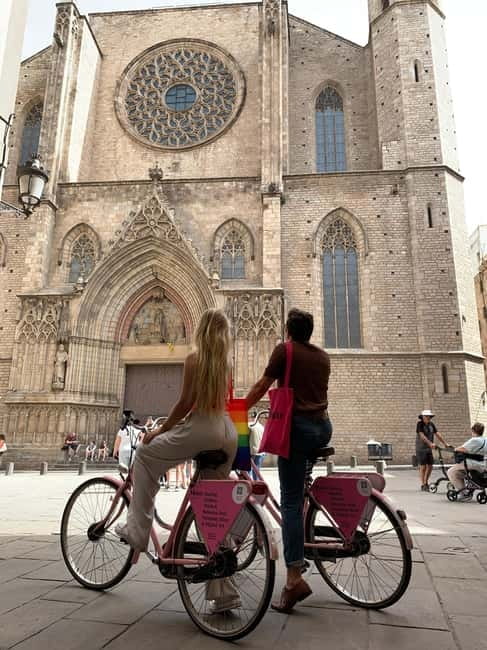
The route continues to c/AURORA, where you will see works connected to Ágora Juan Andrés Benítez. You also pass areas linked to Av/ PARALELO, including Galería Arnau.
This section matters because it shows street art is not trapped in alleyways. It can exist right alongside the city’s contemporary art conversation. The route here helps you notice how Barcelona treats modern expression as part of the same conversation as older streets and classic architecture.
A good tour will give you a reason to care about where the mural sits. That is what makes this stop more than a quick photo. Even if you are not an art student, you can still follow the guide’s explanation and start connecting the visual choices to the surrounding neighborhood.
Jardins de les Tres Chimeneies: industrial setting meets street creativity
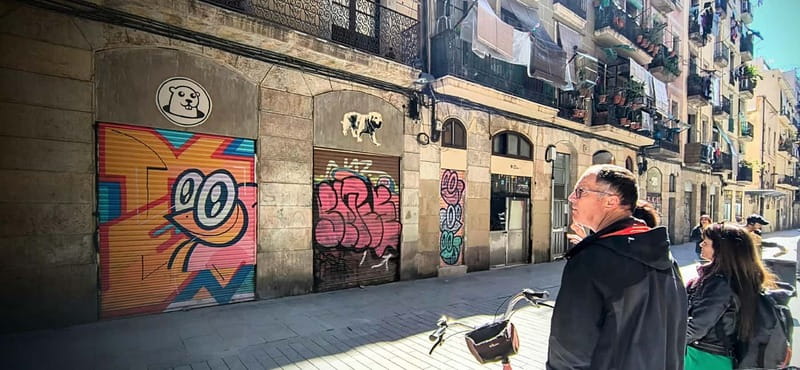
One of the most interesting breaks on the ride is the stop at the Jardins de las Tres Xemeneies on Av/ PARALELO. You will stop for photos and a guided segment, then enjoy scenic views as you ride nearby.
This is one of those places where the setting does half the storytelling. Old industrial structures around you can make the street art feel like a response to place, not just something painted on a random wall. Barcelona has plenty of pretty backdrops, but this industrial-turned-garden mood adds texture.
If you get a bit tired after a few ride legs, this stop also gives you space to regroup. It is not just “look and go.” It is a moment to breathe, then continue to the next set of artworks with fresh eyes.
Portal of Port Vell art: Mariscal’s Gamba and BCNs Head at Ps. Colón
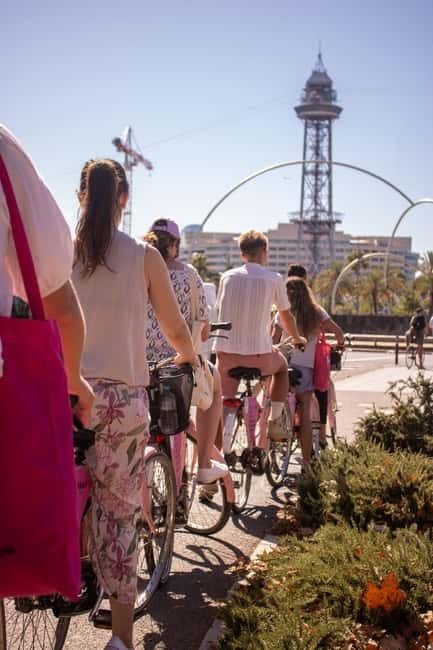
As the tour moves onward, you start getting more recognizable city anchors, including Ps. COLON. Here you will see La Gamba, a sculpture by Mariscal, and BCNs Head, linked to Leinceshtain.
This section is fun because it shows street art in a wider form than only walls. Sculptures and public visuals carry messages too, and they often behave like landmarks. When you see a piece like Gamba, it becomes part of the way you remember the city.
This is also a good moment to watch how you feel about Barcelona. If you usually think of the city as architecture and boulevards, street art can flip that script. You start noticing expression in unexpected places, and you begin mapping neighborhoods through art instead of only through monuments.
A walk toward the Old City: El Cap de Barcelona, the cathedral area, and the Picasso connection
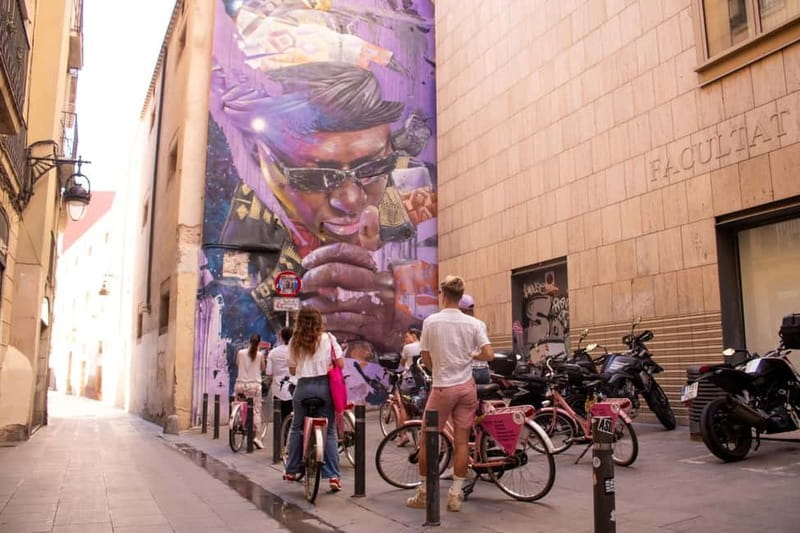
The tour keeps moving past other major sights. You will pass or photo stop for places connected to Columbus Monument, Theatre Arnau, and El Cap de Barcelona. You will also pass Barcelona Cathedral.
Then you reach the photo stop highlights tied to the cathedral area: El Beso Photomosaic and El mural del petó, plus a Picasso Mural. The big win here is how street art intersects with the most classic parts of the city. You are seeing modern expression against a historic backdrop, and it makes the whole experience feel like one living city, not two separate worlds.
For these stops, it helps to think like a visitor with a camera and a question. Where is the piece placed, and what kind of crowd does it attract? Your guide’s explanation gives you the answer, and suddenly the mural feels like communication, not decoration.
From Palace of Catalan Music to Passeig de Gràcia and Casa Batlló
In the final stretch, the tour heads through the Palace of Catalan Music area, then moves toward Passeig de Gracia. You will pass along there and ride by key sights, ending with a photo stop near Casa Batlló.
This part works well because it gives you closure with a visual payoff. You connect what you learned about art messaging to the city’s “official” visual language. Even if you do not go inside buildings, you learn how Barcelona uses design, symbolism, and strong visual identity at every level.
If you are traveling with kids or someone who gets impatient with long explanations, this ending area can be the sweet spot. You get iconic visuals without the feeling of being rushed.
What $34 gives you for 2.5 hours, and why the value adds up
The price listed is $34 per person for about 2.5 hours. On paper, that sounds like a small commitment. In practice, it is a good deal if you want multiple stops, an electric bike, and a story-driven guide.
Here is what you are paying for in real terms:
- An English-speaking guide who explains what the art is saying
- One bike per person plus comfort items like water and a handlebar bag
- Frequent photo stops, so you are not just riding in silence
- A route that connects international names and local street art history in the same loop
The “value” question is always: do you get enough unique content in the time you spend? This tour does. It layers known pieces and lesser-known work, then ties them to specific streets. That makes the hours feel earned.
You should also know this tour adapts to changes in the street art scene. That matters in Barcelona, where murals and graffiti can shift over time. It helps you feel like you are seeing the city as it is now, not as a static photo archive.
Tips that make the ride easier, especially if the weather turns
Barcelona weather can be unpredictable, and this is a rain or shine tour. They provide a poncho if needed, which is a lifesaver when a cloud dump hits mid-ride.
Bring what you can control:
- Sunglasses and sunscreen
- A sun hat
- Weather-appropriate clothing
- A charged smartphone for photos
Also keep it practical: since headphones are not allowed, you will rely on your guide’s pacing. If you need to take a call or read messages, do it during the ride pauses, not while the group is moving.
Finally, check that everyone in your party can ride comfortably. The tour is not suitable for people who cannot ride a bike, and it is not suitable for wheelchair users.
Who should book this street art bike tour, and who should skip it
This tour is a strong match if you:
- Want street art with context, not just Instagram angles
- Love getting a quick map of neighborhoods through art
- Prefer moving efficiently on an electric bike instead of long walks
It is also a nice pick for families who can ride. The tour notes helmets for children up to 16, and at least one guide experience included kids enjoying the day. Still, anyone who is not confident on a bike should skip it.
One more reason I like it: guides bring the material to life. The tour has had standout guide experiences, including one with Eirini, described as energetic and strong at connecting stories to what you are seeing. After the tour, that same kind of guide typically shares smart suggestions, like where to eat next.
Should you book the Barcelona StreetArt Bike Tour with the Moco Museum? My call
I would book it if you want a compact way to see street art across multiple neighborhoods in one morning window, and you care about the meaning behind the walls. The combination of electric bikes, frequent story stops, and iconic targets like Keith Haring makes the time feel well spent.
Skip it if your priority is a quiet, slow museum pace, or if you are not comfortable riding a bike in the city. Also, if you hate weather-dependent plans, remember you get a poncho, but you will still be outside.
If you do book, do one smart thing: go in with a camera ready, then listen closely at the first few murals. The payoff grows as you start noticing patterns, themes, and why certain works are placed exactly where they are.
FAQ
What is the duration of the Barcelona StreetArt Bike Tour with the Moco Museum?
The tour lasts about 2.5 hours.
How much does the tour cost?
The price is listed as $34 per person.
Where does the tour start and end?
It starts at Carrer Dels Tallers 45 (near the meeting passage) and ends back at the same meeting point.
What language is the guide?
The tour is guided in English.
Is the tour suitable for people who cannot ride a bike?
No. The tour is not suitable for people who cannot ride a bike.
What should I bring?
Bring sunglasses, a sun hat, sunscreen, comfortable weather-appropriate clothing, and a charged smartphone. You should also bring a passport or ID card (a copy is accepted).
Do I need a helmet?
Helmets are mandatory for children up to age 16. Kids receive helmets free of charge, while adults can request one in advance for an additional cost.
More Museums in Barcelona
- Barcelona: FC Barcelona Museum “Barça Immersive Tour” Ticket
★ 4.4 · 10,944 reviews - Barcelona: Park Güell and Gaudí House Museum Entry Ticket
★ 4.5 · 6,326 reviews - Barcelona: Picasso Museum Skip-the-Line Guided Tour
★ 4.5 · 3,355 reviews - Girona & Dali Museum Small Group Tour with Pick-up from Barcelona
★ 5.0 · 2,965 reviews
Recently reviewed in Barcelona
- Barcelona: Citizen Segway Tour★ 5.0 · 53 reviews
- Cathedral of Barcelona Entrance Ticket – Optional Private Guide★ 4.0 · 114 reviews
- Sagrada Familia Private Tour in Barcelona★ 4.5 · 23 reviews
- Montjuïc Cemetery Walking Tour – Hidden Art, History & Views★ 5.0 · 62 reviews
- Barcelona Gracia Neighborhood Local Food & History Tour★ 5.0 · 92 reviews
- Castle of Montjuic- 3H Segway Tour★ 5.0 · 3 reviews
- Barcelona Old Town Tour With Optional Flamenco Show★ 5.0 · 42 reviews
- Guided private morning tour of La Pedrera with Casa Batlló ticket★ 5.0 · 14 reviews
Bike Tours, compared.
Barcelona 3-hour Bike or E-Bike Tour: Highlights and Hidden Gems
Read our review →

E-Bike Tour with Montjuic Cable Car & Boat Ride
Read our review →
Sagrada Familia or Coastal City Sights by eBike
Read our review →
Barcelona e-Bike Tour: Gaudí & Old Town Small Group
Read our review →
Barcelona E-Bike Small Group Tour with Tapas & Wine Tasting
Read our review →Browse the lists this tour appears in