
Reviewed · GAUDí TOURS
Barcelona: Art Nouveau & Gaudí Tour
Barcelona’s Eixample is interesting because it turns architecture into a timeline. You can literally walk through how Barcelona expanded after the walls came down, and how wealthy families used building design as a public statement.
I like two things right away. First, the way the guide connects buildings to the political and social shifts of the 1800s, so the street scenes stop feeling random. Second, the tour focuses on the craft of Catalan Modernisme, with details in stone, ceramic, and glass that you’ll keep noticing long after you leave.
One consideration: this is a 3.5 hour outdoor walk with real weather (sun, rain, wind, even strong showers). Also, you’ll mainly see monuments from the outside, and entry fees are not included.
Key points to know before you go
- Golden Square focus in Eixample: you’ll concentrate on the block where Modernisme “big money” shaped the streetscape
- Private group energy: small group format that keeps questions and pace comfortable
- Guides like Johannes or Hannes are praised for making connections fast and teaching without sounding scripted
- Outside-only viewing: great for spotting details, not for museum-style interior time
- A 3.5 hour weather-ready route: pack for sun or showers, since you stay walking
Entering the Golden Square: why Eixample’s Modernisme feels personal
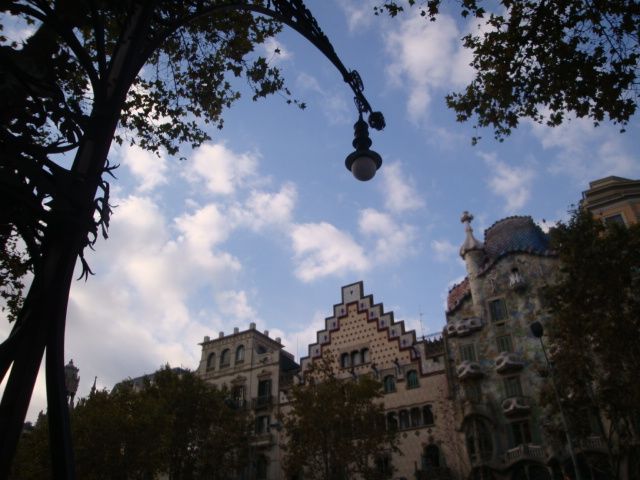
Barcelona’s Eixample is the kind of neighborhood that rewards slow looking. The streets are wide and clean, the corners are distinctive, and the facades seem designed to be read like pages. This tour plays that game well. Instead of bouncing between far-flung landmarks, you stay in the area many people call the Golden Square, and you learn how the “Modernisme moment” grew out of real pressure and real money.
The result is that the style feels human, not museum-like. You’re not just seeing prettiness. You’re seeing a society renegotiating its power, its identity, and its future.
More Gaudí sights across Barcelona:
- Barcelona: Park Güell and Gaudí House Museum Entry Ticket
★ 4.5 · 6,326 reviews - Sagrada Familia & Gaudi Tour Private or Small Group with Tickets
★ 4.5 · 1,188 reviews - Complete Gaudi Tour: Casa Batllo, Park Guell & Sagrada Familia
★ 5.0 · 1,152 reviews
Eixample in one walk: from 1854 expansion to the wall that fell
A big part of why this tour works is that it gives you the neighborhood’s origin story in plain language.
You’ll hear how Eixample literally means city expansion. When the city walls were torn down in the mid-1800s, Barcelona finally had space to build between the old, crowded center and the separate town of Gracia. That empty area became a stage for a new kind of Barcelona: more organized blocks, stronger ambitions, and taller statements in stone.
And then the guide layers in what made those buildings possible. For a long stretch, the powerful in Barcelona lived and controlled things from within the old city while the poorest classes were stuck under policies that blocked autonomy and co-determination. Money in the bank changed everything. Local officials could do something only if they had funding, and people with funding did not hold back.
That history matters for your eyes. After you learn this, you start spotting why so many facades feel like declarations, not just decoration.
The street-level magic: what you should look for on a Modernisme facade
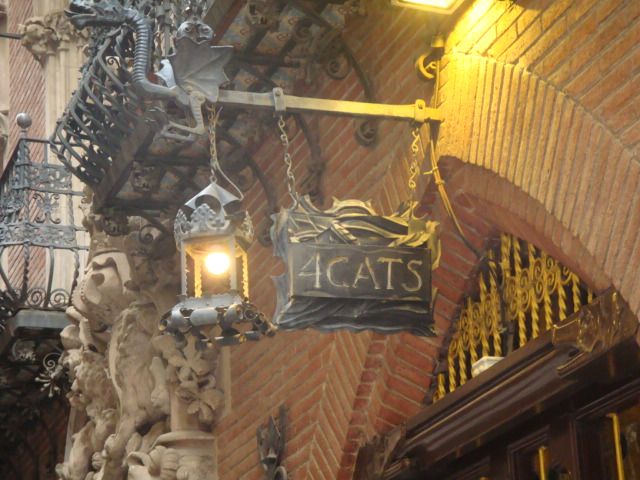
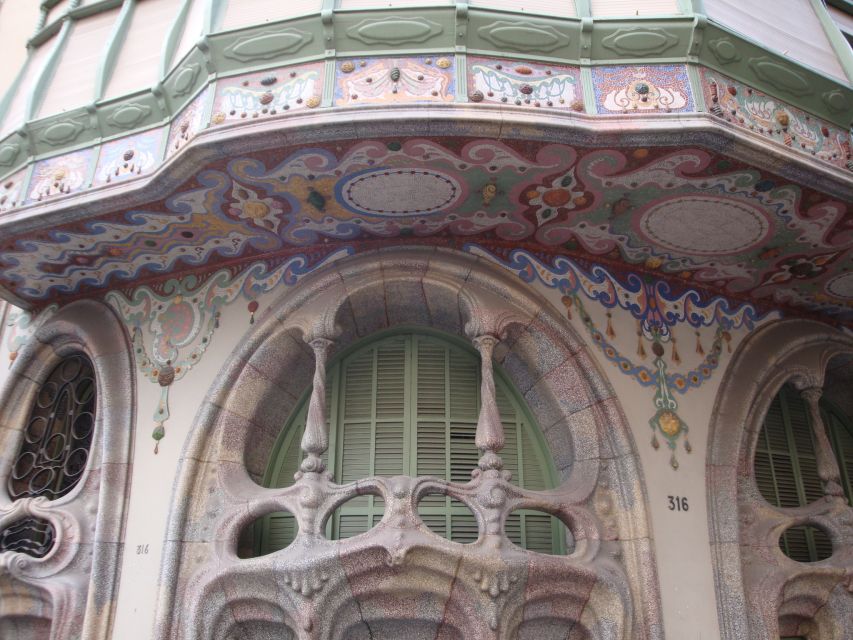
Catalan Modernisme loves materials that catch light. On this tour you’ll be pointed toward the way stone, ceramic, and glass work together, especially along the most famous Modernisme stretches.
Here are the kinds of visual details I’d focus on as you walk:
- Trencadís: the broken-tile mosaic look that turns scraps into pattern and sparkle, often associated with Gaudí’s style
- Corner façades that look leveled and deliberate, not awkward or improvised
- Decorative transitions where structure and ornament feel linked, like the building is explaining itself
You’ll also get to connect those details to bigger ideas. Modernisme here is not only aesthetic. It is also cultural confidence.
The tour also builds in moments of surprise. The route doesn’t feel like a textbook march. The guide’s style, and the way the stops are chosen, is meant to keep you from drifting into “I saw that facade already” mode.
The guide is the difference maker: Johannes, Hannes, and why their storytelling lands
The most consistent praise is about the guide. Several people singled out how the guide knew the material instantly, without pausing to look things up. More importantly, they highlighted that the guide makes connections between local events and political events, so the day never turns into random architecture trivia.
I think that’s what you’re really paying for in a tour like this. Anyone can point at a decorative balcony. A strong guide helps you understand why the balcony exists, why it’s exaggerated, and why it shows up in a particular moment of Barcelona’s push and pull with power.
German or English is offered, and the format is set up for a private group. That means you can ask questions when something clicks, instead of waiting through a crowd.
Another side of Barcelona worth booking on the same trip:
- Barcelona: Park Güell Admission Ticket
★ 4.4 · 76,534 reviews - Barcelona: Casa Batlló Entry with Self-Audioguide Tour
★ 4.7 · 25,359 reviews - Barcelona: 24 or 48-Hour Hop-On Hop-Off Bus Tour
★ 4.4 · 20,872 reviews - Barcelona: Park Guell Guided Tour with Skip The Line Entry
★ 4.7 · 17,563 reviews
Domènech i Montaner, Puig i Cadafalch, and Gaudí: name-drops that are actually useful
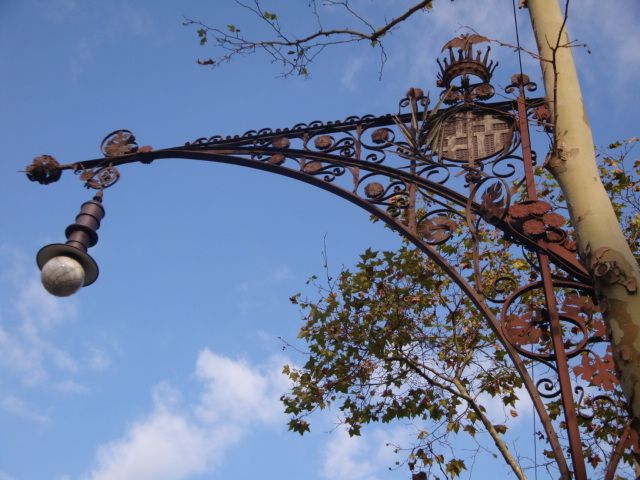
A tour can toss out famous names like confetti. This one uses them for orientation, so the architects start to feel different rather than interchangeable.
You’ll hear about:
- Domènech i Montaner, including how the Palau de la Música concept honors Catalan folk songs through a stone allegory, not just as a music reference but as an architectural story
- Puig i Cadafalch, as part of the wider Catalan Modernisme leadership that helped define the era’s look
- Gaudí, because he becomes the practical bridge between the neighborhood’s Modernisme identity and the future he was building toward
The real value is that you’ll stop treating Modernisme as one style. The tour frames it as a movement that begins in the cultural world around 1885 and then shows up in architecture with its own local personality.
The political plot behind the pretty streets: 1714, autonomy, and the “Indianos”
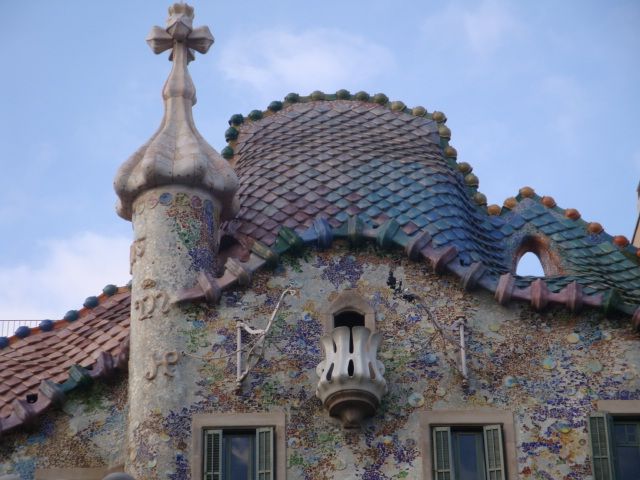
This tour doesn’t pretend politics is separate from architecture. You’ll get the story of what happened when Barcelona threw off shackles and then faced the consequences of power struggles that played out far away in Madrid.
Expect themes like:
- 1714 and beyond, including repercussions of the war of secession
- The idea of an enslaved city, where people suffered under refusal of local autonomy and shared decision-making
- The contrast between those who stayed stuck and those who came into money, including the Indianos who gained wealth in South America and returned with capital and influence
That’s where the Golden Square gets its nickname in practice. Wealthy industrialists, aristocrats, and the returned fortunes didn’t just want comfort. They wanted visibility. They used buildings to show status, taste, and identity in a city where political rights were contested.
When you understand that, the architecture reads like a social document. The facades start to look like arguments, not just decoration.
Cerdà’s utopia and the grid that made everything possible
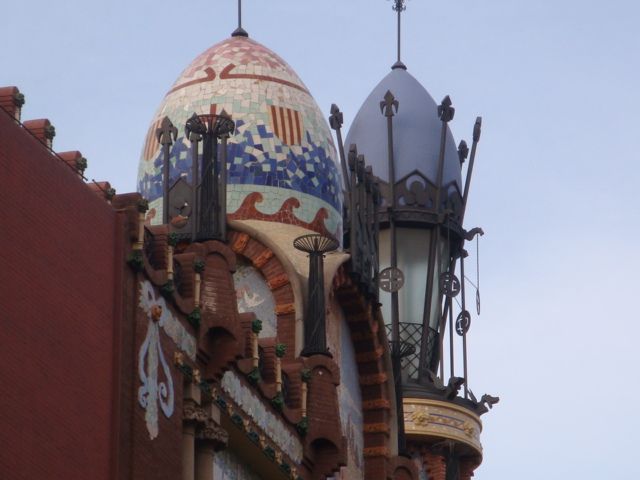
Even if you’re not a city-planning fan, this part is worth your attention because it explains why Eixample feels so “designed.”
You’ll hear about Ildefons Cerdà’s utopia of the perfect city and why Eixample will tell another story than the old center. The idea isn’t only romantic. A grid plan changes how people move, how neighborhoods grow, and where big statements can be built without squeezing into medieval chaos.
So when you’re standing on a street corner, you’re not just seeing beauty. You’re seeing an urban experiment that shaped the stage where Modernisme could flourish.
Barcelona cleans up: World’s Fair energy and the Catalan Renaissance
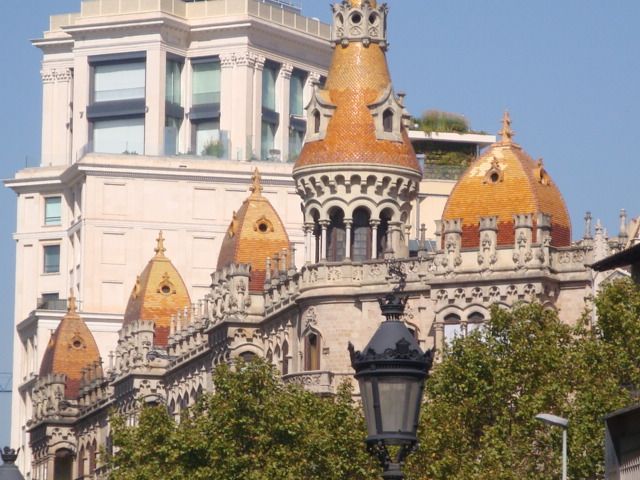
The tour also tracks the emotional arc of the city. The highlights point to a movement from struggle to transformation, including a “cleanup” era linked to the Barcelona World’s Fair.
You’ll also hear about the phoenix idea, where the Catalan Renaissance rises after hardship. The takeaway for you is that architecture here isn’t only about glamour. It’s about recovery and identity-making.
This is one reason the walk feels more like a story than a checklist. The buildings become chapters.
Gaudí’s hour and the stops that feel like clues
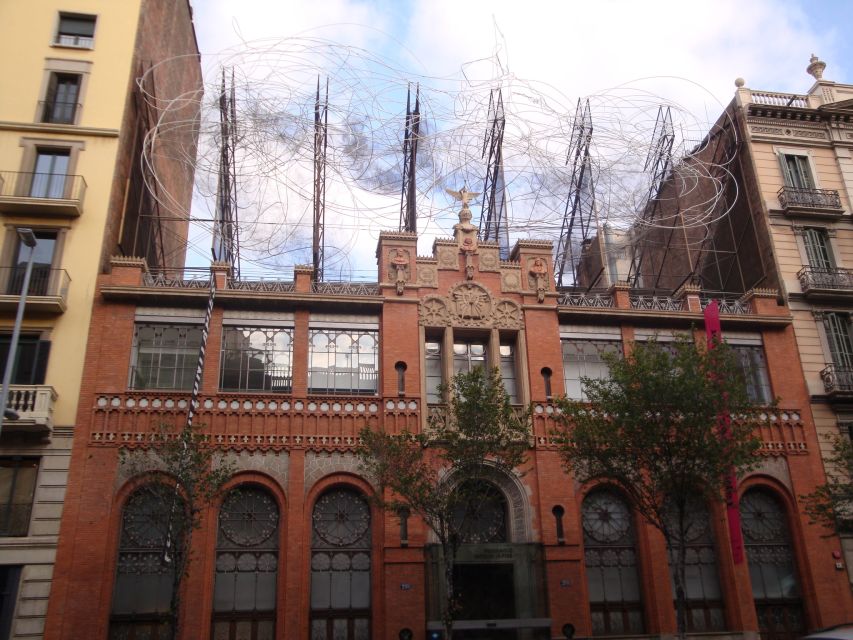
Gaudí appears throughout, but the tour frames him as part of a broader Modernisme moment. A few highlighted themes are especially fun because they’re clues to how his mind worked.
Here are the Gaudí-related ideas you can expect to connect on the walk:
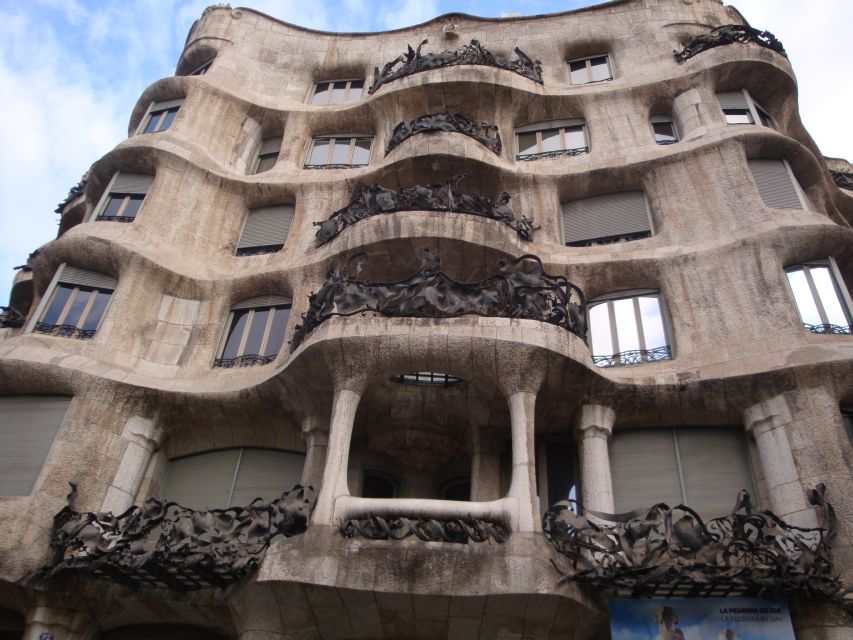
- Passeig de Gràcia and trencadís: the broken-tile look that turns surfaces into messages, including the idea of shards bringing luck
- The block of discord, including the note about three stars at a block that symbolically represents tension and competition in one place
- Gaudí’s trick with string, a classic reference that points to how he studied forms and geometry in a hands-on way
- Sagrada Familia: Gaudí’s lost plans, which sets you up to understand the building as an ongoing idea, not a finished product
I like this approach because it gives you mental hooks. Even if you’ve heard of Gaudí before, you’re less likely to see the city as “Gaudí stuff over there.” Instead, you’ll see how Gaudí’s thinking fits the neighborhood’s larger historical mood.
Outside-only viewing: what to expect, what not to expect
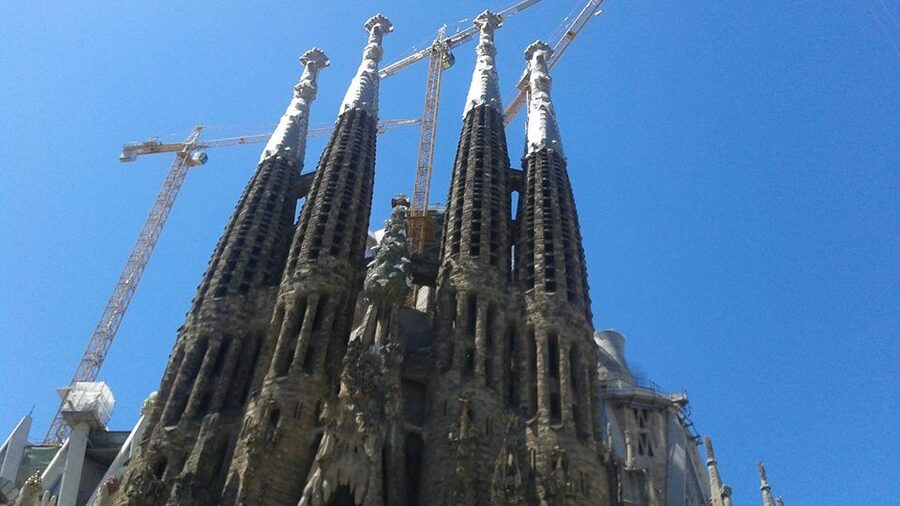
This is a walking tour where you admire monuments from their exteriors. Museum visits and interior explorations are generally not part of the plan, with a couple of exceptions.
That’s good news if you want movement and street-level context. It’s less good if you want ticketed interiors, private viewing, or museum time.
Also, entry fees are not included. So if your plan depends on going inside specific buildings, treat this tour as the best pre-game and plan the extra stops on your own.
Timing, pace, and weather reality for a 3.5-hour walk
The walk is relaxed. You can stop for photos. Bathroom breaks are fine. You’re not going to be sprinting to keep up.
Now the honest part: it runs in sun, rain, and wind, even strong showers. That means your clothing choices matter as much as your ticket.
In warm months, pack:
- Hat, sunglasses, sunscreen
- A small bottle of water
In cooler months:
- A jacket or thin coat
If you get light rain, you’ll probably still enjoy it. If you hate wet streets and wind, you might find the experience less comfortable. The upside is that the route is built around seeing the city from street level, so you’re not constantly dependent on indoor venues.
Getting there: meeting point and how the subway fits in
You meet at Plaza de Urquinaona, in front of the Theater Borràs. The tour also includes a U-Bahn (subway) ticket, which is helpful for keeping the walking manageable and for linking the route through the city fabric.
For planning, remember the duration is 3.5 hours. That’s long enough to feel like you saw a lot, but short enough to still leave room for another neighborhood walk or a meal afterward.
Price and value: $212 per group up to 4
The price is $212 per group for up to 4 people, and it includes the city tour plus a U-Bahn ticket.
Here’s how I look at value:
- If you go with 4 people, you’re effectively paying about $53 per person for a private-group guided experience for 3.5 hours.
- If you go as a smaller group, it costs more per person, but you still get the benefit of a guide who can tailor the pace and answer questions without fighting a big crowd.
Also, because entry fees are not included, you avoid surprise costs if you planned around exteriors. It’s a clear model: pay for the guiding and route, then decide later if you want interiors.
If you’re the kind of traveler who likes understanding why buildings exist, this format usually feels like money well spent.
Who should book this tour (and who might skip it)
This is a strong choice if you:
- Want Modernisme in a focused area, not a scattershot day
- Like historical storytelling tied to architecture
- Appreciate guides who make connections quickly, with real names and specifics
- Prefer walking streets and squares over museum time
You might skip it if you:
- Only care about interior tickets and don’t want exterior viewing
- Strongly dislike weather exposure, since you’ll be outside in sun and rain
- Want a self-guided checklist style experience rather than a guided narrative
Should you book the Barcelona Art Nouveau and Gaudí Tour?
I’d book it if you want Eixample’s Golden Square to make sense. The best version of this tour is not only seeing beautiful facades, it’s understanding why Barcelona built them when it did, and why the Modernisme style became a citywide message.
One last practical tip: wear comfortable shoes and plan to slow down. The tour works because you notice things. Let yourself be a little curious at the corners. That’s where the stories live.
FAQ
What languages is the tour offered in?
The tour is offered in German and English.
How long is the Barcelona Art Nouveau and Gaudí walking tour?
It lasts 3.5 hours.
Where do I meet the tour guide?
You meet at Plaza de Urquinaona, in front of the Theater Borràs.
Is the tour private and how big is the group?
It’s described as a private group, priced for a group up to 4 people.
What is included in the price?
The included items are the city tour and a U-Bahn (subway) ticket.
Are entry fees or museum visits included?
Entry fees are not included, and the tour is mainly focused on viewing monuments from the outside rather than interior visits.
Recently reviewed in Barcelona
- Barcelona: Citizen Segway Tour★ 5.0 · 53 reviews
- Cathedral of Barcelona Entrance Ticket – Optional Private Guide★ 4.0 · 114 reviews
- Sagrada Familia Private Tour in Barcelona★ 4.5 · 23 reviews
- Montjuïc Cemetery Walking Tour – Hidden Art, History & Views★ 5.0 · 62 reviews
- Barcelona Gracia Neighborhood Local Food & History Tour★ 5.0 · 92 reviews
- Castle of Montjuic- 3H Segway Tour★ 5.0 · 3 reviews
- Barcelona Old Town Tour With Optional Flamenco Show★ 5.0 · 42 reviews
- Guided private morning tour of La Pedrera with Casa Batlló ticket★ 5.0 · 14 reviews
Gaudí Tours, compared.
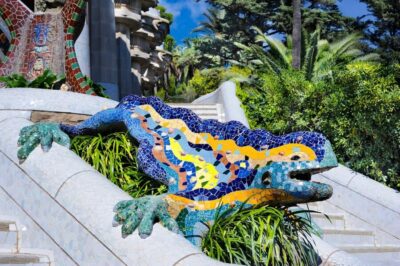
Park Güell and Gaudí House Museum Entry Ticket
Read our review →
Sagrada Familia & Gaudi Tour Private or Small Group with Tickets
Read our review →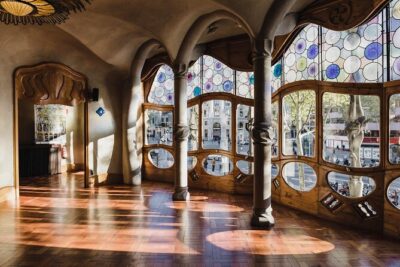
Complete Gaudi Tour: Casa Batllo, Park Guell & Sagrada Familia
Read our review →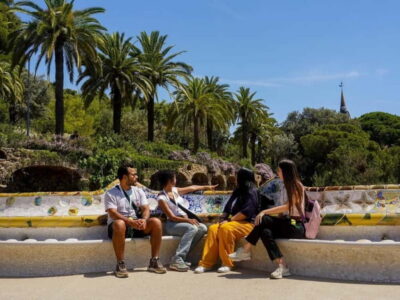
Park Güell: Guided Tour with Optional Gaudí Experience Entry
Read our review →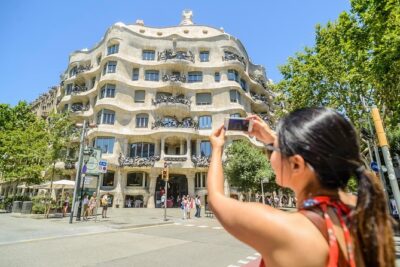
Barcelona e-Bike Tour: Gaudí & Old Town Small Group
Read our review →
Ramblas, Old Town, Gothic and Gaudi Architecture Walking Tour
Read our review →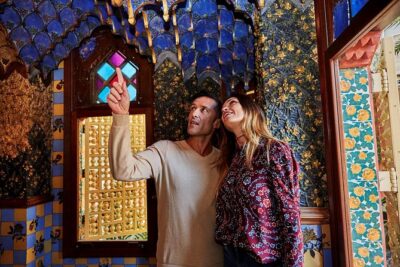
Gaudi´s Casa Vicens Skip the Line Ticket with Audioguide
Read our review →
Discover Gaudí, Sagrada Familia, and Park Güell
Read our review →Browse the lists this tour appears in