
Reviewed · HISTORICAL TOURS
El Born – Historic Heart of Barcelona
El Born feels like the Barcelona you can picture in your head, not just see on postcards. I love the step-by-step pacing, and I love the way the guide uses photos and stories to make old walls feel personal. One thing to consider: the walk is outdoors and parts have optional or separate entry costs, like at Santa Maria del Mar.
You’ll get a small-group experience (max 15), in English, with a mobile ticket you can show on your phone. If you want a quick hit of landmarks only, this might feel more like storytelling with stops to catch your breath and take photos.
Key things you’ll notice on this El Born experience
- A strong photo route that starts at Arc de Triomf and keeps giving you angles.
- Two “time layers” in one walk, medieval sites and modernist Barcelona.
- A market stop that’s actually useful, including tapas or drinks and a toilet break.
- 1714 memorial sites that explain why this neighborhood still matters.
- A museum inside an old market, where the medieval city is easier to visualize.
- A calm ending in Ciutadella Park, after you’ve toured the old streets.
Why El Born feels like the real Barcelona, not just the obvious stops
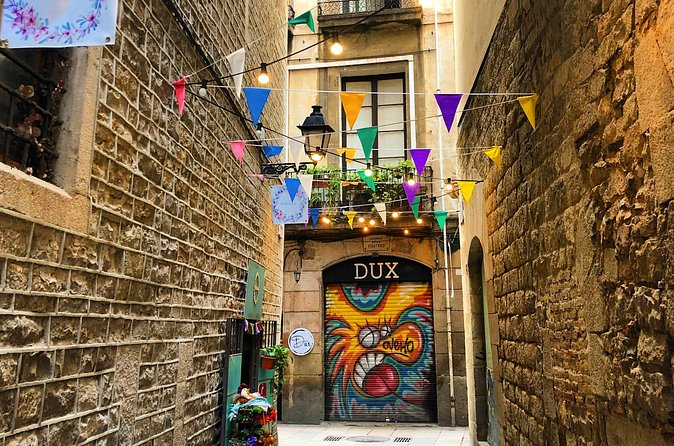
El Born is one of those places where the city’s shape still tells the story. Narrow streets and old stone make it easy to understand why Barcelona kept evolving instead of starting over. This tour works because it ties streets and buildings to people, faith, conflict, and daily life.
The best part for me is the guide-led commentary. You’re not just walking from one “important” thing to the next. You get context, plus images that help you see what medieval and early modern Barcelona looked like, even when you’re standing in the present.
You’ll also appreciate the photo opportunities. This is a route designed for real angles, not just “stand here and look that way.” Expect repeated pauses that feel natural, especially early on.
A few more ways to see Barcelona
- Barcelona: Tapas Walking Tour with Food, Wine, and History
★ 4.8 · 4,261 reviews - Barcelona Tapas Walking Tour: Food, Wine & History
★ 4.5 · 1,928 reviews - Barcelona: 2.5-Hour Bike or E-Bike Historical Tour
★ 4.5 · 1,262 reviews
Price and what $21.63 buys you (and why it feels fair)
At $21.63 per person for about 2 hours 30 minutes, you’re paying for guided interpretation, not museum-style entry time. The value shows up in three places: a local guide, structured stops with time to absorb them, and practical extras like restaurant recommendations and supporting photos.
Also, small group size matters. With a maximum of 15 people, you’re more likely to ask a question and hear the answer without shouting. That makes the history feel less like a lecture and more like a conversation that happens while you walk.
One practical note: not every site’s admission is included. The basilica stop lists admission not included, so you may want to budget a bit for that if you decide to enter.
The route: Arc de Triomf to Ciutadella Park in a smooth, story-driven loop
The walk runs from Arc de Triomf to the inside of Ciutadella Park, finishing near the end of the Lluis Companys promenade. The meeting point is right at Passeig de Lluís Companys, in Ciutat Vella, and the start time is 11:00 am.
The route is built like a timeline. You begin with a landmark from the late 1800s, then shift quickly into medieval Barcelona. After that, you move through modernist architecture and local food culture, then land on memorials connected to 1714, before ending in the big green space shaped by the 1888 exposition.
That flow is the “why” behind the tour. You’re not just ticking boxes. You’re watching Barcelona change eras without leaving the same neighborhood.
Stop by stop: what each place teaches you (and what to watch for)
Another side of Barcelona worth booking on the same trip:
- Barcelona: Park Güell Admission Ticket
★ 4.4 · 76,534 reviews - Barcelona: Casa Batlló Entry with Self-Audioguide Tour
★ 4.7 · 25,359 reviews - Barcelona: 24 or 48-Hour Hop-On Hop-Off Bus Tour
★ 4.4 · 20,872 reviews - Barcelona: Park Guell Guided Tour with Skip The Line Entry
★ 4.7 · 17,563 reviews
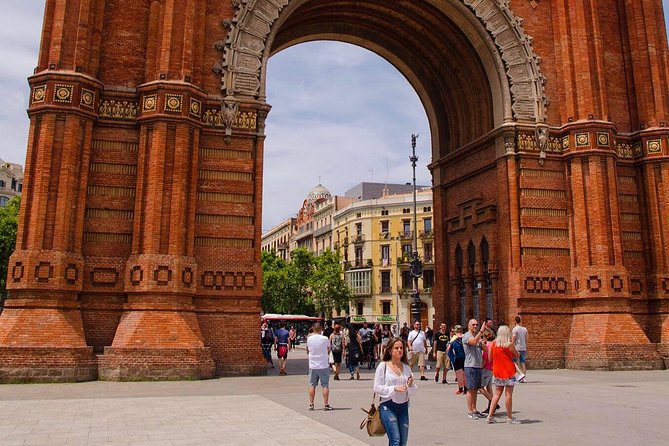
Arc de Triomf, your first big photo moment
You start at Arc de Triomf, built for the 1888 celebration. It’s a clean, photogenic opener that gives you a sense of scale right away. The guide uses this as a visual starting point for the tour, so you understand what kind of city you’re entering.
You’ll get around 20 minutes here, and it’s mostly about seeing, framing photos, and getting oriented. If you like to take pictures, this is a good place to settle in before the tighter streets begin.
Monasterio de Sant Pere de les Puel.les, medieval faith in plain stone
Next is Monasterio de Sant Pere de les Puel.les, dating to 945 AD. Even if you don’t read every detail, the age of it hits fast. The tour uses this stop to show why religion wasn’t a side note in medieval Barcelona, it shaped daily life.
The time here is also about 20 minutes, which is long enough to hear the explanation and still move on without feeling rushed.
What to watch for: stone and layout details. A lot of the meaning comes from how these spaces were built for community life.
Palace of Catalan Music, modernism you can feel with your eyes
Then comes the Palace of Catalan Music, a UNESCO modernist landmark. This is one of those stops where architecture becomes “storytelling” you can see. Expect the guide to point out features you might miss if you were just walking past, including how the building reads as both art and public culture.
You’ll get about 20 minutes here. It’s usually the best moment for people who love design, because the guide can explain the “why” behind the ornament without drowning you in technical terms.
If you’re coming from other parts of Barcelona, this stop is your reminder that the city’s identity is not only medieval, it also reinvented itself through modernism.
Mercado de Santa Caterina, tapas, drinks, and a real rest break
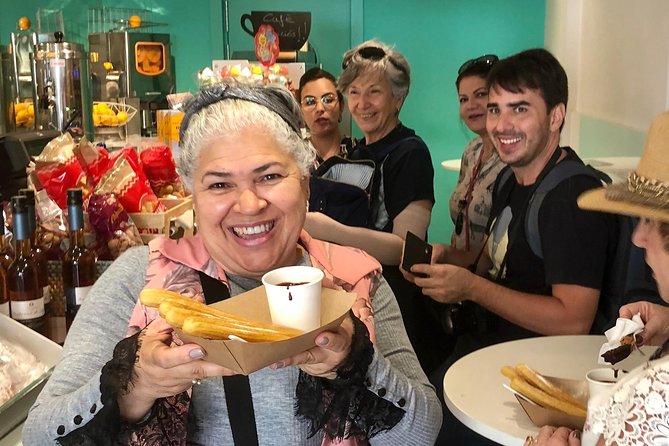
At Mercado de Santa Caterina, you shift gears from architecture to food and everyday Barcelona. This is the stop where you can try tapas and drinks, and yes, it’s also where you can use the toilet. That last part matters more than you think on a 2.5-hour walk.
You’re typically in this zone for about 20 minutes. The important detail is that refreshments are pay as you go, so you have control over what you order and your spending.
I like this kind of stop because it stops the tour from being purely visual. You’re tasting, people-watching, and cooling down a bit before the bigger emotional monuments.
Basilica de Santa Maria del Mar, perseverance explained through place
Santa Maria del Mar is described as the most important basilica in the old town, and the tour focuses on its story of perseverance and faith. This is one of the places where the guide’s narrative tone makes a difference. Instead of treating the church like a backdrop, the tour frames why this kind of building mattered enough to be finished and defended across time.
Plan for about 20 minutes here, and note the key downside: admission is not included. That means you’ll need to decide on-site whether you want to go in and pay the separate fee.
If you’re the type who likes to see inside as much as outside, bring a little extra budget and be ready to spend a bit more time here if you choose entry.
El Fossar de les Moreres, remembering 1714 where it happened
Next is El Fossar de les Moreres, tied to the tragic defeat in Barcelona’s history on September 11, 1714. The guide uses this stop as a turning point. Up to now, you’ve mostly been learning about culture and architecture. Here, you learn why this neighborhood still carries weight.
You’ll spend around 20 minutes at the monument. It’s also an important chance to slow down and let the story land. This stop can feel heavier than the market and basilica, but that’s the point.
El Born Centre de Cultura i Memòria, medieval Barcelona made visible
Then you head to the El Born Centre de Cultura i Memòria, an old market converted into a museum. The tour explains how you can still see parts of medieval Barcelona and why this space matters in the story around 1714.
Time is about 15 minutes. That’s enough for a guided orientation and to connect what you learned outside with what you see inside. If you like being able to visualize the past, this stop gives you the clearest “aha” moment of the whole walk.
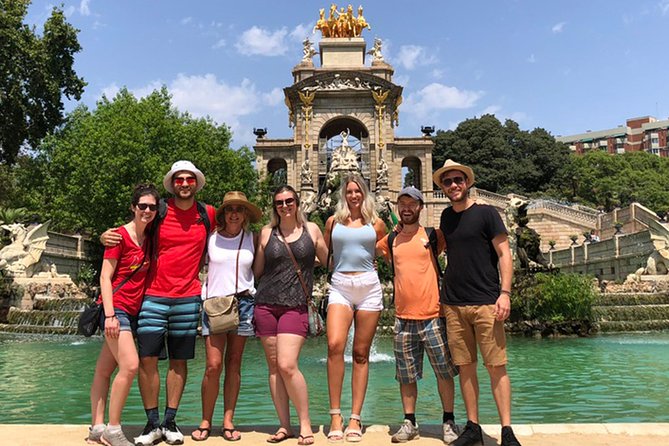
Parc de la Ciutadella, ending in a park shaped by the 1888 exposition
Finally, you finish in Parc de la Ciutadella, starting inside the park near the end of the promenade from where you began. The site began as a fortress built after the war of succession, then it later became the heart of Barcelona’s Universal Exposition in 1888.
You’ll have about 15 minutes to end the walk, stretch your legs in open space, and take in the calmer green setting after the tighter old streets.
It’s a good finish because it gives you a physical reset and makes the day feel complete.
What the guides do that makes this tour rate 5/5 in real life
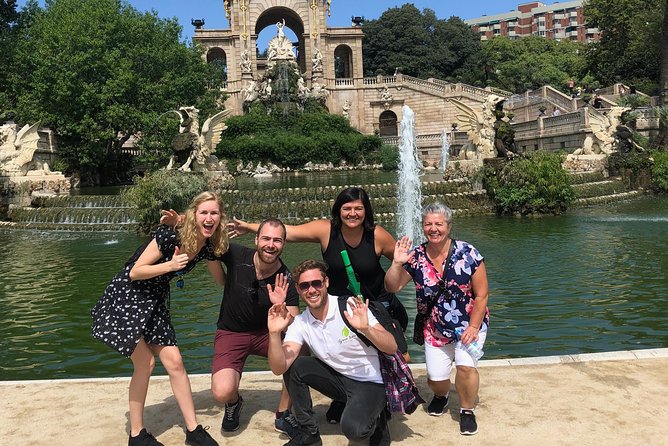
This tour’s reputation is strongly tied to the guides and their energy. In the reviews, names like Paulo and Alessio come up again and again. Both are described as enthusiastic, animated, and strong at turning architecture and dates into stories you can remember.
One very specific example: Paulo is noted for using an umbrella as a playful prop to act out a battle scene. That’s the kind of detail that keeps the tour from feeling like it’s reading from a script.
The other big win is interaction. Because the group is small, you can ask questions. That matters for people who want more than a basic overview, but don’t want a long academic style.
When this is the best fit for you

This tour is a great choice if you want:
- A guided walk that teaches you how to read a neighborhood
- Photo-friendly stops without running at full speed
- Architecture plus story, especially around faith and 1714
- A market break that connects history to daily life
It also suits you if you’ve already seen some of Barcelona’s biggest attractions and want something more specific and less generic. El Born is close enough to other central areas, but it feels like it has its own rhythm.
The best match is people who like being outside and don’t mind standing for short photo moments. If you want a mostly indoor experience with lots of long museum time, this may feel a bit too “walk and explain” for your taste.
Practical stuff before you go, so it feels easy
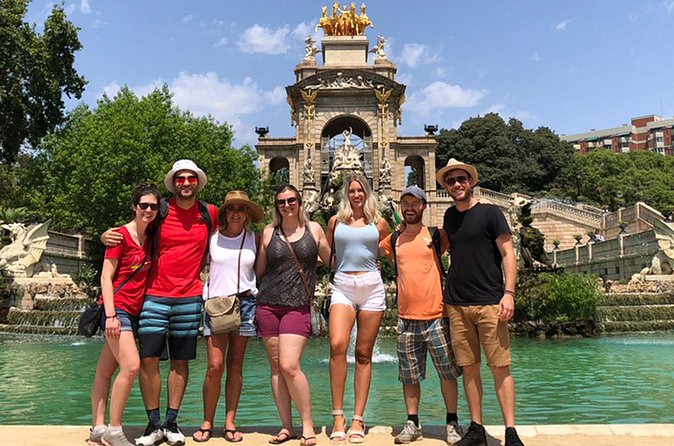
You’ll want to plan for a 2.5-hour walk that includes multiple monuments and viewpoints. The tour requires good weather, so if rain or strong wind shows up, you may see date changes or an alternate option.
You’ll also want to remember that snacks and bottled water aren’t included. You can grab your drinks or tapas at the market stop, but if you prefer water or a snack for later, plan to buy it yourself.
Lastly, you’ll leave with a list of restaurant recommendations and photos/images that help you understand what you just saw. That’s handy when you later realize you missed a detail and want to spot it again on your own.
Should you book this El Born tour?

If you want a guided, story-focused tour of El Born that balances buildings, food culture, and the emotional weight of 1714, I think it’s an easy yes. The small group size, guide energy, and the mix of photo stops plus a market break make it feel like more than the sum of its monuments.
I’d only hesitate if you strongly prefer fully included admissions at every stop, because Santa Maria del Mar requires separate admission. Also, if you hate walking in open air, keep the weather requirement in mind.
If you’re booking during peak weeks, this one gets reserved in advance, so securing your spot earlier helps you lock in your preferred date and time.
Recently reviewed in Barcelona
- Barcelona: Citizen Segway Tour★ 5.0 · 53 reviews
- Cathedral of Barcelona Entrance Ticket – Optional Private Guide★ 4.0 · 114 reviews
- Sagrada Familia Private Tour in Barcelona★ 4.5 · 23 reviews
- Montjuïc Cemetery Walking Tour – Hidden Art, History & Views★ 5.0 · 62 reviews
- Barcelona Gracia Neighborhood Local Food & History Tour★ 5.0 · 92 reviews
- Castle of Montjuic- 3H Segway Tour★ 5.0 · 3 reviews
- Barcelona Old Town Tour With Optional Flamenco Show★ 5.0 · 42 reviews
- Guided private morning tour of La Pedrera with Casa Batlló ticket★ 5.0 · 14 reviews
Historical Tours, compared.

Tapas Walking Tour with Food, Wine, and History
Read our review →
Barcelona Tapas Walking Tour: Food, Wine & History
Read our review →
Barcelona Erotic Museum – Explore Art, History & Fun
Read our review →
Andorra Original History and Sightseeing Tour (Private, Pickup)
Read our review →
Tarragona and Sitges Small Group Tour – Roman History & Culture
Read our review →
Girona History and Legends Tour Small Group from Girona
Read our review →Browse the lists this tour appears in