
Reviewed · GOTHIC QUARTER TOURS
Gothic Quarter & Beyond: Leisurely Local Discoveries
This is interesting because it connects Barcelona’s medieval streets to Roman leftovers and music royalty, without rushing you through the loudest stops. You’ll get a small group pace and an eat-like-a-local style snack break, while your guide points out what most people walk right past.
I especially like two things: the chance to ask questions, since the group caps at 12, and the focus on spots that are built for photos even when the crowds thin out. One name that comes up often is Laura, and her explanations are clear and easy to follow.
The main tradeoff is time. In about 3 hours 30 minutes, you cover quite a bit on foot, and the tour needs good weather, so plan for comfort and flexibility.
Key things to look forward to
- Small-group pace (max 12), so questions do not get swallowed by the noise
- Traditional local snack included, a good way to refuel mid-walk
- A mix of convents, chapels, and churches, not the usual only-big-sites itinerary
- Free entry stops with your ticket, so you spend less time worrying about costs
- Photo-friendly corners, including lesser-noticed architecture and courtyards
- Barcelona’s layers on display, from 10th-century monastic life to Roman-era stone
A small-group Gothic Quarter walk at a comfy pace
Barcelona’s Gothic Quarter can feel like an open-air maze. This tour helps you turn that maze into a story. Instead of zigzagging randomly, you walk with a plan that moves you through religious buildings, old city foundations, and a couple of major cultural landmarks. The pace is leisurely enough that you are not speed-walking just to keep up, but it still feels like a real sightseeing block, not a slow stroll that runs out of momentum.
The big value here is your access to the guide. With a maximum of 12 people, you are more likely to get direct answers, not just a general speech. That matters in places where details change everything, like when you hear why a convent was abandoned or how a church evolved over centuries.
And then there is the food. A traditional snack is included, which sounds small, but it changes the whole feel of a walk. You are not just looking at old stones, you are also taking a breath like a local would, with something to nibble while the neighborhood does its thing around you.
More Gothic Quarter walks:
- Barcelona Gothic Quarter Tapas & Taverns Food & Wine Tour
★ 5.0 · 1,470 reviews - Barcelona: Old Town and Gothic Quarter Walking Tour
★ 4.8 · 1,393 reviews - Barcelona Old Town & Gothic Quarter Small Group Tour
★ 5.0 · 1,308 reviews
Where you start, where you end, and how the route strings together
The tour begins near Carrer del Palau de la Música, in the Ciutat Vella area, and finishes at the Museu Frederic Mares by Plaça Sant Iu. Starting and ending in that central pocket is practical because you do not have to manage a long commute across town. You also end near another cultural site, so if you still have energy, you can keep exploring on your own.
The route is designed around short “photo plus context” stops. Many locations include free entry with your ticket, so you are not forced into long ticket lines. You spend about 5 to 10 minutes at each stop, which is enough time to understand what you are looking at and still move along before the group gets restless.
One small consideration: some of these spaces are courtyards, churches, and interior areas that can feel cool or dim compared with the street outside. That is normal for historic buildings, just come prepared for light changes and wear shoes that work well on older stone.
Stop by stop: convents, chapels, and quiet churches you will actually remember
This tour’s best trick is mixing big names with smaller, quieter stories. You get several layers of Barcelona’s religious life, and each stop adds a piece to the larger puzzle of who lived here, what changed, and why.
Centre Cívic Convent de Sant Agustí (where a convent became a civic hub)
Your first stop is the Convent of Sant Agustí Vell, with its timeline stretching back to 1349. What makes this fascinating is the way the story bends around politics and military needs. The Augustinians had to abandon the earlier site because of the Fortress of the Ciutadella. Between 1728 and 1750, they created a new convent with its church.
Today, much of the old convent area is used as the Ciutat Vella Civic Centre. You also find spaces tied to the Barcelona Photographic Archive and the Chocolate Museum. Even if you do not plan to enter everything, it helps to see how Barcelona keeps reusing older structures instead of letting them freeze in time. The Gothic-era wing and parts of the church were restored, so you still get those older architectural cues rather than a total rebuild.
One practical note: this is a short stop, so look first at the restored elements, then read what you can on-site, so your photos do not turn into random snapshots.
Another side of Barcelona worth booking on the same trip:
- Barcelona: Park Güell Admission Ticket
★ 4.4 · 76,534 reviews - Barcelona: Casa Batlló Entry with Self-Audioguide Tour
★ 4.7 · 25,359 reviews - Barcelona: 24 or 48-Hour Hop-On Hop-Off Bus Tour
★ 4.4 · 20,872 reviews - Barcelona: Park Guell Guided Tour with Skip The Line Entry
★ 4.7 · 17,563 reviews
Sant Pere de Puelles (10th-century monastic life, then hard times)
Next is Sant Pere de Puelles. The history here goes back to 945 AD, when the monastery was consecrated. It became Barcelona’s first convent of Benedictine nuns. That early date is the kind of detail that makes a walk feel educational instead of just scenic.
The building also tells a story of shifting fortune. It started outside the city walls, in a Romanesque form, then faced attacks by Arab troops and also fires. Later, in the 19th century, the religious community was expelled, and the nuns moved to a permanent site in Sarrià-Sant Gervasi in 1879.
Why I like including a place like this is that it gives you cause and effect. You see how a neighborhood’s borders move, and you learn that today’s Barcelona streets were shaped by decisions made centuries ago, with plenty of interruption along the way.
Capella d’en Marcús (a chapel that served travelers and the poorest)
Then comes Capella d’en Marcús, tied to Bernat Marcús, an influential Barcelona citizen. He sponsored the construction of a small chapel in 1166, and the purpose was practical, not just spiritual. It was meant to house travelers and also act as a hospital for the poorest people in Barcelona.
You will also hear about its earlier name, Capella de la Mare de Deu de la Guia. That name matters because the chapel was placed along the old Roman road that led to France. In other words, the building sits at a crossroads of movement, charity, and long-distance travel.
This is one of those stops where you might think, a small chapel, why should I care? But after the context, it becomes a pinpoint in the city’s map of human needs, not just a pretty façade.
Basilica dels Sants Martirs Just i Pastor (the oldest-church question, answered by atmosphere)
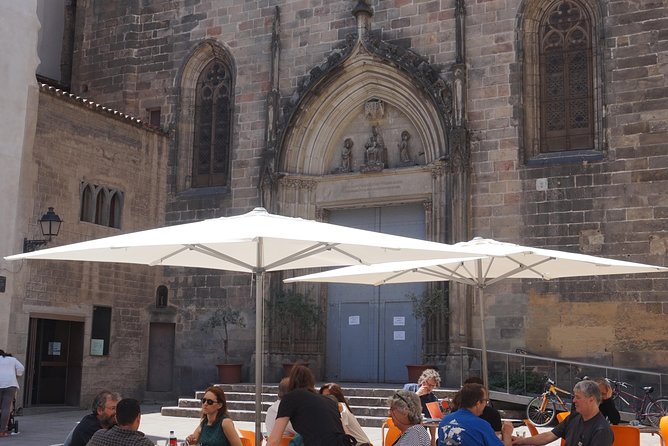
After that, you reach Basilica dels Sants Martirs Just i Pastor. Tradition says it is Barcelona’s oldest church. Even if you treat that claim as a story worth hearing rather than a sealed fact, the building still impresses. It is a 14th-century church in one of the Gothic Quarter’s most beautiful and less-visited pockets.
This stop is a reminder that Barcelona’s “main sights” are only part of the picture. When you step into this kind of quiet space, you get a sense of scale and medieval faith without the pressure of a packed tour bus nearby.
If you care about architecture, keep an eye out for how the Gothic Quarter’s medieval character still looks intact here, even as everything around it has modern layers.
The Palau de la Música moment: when music and UNESCO meet street level
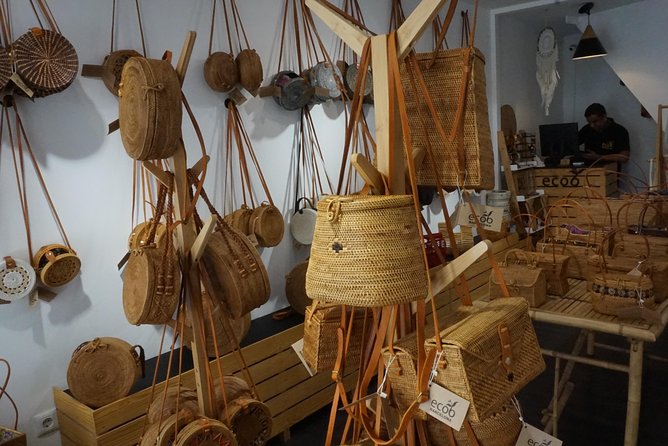
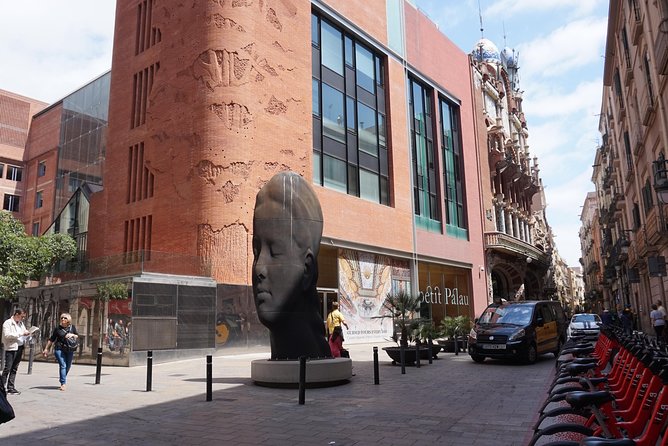
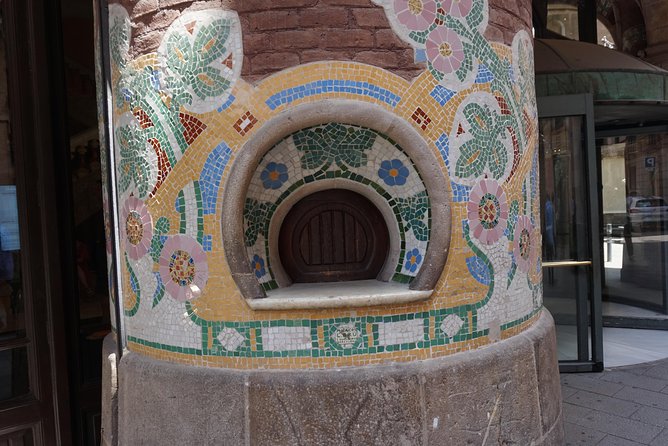
One of the most rewarding stops is the Palau de la Música Catalana, Barcelona’s UNESCO World Heritage Site concert hall. It is designed by architect Domènech i Montaner as the home of the Orfeó Català choir, funded by public donations. That funding detail is worth noticing because it frames the building as a community project, not just a grand private showpiece.
From a traveler’s viewpoint, this stop does two things at once. First, it gives you a major architectural highlight that many people know by name. Second, your guide helps you see it as more than a landmark photo, with an explanation of how music, identity, and civic pride shaped the building.
You also get practical value from including it on a walking tour. It means you can compare it immediately with the older religious stops you just saw, so you start noticing differences in design and purpose. That mental contrast is what makes the walk stick.
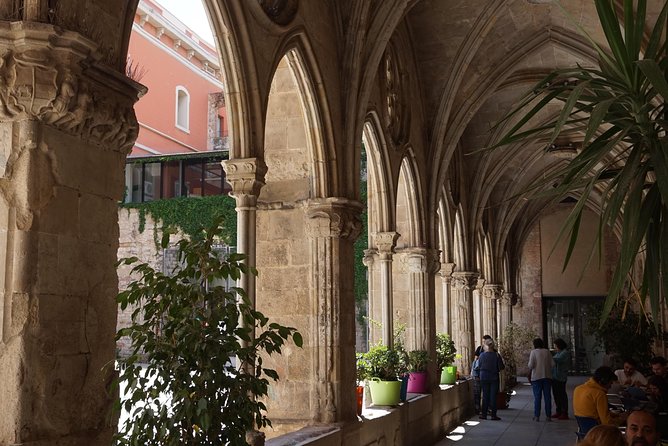
MUHBA Temple d’August: Roman columns in a medieval courtyard
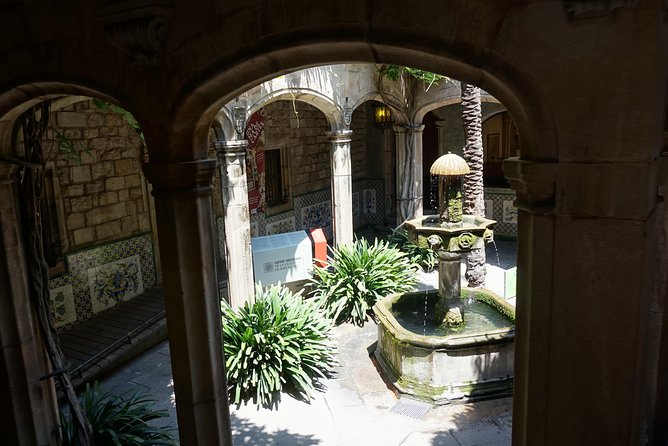
After the palau, the tour slows you down for a very specific kind of awe. At MUHBA Temple d’August, you find one of Barcelona’s best-kept secrets, a small medieval courtyard with four surviving columns from the Temple of Augustus.
These columns are more than 2,000 years old. That number stops being abstract once you are standing in the space, surrounded by newer layers around the old stone. It is the kind of place where your photos turn out better because there is a frame, the courtyard walls, plus the vertical rhythm of columns.
The key here is mindset. When you visit, do not rush for the perfect shot. Look up. Then look around. You are seeing how the city preserved a Roman presence inside a later urban structure.
If you like Roman ruins but hate spending hours in excavation sites, this is a good compromise. Short, focused, and extremely photoable.
Museu Frederic Marès: turning a former palace into objects you can actually see
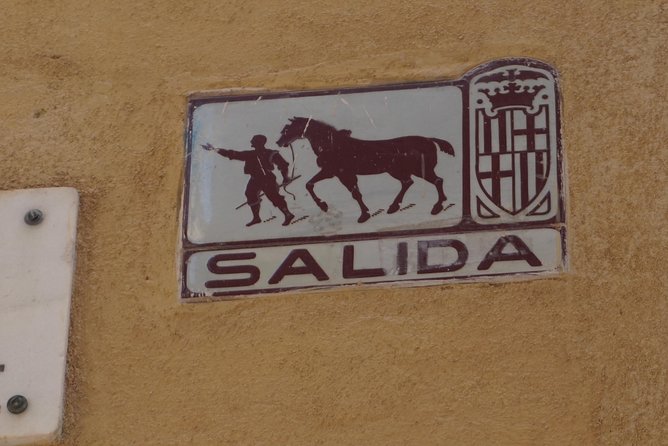
Your final stop brings you to the Museu Frederic Marès. The museum sits in the heart of the Gothic Quarter and is partly in a former royal palace that once belonged to the Counts of Barcelona. That palace context helps you understand why the museum feels grounded in power and daily life at the same time.
Frederic Marès collected artworks and objects over his lifetime, and the museum displays an extensive collection. Even if you only scratch the surface in a single visit, you get a sense of what someone’s private collecting eye can tell you about taste, craft, and local culture.
What makes the ending here smart is pacing. After churches and courtyards, a museum offers a different kind of quiet. You can continue exploring at your own tempo, especially if you want more detail than a walking stop allows.
Price and value: what $61.54 buys you in real time
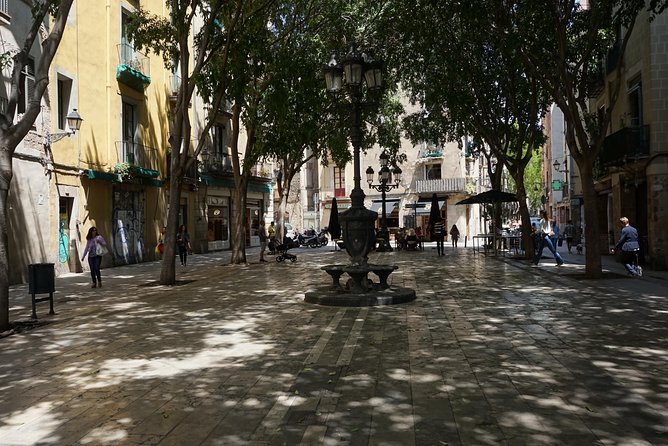
At about $61.54 per person, this is priced like a guided neighborhood experience, not a budget “just walk with us” thing. You get a few cost-saving factors that matter: mobile ticketing, English-language guidance, a small group capped at 12, and multiple stops where entry is free with your ticket.
The included snack adds value too. Food costs add up in Barcelona, and having a scheduled bite is convenient. It also keeps the tour from feeling like constant sightseeing without a break.
Duration matters as well. About 3 hours 30 minutes is long enough to see several distinct places, but short enough that you can still handle lunch plans afterward. For me, that balance is a big part of the value equation.
If you are deciding based on what you care about, here is the honest breakdown:
- If you want architecture and layered storytelling, you will feel satisfied.
- If you only want the most famous exterior sights, you may wish for more time at fewer landmarks.
- If you hate walking, you might feel the effort, because this is built as a sequence.
Who should book this tour, and who might want a different style
This tour fits best if you like guided context, not just photos. You will enjoy it if you care about how Barcelona’s past changed shape over time, especially through monastic life, religious institutions, and civic uses of old spaces.
It also works well if you appreciate lesser-noticed architecture. The itinerary leans toward beautiful, quieter corners, plus one major icon in the Palau. That mix keeps it interesting without turning into a checklist of the same big names.
You might want a different option if you are looking for long stays in museums or if you prefer a route that focuses almost entirely on one famous district with minimal walking.
Either way, do not underestimate the benefit of a small group. In a place like the Gothic Quarter, that small difference can mean the difference between learning and just walking.
Should you book: my practical take
Yes, I would book this tour if your goal is to understand the Gothic Quarter’s feel and layers without spending hours mapping it yourself. You get a thoughtful mix of convent stories, a Roman-era survival, a UNESCO concert hall, and a museum ending that is easy to build on.
Book it when the weather looks good, bring comfortable shoes, and be ready to stop and look up. If you want a guided walk that makes Barcelona’s older streets feel connected and meaningful, this one does that while still leaving you time for your own wandering afterward.
FAQ
How long is the tour?
It runs for about 3 hours 30 minutes.
What is the price per person?
The price is $61.54 per person.
Is the tour in English?
Yes, it is offered in English.
What is the group size?
The tour has a maximum of 12 travelers.
Where does the tour start and end?
It starts at Carrer del Palau de la Música, C/ Palau de la Música, Ciutat Vella, 08003 Barcelona. It ends at Museu Frederic Mares, Plaça Sant Iu, 5, Ciutat Vella, 08002 Barcelona.
Are admissions included?
Many of the stops are listed as admission ticket free, and you receive a mobile ticket.
Do I need good weather?
Yes, the tour requires good weather. If it is canceled due to poor weather, you will be offered a different date or a full refund.
Is cancellation free?
Yes, cancellation is free. You can cancel up to 24 hours in advance of the experience for a full refund.
Recently reviewed in Barcelona
- Barcelona: Citizen Segway Tour★ 5.0 · 53 reviews
- Cathedral of Barcelona Entrance Ticket – Optional Private Guide★ 4.0 · 114 reviews
- Sagrada Familia Private Tour in Barcelona★ 4.5 · 23 reviews
- Montjuïc Cemetery Walking Tour – Hidden Art, History & Views★ 5.0 · 62 reviews
- Barcelona Gracia Neighborhood Local Food & History Tour★ 5.0 · 92 reviews
- Castle of Montjuic- 3H Segway Tour★ 5.0 · 3 reviews
- Barcelona Old Town Tour With Optional Flamenco Show★ 5.0 · 42 reviews
- Guided private morning tour of La Pedrera with Casa Batlló ticket★ 5.0 · 14 reviews
Gothic Quarter Tours, compared.

Barcelona Gothic Quarter Tapas & Taverns Food & Wine Tour
Read our review →
Gothic Quarter Ghosts and Legends Walking Tour
Read our review →
Barcelona Old Town & Gothic Quarter Small Group Tour
Read our review →
El Born and Gothic Quarter Wine & Tapas Bar Tour
Read our review →
Kids and Family Gothic Quarter Walking Tour in Barcelona
Read our review →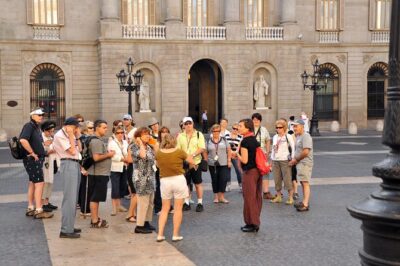
Browse the lists this tour appears in