
Reviewed · GOTHIC QUARTER TOURS
Photo Walking Tour Barcelona Cathedral Gothic Quarter El Born
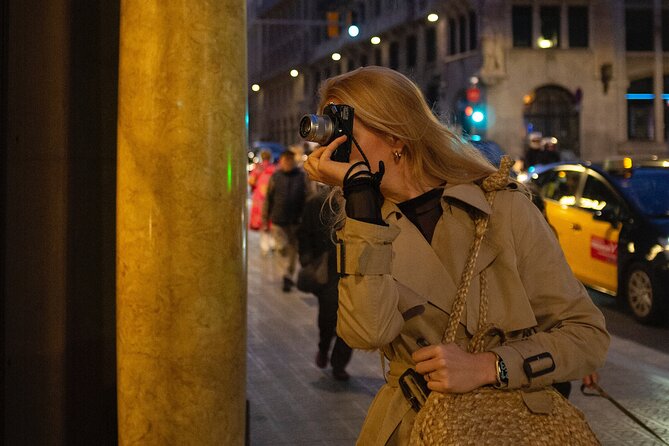
Barcelona is gorgeous, but this experience is about learning how to see it. You’ll move through El Born and the Gothic Quarter with a guide who focuses on photo angles, reflections, and composition you can use the second you step outside. I especially like that you can do it with just your phone, and I also like the small group, up to 10, where guide Leonardo can give you personal feedback. One thing to consider: it depends on good weather, since this is an outdoor walk with short stops.
I found the promise of personal coaching to be the big difference. You are not stuck watching someone else take photos while you just click away. With a guide like Leonardo, you get practical tips that help your images look less like snapshots and more like purposeful frames, even when you are using a mobile phone.
The route also makes smart sense. You get a mix of architectural styles and photo subjects without any fancy gear, and the tour is designed for English speakers with a mobile ticket. Still, each stop is brief, so if you want long time inside major buildings, this is more about the street-level photo opportunities than deep museum time.
Key things to know before you go
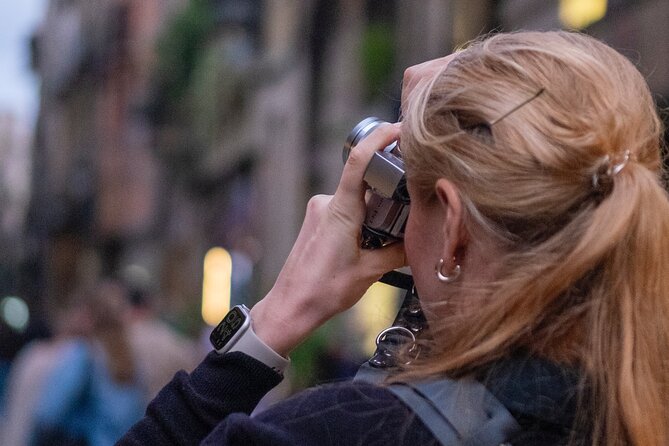
- Phone-first coaching that helps you improve on the fly, no fancy equipment needed
- Small group (max 10) so you can actually ask questions and get guidance
- A compact 2-hour route that links El Born and the Gothic Quarter efficiently
- Free-entry stops on the route for a low-stress, wallet-friendly photo outing
- Architectural variety from Estació de França and Ciutadella Park to Gothic cathedral viewpoints
- Weather matters because you’re outside most of the time, walking between photo moments
A photo walk that teaches you angles, not just places
This is the kind of Barcelona tour I like for people who want more than a checklist. Yes, you’ll see famous landmarks. But the point is learning how to photograph them so your images look intentional. The guide’s focus is on the way you frame a scene, how you use lines and reflections, and how you find angles that make the city feel more three-dimensional.
I also like that the tour does not make you bring gear. You can use your iPhone or Android, and you can bring any camera that works for you. That matters because in Barcelona, your best photo moments often appear when your hands are free and your setup is simple.
The practical bonus is that you leave with skills you can keep using. After this, you’ll be more likely to notice light direction, foreground elements, and repeating patterns in buildings and streets. That is the real value: you are not just collecting photos, you are learning how to collect them better.
More Gothic Quarter walks:
- Barcelona Gothic Quarter Tapas & Taverns Food & Wine Tour
★ 5.0 · 1,470 reviews - Barcelona: Old Town and Gothic Quarter Walking Tour
★ 4.8 · 1,393 reviews - Barcelona Old Town & Gothic Quarter Small Group Tour
★ 5.0 · 1,308 reviews
Price and value: what $59.90 covers, and what it does not
At $59.90 per person for about 2 hours, you are paying for instruction and guidance, not admission fees or transportation. The tour includes individual tips to help you improve your photos, and the stops on the route are marked as free admission.
Here’s how I think about the value:
- You get a guide to point out viewpoints you might miss on your own, especially in areas packed with tourists.
- You get feedback that targets your specific photos and your device, which is harder to get if you are on your own wandering with no plan.
- You do not have to add costs for food or entry tickets on the route, which keeps the outing budget-friendly.
What is not included is also clear. You bring your own phone or camera. Food and drinks are not included, and the tour does not provide transportation to and from the meeting point. So come with your plan: comfortable walking shoes and a phone charged up.
The route flow: El Born to the Gothic Quarter without the confusion
The tour starts at Estación de Francia and ends back at the meeting point. That loop matters because it keeps things organized. You are not trying to figure out where you are supposed to be next while dragging a camera around.
The pacing is built around short photo sessions. Each stop is listed for about 10 minutes, with a couple longer moments early on. That gives you just enough time to look, shoot, and adjust, without turning the tour into a full day.
Also, the route layout is smart for photos. You begin with large, open architectural spaces, move into a green park for softer light and wide angles, then shift into dense medieval streets where reflections, doorways, and stone textures become the story.
Stop 1: Estació de França, big structure shots close to the city core
You kick off at Estación de França, at Av. del Marquès de l’Argentera, 6 in Ciutat Vella. This major train station is known for its elegant architecture and historical importance, inaugurated in 1929 to handle railway traffic during the International Exposition of Barcelona.
Photo-wise, this is a great first stop because the station offers strong geometry. You can look for:
- Symmetry in the building lines
- Wide-angle compositions that show scale
- Details where the structure meets the urban environment
This start also helps you get warmed up. You begin with an easier subject than the narrow streets later on, so it’s a smooth way to start thinking like a photographer rather than just a tourist.
More walking tours in Barcelona:
- Barcelona Tapas and Wine Experience Small-Group Walking Tour
★ 5.0 · 5,804 reviews - Barcelona: Tapas Walking Tour with Food, Wine, and History
★ 4.8 · 4,261 reviews - Barcelona Tapas Walking Tour: Food, Wine & History
★ 4.5 · 1,928 reviews - Barcelona: Tapas Food Crawl Walking Tour with Tastings
★ 4.9 · 1,798 reviews
Stop 2: Parc de la Ciutadella, where you can practice light and framing
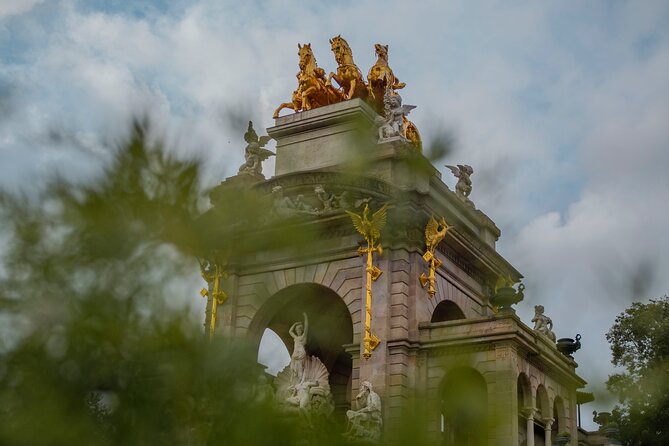
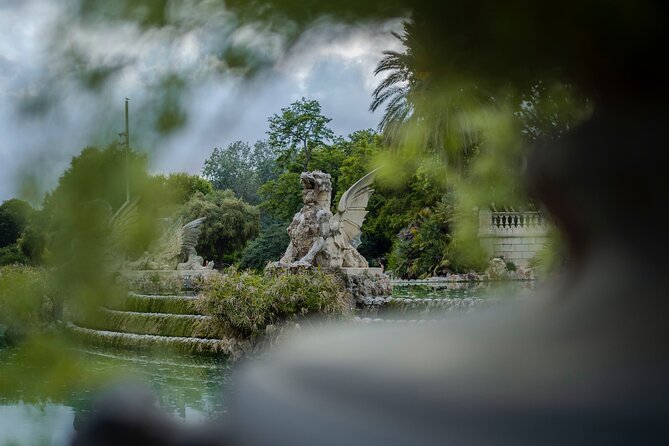
Next up is Parc de la Ciutadella, a green oasis in El Born not far from Estación de França. The park was designed for the 1859 Barcelona Universal Exposition, and that background makes it feel like more than just a place to rest.
From a photography standpoint, parks give you options that buildings cannot. You can:
- Shoot wider views with trees and pathways
- Find leading lines in paths and railings
- Work with natural light filtering through leaves
A 20-minute pause is the right length for experimentation. You can test a few angles, switch between portrait and landscape framing, and get a feel for how your camera handles contrast in outdoor shade.
Stop 3: Arc de Triomf, Neo-Mudéjar shapes and easy “wow” angles
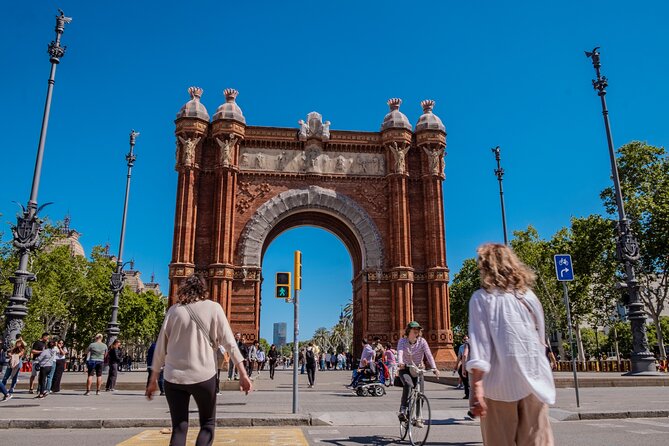
From the park, it’s a short walk to Arc de Triomf. This triumphal arch was built in 1888 for the Universal Exposition and is a striking example of Neo-Mudéjar architecture.
This is one of those stops where a good angle makes the photo. You can stand in spots that show the arch’s structure head-on, then step slightly to catch it at an angle for depth. Since the tour is phone-friendly, you can also use your screen to check framing quickly and adjust without fiddling.
If you enjoy learning by copying a shot, this is the kind of landmark where you can try the guide’s suggestions and see the difference fast.
Stop 4: Palau de la Música Catalana, Modernisme details that reward close looking
Then you reach Palau de la Música Catalana, at Carrer Palau de la Música, 4-6. This is one of Barcelona’s most stunning architectural gems, designed by Lluís Domènech i Montaner, a key figure in Catalan Modernisme.
A building like this is great for photo learning because the details are worth chasing. Even when you are limited by time, you can focus on:
- Ornamental elements that create texture
- Patterns that repeat across façades
- Contrasts between carved stone and open shapes
One consideration: the tour gives about 10 minutes here. That’s usually enough to grab a few strong frames, but not enough for slow, obsessive detail hunting. If you love architectural photography, plan to come back again later on your own.
Stop 5: Plaça de Isidre Nonell, El Mon Neix En Cada Besada as a change of mood
The next stop is El Mon Neix En Cada Besada at Plaça de Isidre Nonell in the Raval district. The title translates to The World Begins in Every Kiss, which hints at a poetic, more intimate experience compared to the big monuments earlier on.
This is a helpful pause in the route because it changes the visual style. Instead of only wide architectural shots, you can look for calmer compositions and a different kind of storytelling image.
Since the tour keeps moving, treat this as a chance to reset your eye. Shoot a few frames that feel more personal or atmospheric, then get ready for the high-drama stone of the Gothic Quarter.
Stop 6: Barcelona Cathedral, Gothic façades and phone-scale drama
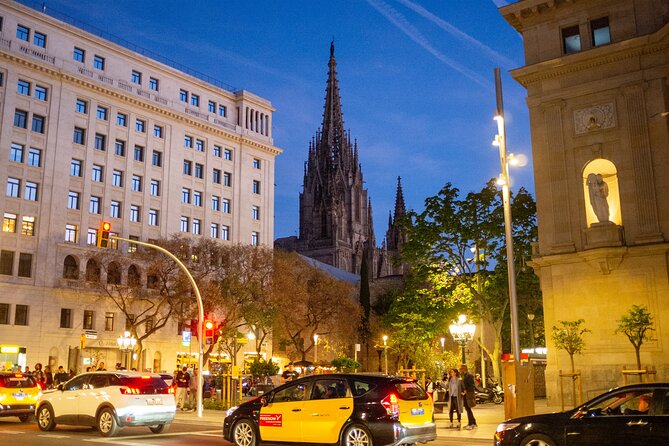
Now you enter the Gothic Quarter proper with Barcelona Cathedral, officially Catedral de la Santa Creu i Santa Eulàlia, located at Pla de la Seu.
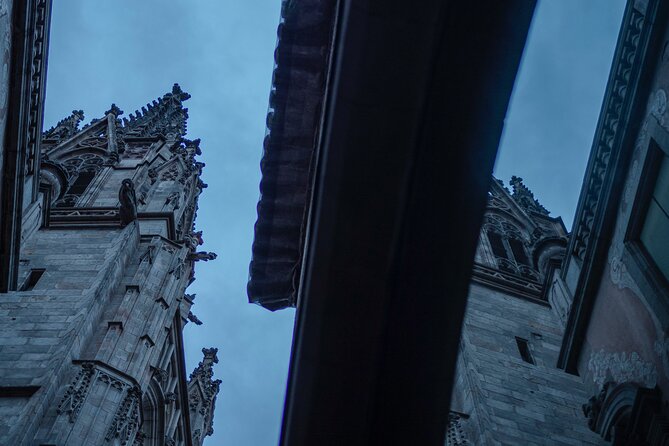
This is a must-see landmark and one of the area’s biggest Gothic architecture icons. Photo-wise, cathedral exteriors can be tricky because they are tall and you’re surrounded by other structures. That’s exactly why having a guide helps. A good angle can reduce visual clutter and make the cathedral feel like the main character.
In a short stop, I’d focus on:
- Lines that lead toward the cathedral
- Vertical framing to emphasize height
- Close-up detail shots that avoid turning your image into a crowded wide scene
This is also where reflections, shadows, and stone texture start mattering more. If you want photos that look different from the usual wide postcard view, this is where you can make that happen.
Stop 7: Casa de l’Ardiaca and Pont del Bisbe, narrow spaces with strong geometry
After the cathedral, you visit Casa de l’Ardiaca at Carrer de Santa Llúcia, 1. The name Ardiaca refers to the archdeacon position in the medieval cathedral system, giving the building a deep historical tie to Barcelona’s religious and civic life. It’s valued for architecture and its connection to the city’s broader past.
Next is Pont del Bisbe, the Bishop’s Bridge on Carrer del Bisbe. It connects two buildings of the Palau de la Generalitat and is a beautiful example of Gothic Revival architecture.
These two stops are ideal for learning because narrow streets force you to choose angles carefully. You’ll likely find that moving a step left or right changes the whole frame. This is also where you can benefit from guidance on:
- Using frames within frames
- Finding the angle that minimizes distractions
- Capturing reflections when surfaces cooperate
A quick note: because streets can be busy, your best shots may require patience and small adjustments. Ten minutes can fly by, so keep your phone ready and your settings simple.
Stop 8: Plaça de Sant Jaume, the civic center shot you’ll actually remember
Plaça de Sant Jaume is one of the most historic and central squares in Barcelona. It’s in the heart of the Gothic Quarter and has been a focal point for centuries.
Squares offer a different kind of photo challenge. Instead of chasing details, you work with composition and balance. Try capturing:
- The square’s layout and open space
- Architectural edges that form a frame around you
- A balanced wide shot that shows what makes the place feel central
This is also a great spot to slow your photo rhythm. If you’ve been rushing earlier stops, a square gives you breathing space to adjust without constantly moving.
Stop 9: Plaça Sant Miquel, a quieter square for calmer compositions
Plaça Sant Miquel is smaller and more tranquil than the big-name squares nearby. It’s historically significant, but it also offers a calmer feel that can make your photos stand out by not looking like a rush-job.
This stop is a good place to practice a simple technique: shoot fewer frames, but make them cleaner. You can look for softer light and simpler backgrounds, then focus on the architecture edges and the way the square’s corners pull your eye.
Stop 10: Plaça Reial, lively atmosphere and elegant night-ready architecture
Plaça Reial is one of Barcelona’s most iconic and vibrant squares, just off La Rambla. It’s known for elegant architecture and a lively atmosphere, and it remains historically significant.
Even if you’re there in daylight, this square is photo-friendly because it gives you strong structure and social energy. You can capture:
- Architectural forms and repeating details
- People in motion for scale
- Framing that includes both the square’s elegance and real life
Since this is in the final stretch, I recommend saving your most creative attempts for here. Your eyes will be trained by then, and you’ll know what angles have been working for you.
What you’ll learn about phone photography on the street
This tour is built on the idea that better photos come from habits, not gear. The included guidance is individual, meaning you can ask for advice tied to what you’re doing right now.
Based on what I’ve seen from this kind of coaching, and what’s been reflected in strong feedback from past participants, the lessons you’re likely to hear include:
- How to find stronger angles that make landmarks feel more 3D
- How to use reflections and surfaces when you spot them
- How to frame compositions so your images look planned, not accidental
- How to use your phone in ways that hold up, even in busy areas
One review highlight that matters for you: people have described getting help that works for both mobile phones and DSLR cameras. That tells me the guide adapts his advice to your tool, which is what you want when you are not bringing specialized equipment.
Practical tips so you enjoy every stop
A few things will make the tour feel smoother and more rewarding:
- Charge your phone fully before you leave. You will likely take many more photos than you expect.
- Bring a small amount of water if you run hot, since the tour relies on walking and good weather. Food is not included.
- Dress for sun and shade. Cathedral stone and park paths can swing the lighting fast.
- Keep your phone ready instead of switching apps constantly. Quick framing checks help more than long experiments.
Also, remember the tour ends back at the starting meeting point. Plan your day so you can return to your next plan without stress.
Who should book this photo walking tour
This tour is a great fit if you fall into one of these buckets:
- You want better photos without learning a complicated camera setup
- You like history and architecture, but you care just as much about images that look good in your camera roll
- You want a small group setting, max 10, where you can get targeted tips
- You are traveling with a phone and want guidance specific to mobile photography
It may be less ideal if you want long time inside major sites. The focus is street-level photography and quick, high-impact stops. Think short sessions with coaching, then do longer independent visits on your own later.
Should you book? My call
I’d book this if you want a guided photo strategy in a compact route through Barcelona’s most photogenic zones. The price is reasonable for what you get: individual tips, a small group, and a route packed with subjects that teach you how to see. The fact that you can use a phone and you do not need to bring gear is a major plus for real travel days.
I’d hesitate only if weather is uncertain, because the experience requires good weather. Also, if you hate walking or you need lots of time at one stop, the short timing may feel rushed. If that sounds like you, consider a longer independent plan.
FAQ
How long is the photo walking tour?
The tour is listed as about 2 hours.
How many people are in the group?
The tour has a maximum of 10 travelers.
What language is the tour offered in?
It is offered in English.
Do I need to bring a camera?
Yes. You should bring your own mobile phone or camera that works for you. No camera equipment is provided.
Are food or drinks included?
No, food or drinks are not included.
What is the meeting point and where does it end?
It starts at Estación de Francia, Av. del Marquès de l’Argentera, 6, Ciutat Vella, 08003 Barcelona, Spain. It ends back at the meeting point.
What happens if the weather is bad?
The experience requires good weather. If it is canceled due to poor weather, you will be offered a different date or a full refund.
Recently reviewed in Barcelona
- Barcelona: Citizen Segway Tour★ 5.0 · 53 reviews
- Cathedral of Barcelona Entrance Ticket – Optional Private Guide★ 4.0 · 114 reviews
- Sagrada Familia Private Tour in Barcelona★ 4.5 · 23 reviews
- Montjuïc Cemetery Walking Tour – Hidden Art, History & Views★ 5.0 · 62 reviews
- Barcelona Gracia Neighborhood Local Food & History Tour★ 5.0 · 92 reviews
- Castle of Montjuic- 3H Segway Tour★ 5.0 · 3 reviews
- Barcelona Old Town Tour With Optional Flamenco Show★ 5.0 · 42 reviews
- Guided private morning tour of La Pedrera with Casa Batlló ticket★ 5.0 · 14 reviews
Gothic Quarter Tours, compared.
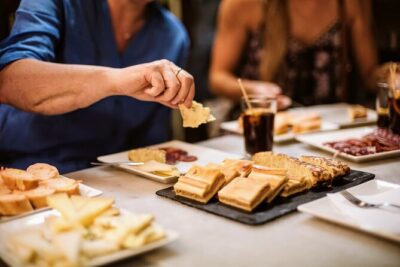
Barcelona Gothic Quarter Tapas & Taverns Food & Wine Tour
Read our review →
Gothic Quarter Ghosts and Legends Walking Tour
Read our review →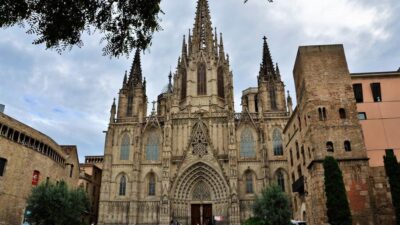
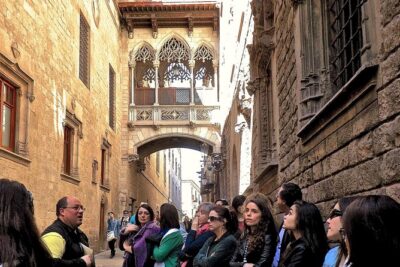
Barcelona Old Town & Gothic Quarter Small Group Tour
Read our review →
El Born and Gothic Quarter Wine & Tapas Bar Tour
Read our review →
Kids and Family Gothic Quarter Walking Tour in Barcelona
Read our review →
Browse the lists this tour appears in