

Reviewed · GOTHIC QUARTER TOURS
Barcelona Historical Walking Tour: Gothic Quarter and El Born
Barcelona’s older layers never sit still, and this walking route makes that feel real fast. You move through the Gothic Quarter and El Born on foot, where you can spot Roman remnants, medieval street corners, and Catalan memorials in one smooth loop. I love how it connects art and everyday life, especially the Picasso and Gaudí hangout thread, and I love that guides like Juan (and others) keep the stories moving.
You’ll also like the pace. It is built around short stops, so you can actually look up, take photos, and ask questions. The mix of major landmarks plus streets and corners that bus tours often miss makes it a solid first-day walk. One possible drawback to plan for, two church stops are marked as admission not included, so you might add a little extra if you want to go in.
Key highlights you should not miss
- Picasso and Gaudí links at Els 4 Gats, tied to Barcelona’s artist and intellectual scene
- A 2014 photomosaic about Sept 11, 1714 and La Diada, turning a historical defeat into modern identity
- Roman traces you can see, including Roman wall and aqueduct features at Casa de l’Ardiaca
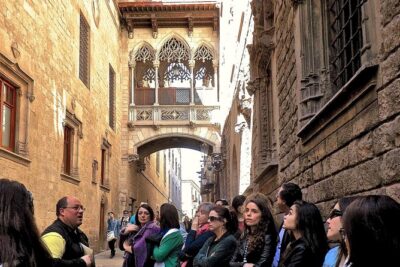
- Pont del Bisbe on Bishop Street, plus a superstitious legend that locals still enjoy
- El Call in MUHBA, with medieval street feel and Jewish history focus
- The Catalan Gothic finish at Santa Maria del Mar, with maritime history in the spotlight
Where this 2-hour walk fits into your Barcelona day
This tour is designed for getting your bearings fast in Barcelona’s oldest core. It runs about 2 hours, and the route stays mostly in the compact streets of Ciutat Vella and El Born, so you are not spending your time stuck in traffic or waiting for a bus.
The group size is capped at 20 people, which matters more than you think. In tight medieval streets, a smaller group makes the walking smoother and keeps time for questions. Also, multiple guides on this route are known for staying energetic and giving thoughtful answers, like Juan, Lidia, Petra, and David.
Price-wise, $30.25 per person feels fair for what you get: a live guide, a tight circuit of major landmarks, and a lot of storytelling per minute. You are paying for interpretation, not just sightseeing. And because several stops are ticket-free to visit, you get value without turning the walk into a string of paid entrances.
More Gothic Quarter walks:
- Barcelona Gothic Quarter Tapas & Taverns Food & Wine Tour
★ 5.0 · 1,470 reviews - Barcelona: Old Town and Gothic Quarter Walking Tour
★ 4.8 · 1,393 reviews - Barcelona Old Town & Gothic Quarter Small Group Tour
★ 5.0 · 1,308 reviews
Start at Plaça del Vuit de Març, then walk into Ciutat Vella
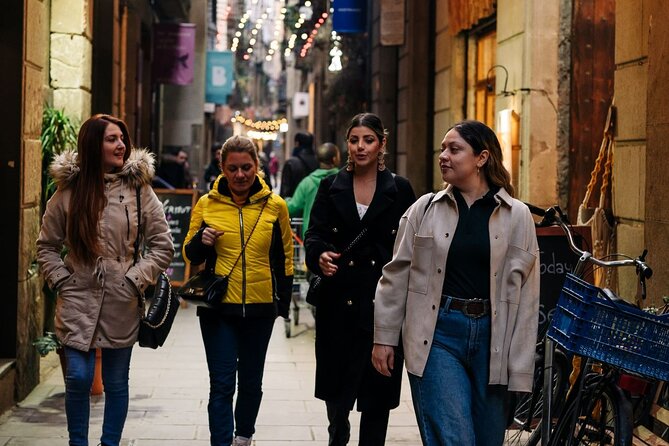
You meet at Plaça del Vuit de Març, Ciutat Vella (08002). From there, you work your way through narrow lanes where the buildings close in like a hallway. The tour is about “on foot” Barcelona, the kind where you notice the details you miss when you zoom past in a vehicle.
The experience is offered in English, and you get a mobile ticket. Confirmation comes at booking, and the meeting area is near public transportation, which helps if you plan to arrive early or adjust for timing.
If you can, going earlier in the day is a smart move. You are often walking in shade and cooler air, and the streets tend to feel less chaotic. It is also easier to hear your guide when the crowd density is lower.
Els 4 Gats: the artist hangout story that makes the Gothic Quarter click
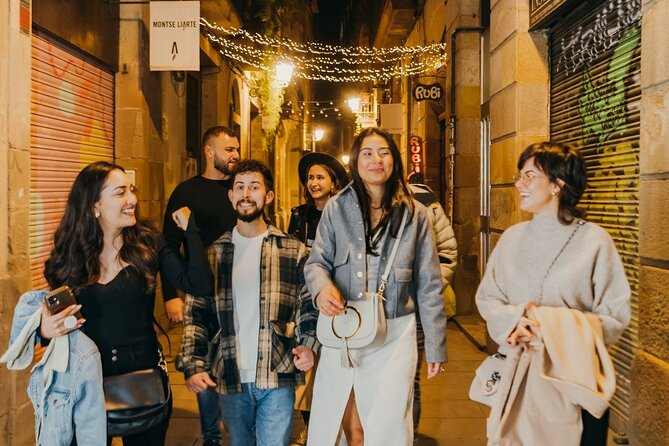
Your first stop takes you to Els 4 Gats, a historic café and restaurant that helped shape Barcelona’s modernist atmosphere. The big hook here is how the place is remembered as a meeting ground for artists and intellectuals, including Pablo Picasso and Antoni Gaudí.
You spend about 10 minutes there, with admission listed as free. What you should do during this short stop is look at the building’s style and let your guide connect the dots between art culture and the streets around you. The goal is not to “memorize facts,” it is to understand why Barcelona’s creative energy has always been tied to where people gather.
Potential drawback: because it is a popular historic café, the area can feel busy. If you want a clear view, position yourself a step back so you can see the facade and still hear the guide.
El Mon Neix En Cada Besada: history you can actually see
Next you visit El Mon Neix En Cada Besada, a photomosaic installed in 2014. It connects to the Catalan defeat on September 11, 1714, tied to the War of Spanish Succession, and it links that event to the meaning behind La Diada (Catalonia Day).
This stop is also about 10 minutes with entry listed as free. I like this part because it turns a heavy political story into something physical you can point at and understand on the walk. You start to feel how Barcelona uses public art to carry memory in everyday spaces.
If you care about symbolism, bring your attention here. Take a moment to orient yourself to what you are looking at, then let the guide explain how locals interpret the connection to identity and freedom.
More walking tours in Barcelona:
- Barcelona Tapas and Wine Experience Small-Group Walking Tour
★ 5.0 · 5,804 reviews - Barcelona: Tapas Walking Tour with Food, Wine, and History
★ 4.8 · 4,261 reviews - Barcelona Tapas Walking Tour: Food, Wine & History
★ 4.5 · 1,928 reviews - Barcelona: Tapas Food Crawl Walking Tour with Tastings
★ 4.9 · 1,798 reviews
Catedral de Barcelona: an easy exterior stop, optional ticketed interior
Then you reach Catedral de Barcelona, a Gothic-style church connected to the life and death of the city’s patron saint, Eulalia, who was tortured to death by the Romans. You get about 10 minutes at the cathedral area.
Important for your planning: admission is listed as not included, so you will likely pay if you want to go inside. If you skip the interior, you can still appreciate the setting and let your guide fill in the context.
If you do go in, keep your expectations realistic. You have limited time on a walking tour, so this is more about a brief, meaningful introduction than a full cathedral visit.
Casa de l’Ardiaca: Gothic and Renaissance layers, plus Roman wall texture
At Casa de l’Ardiaca, the experience turns visual in a very satisfying way. The building blends Gothic and Renaissance influences, and it includes features tied to older Barcelona, including a vertical face of the Roman wall and aqueducts.
You spend about 10 minutes here, and admission is listed as free. This is one of those stops that helps you understand why the Gothic Quarter feels like it is always shifting. Your guide’s job is to point out how the “older stuff” keeps getting reused, remodeled, and framed by later styles.
If you are the kind of traveler who likes to spot architectural clues, this is your moment. Look for transitions between styles and ask yourself how the Roman structure survived inside later building work.
Pont del Bisbe on Bishop Street: Roman-era street meets Neo-Gothic drama
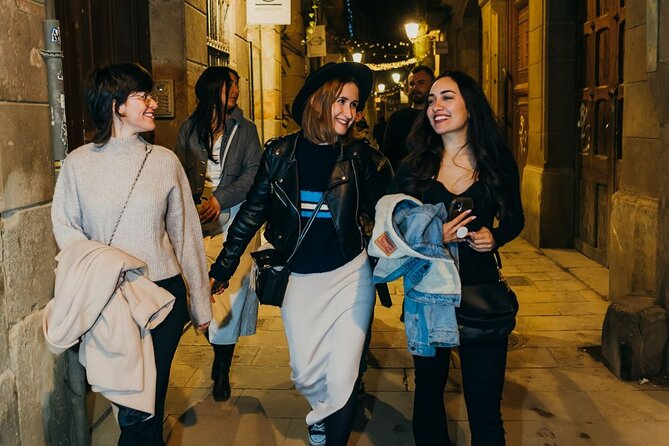
Next comes Pont del Bisbe, a Neo-Gothic-style bridge on Carrer de Bisbe, or Bishop Street. Your guide connects it to the Roman street grid of Barcino, then adds a legend that is described as superstitious.
This stop is about 10 minutes with entry listed as free. The bridge itself is the kind of place you slow down for, even if you do not read every plaque. The legend is the reason people remember this part, because it gives the architecture a human, story-driven vibe.
Practical tip: when you stop on a bridge, the wind can pick up. If you have a small backpack, keep it secure, and if it is raining, watch your footing because stone can get slick.
Placa Sant Felip Neri: a square with scars from the Spanish Civil War
A short walk brings you to Plaça Sant Felip Neri, a tucked-away square in the Gothic Quarter. It holds sombre connections to the Spanish Civil War, and the description emphasizes that the place still bears traces of its tragic past.
You spend about 10 minutes here, admission listed as free. This stop can be emotionally heavier than some of the others, but it is valuable because it prevents the Gothic Quarter from feeling like a theme park. You see how “pretty” spaces can also be sites of remembrance.
If you like respectful travel, treat this as a pause. Look around, then listen closely to the context your guide provides.
MUHBA – El Call: narrow lanes and Jewish quarter memory
Now you step into MUHBA – El Call, focused on Barcelona’s Jewish quarter. You get about 10 minutes at this point, also ticket-free as listed. The route highlights narrow medieval streets, the presence of the synagogue area, and legends connected to the neighborhood.
I like this stop because it broadens the story of the Gothic Quarter. Too often, people see medieval Barcelona as only Catholic architecture and royal power. This part brings in community history and everyday street life.
Since this section is in older lanes, wear shoes you trust. The streets are not just scenic, they are uneven in places. A good guide keeps the pace comfortable, and multiple past guides are praised for keeping the walk relaxed and not too hard for most people.
Placa de Sant Jaume and Placa Del Rei: government energy and royal shadows
The walk then moves into two key squares.
First is Plaça de Sant Jaume, a lively hub of government activity surrounded by historic buildings. You get about 10 minutes with entry listed as free. This is where the medieval city starts to feel political, not just aesthetic.
Then you go to Plaça del Rei, where the Royal Palace sits and the explanation includes a reminder of a darker past. This stop is also about 10 minutes and listed as ticket-free.
These squares are excellent for taking a breath. They open up the view, so you can see how the dense Gothic lanes connect to the larger civic spaces.
Plaça de l’Àngel: grain trading once happened here
At Plaça de l’Àngel, you learn the square’s earlier role as the former Wheat Square, a key hub for grain trading. You also get a “heavenly legend” tied to why it is called Angel’s Square.
This is another 10-minute, ticket-free stop. I enjoy this part because it mixes practical economic history with story. Grain trading is the kind of detail that makes a city feel lived in, not only monumental.
If you want photos, this is a good place to do them. The square tends to be more open than the narrow corridors, so you can capture the building lines without crowding yourself into a doorway.
Basilica de Santa Maria del Mar: Catalan Gothic maritime pride
Your tour finishes at Basilica de Santa Maria del Mar at Plaça de Santa Maria, 1 (08003). It is about 10 minutes on the final stop, and admission is listed as not included.
This church is described as Catalan Gothic, and the connection your guide likely emphasizes is Barcelona’s maritime life. It is a strong ending point because the architecture feels purposeful, like it was built to honor a community that moved through sea and trade.
If you want to go inside, plan for that ticket cost. If you do not, you can still appreciate the exterior and let the guide’s framing carry you to the end of the route.
Price and logistics: what you’re really paying for
At $30.25, the best value isn’t that every stop is a paid attraction. It is that you are buying a guided thread that ties them together, from Picasso and Gaudí connections to Roman street remnants, to memorials and legends. A two-hour format also helps you avoid tour fatigue in a city where walking is nonstop anyway.
A few logistics details matter:
- Duration is about 2 hours
- Group size max is 20
- English is available
- Several stops are listed as free to enter, while Catedral de Barcelona and Basilica de Santa Maria del Mar are marked as not included
- You get a mobile ticket and confirmation at booking
If you want the smoothest experience, bring water and a light layer. Stone streets keep temperature swings noticeable, and rain can turn the surface slick. One of the more repeated themes in guide feedback is handling weather without rushing you.
Should you book this Gothic Quarter and El Born walking tour?
Book it if you want a guided “first map” of Barcelona’s oldest neighborhoods in a short time. This is especially good if you like stories tied to specific corners, not just general facts about famous buildings. The route also makes sense if you care about seeing how art culture, politics, and architecture overlap.
Skip or adjust if you strongly want full indoor time in major churches. Since key church stops have admission not included, you may want to plan separate visits later so you are not time-limited on a busy walking schedule.
One more smart decision rule: if you can go in the cooler, quieter morning window, you will likely enjoy it more. The pace is described as relaxed and manageable, and a smaller group helps you actually hear the guide when streets get crowded.
If your goal is to walk into Barcelona’s past with a local voice leading the way, this is a straightforward, high-value pick. With a 4.9 rating and 97% recommending it, it is one of those tours that tends to do what you want at the start of a trip: get you oriented, entertained, and ready to wander on your own.
FAQ
How long is the Barcelona Historical Walking Tour?
It lasts about 2 hours.
What does it cost and is there a group size limit?
The price is $30.25 per person, and the tour has a maximum of 20 travelers.
Is the tour offered in English?
Yes, it is offered in English.
What is included in the tour price?
The tour includes a guided walking tour with a local guide, plus city highlights and hidden gems.
Do I need to buy tickets for the stops?
Some stops are listed as free (admission ticket free), while Catedral de Barcelona and Basilica de Santa Maria del Mar are marked as admission not included.
Where do I meet and where does the tour end?
You start at Plaça del Vuit de Març, Ciutat Vella, 08002 Barcelona, and the tour ends at Basílica de Santa Maria del Mar, Plaça de Santa Maria, 1, Ciutat Vella, 08003 Barcelona.
Is there a refund if I cancel?
Yes. Free cancellation is available up to 24 hours in advance for a full refund. Changes made less than 24 hours before the start time are not accepted.
More Historical Tours in Barcelona
- Barcelona: 2.5-Hour Bike or E-Bike Historical Tour
★ 4.5 · 1,262 reviews - Barcelona Erotic Museum – Explore Art, History & Fun
★ 4.4 · 450 reviews - Andorra Original History and Sightseeing Tour (Private, Pickup)
★ 5.0 · 350 reviews - Barcelona: Dark History Night Walking Tour
★ 4.8 · 344 reviews
Recently reviewed in Barcelona
- Barcelona: Romantic Private Sailing Tour★ 4.1 · 19 reviews
- Barcelona: Rock Museum- Guitar Legends Hall★ 4.9 · 26 reviews
- Barcelona: Raval Street Art and Graffiti Walking Tour★ 4.9 · 60 reviews
- Barcelona: Rent a Jetski and speed through the ocean★ 4.0 · 4 reviews
- Barcelona: Professional Private Photoshoot★ 4.9 · 28 reviews
- Barcelona: Ramblas, Gothic & Gaudí Architecture Walking Tour★ 4.9 · 136 reviews
- Barcelona Photo Experience: famous landmarks or the beach!★ 4.9 · 48 reviews
- Barcelona Private Tour: Sagrada Familia,Park Güell & Pedrera★ 4.9 · 13 reviews
Gothic Quarter Tours, compared.

Barcelona Gothic Quarter Tapas & Taverns Food & Wine Tour
Read our review →
Gothic Quarter Ghosts and Legends Walking Tour
Read our review →
Barcelona Old Town & Gothic Quarter Small Group Tour
Read our review →
El Born and Gothic Quarter Wine & Tapas Bar Tour
Read our review →
Kids and Family Gothic Quarter Walking Tour in Barcelona
Read our review →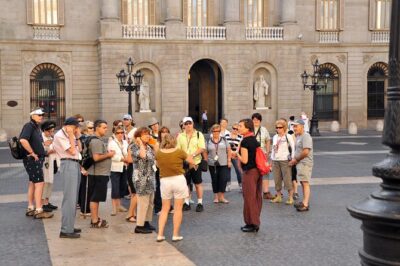
Browse the lists this tour appears in