
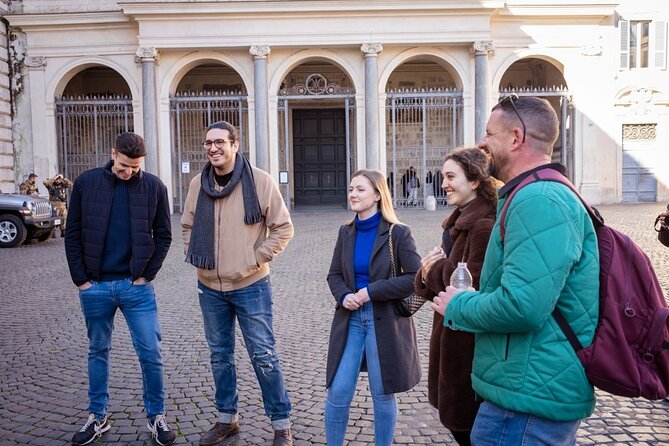
Reviewed · HISTORICAL TOURS
Barcelona in 2 Hours: Guided Walk Through History and Sights
Barcelona in 2 Hours is interesting because it packs story, art, and identity into a short walk through Ciutat Vella. You do not just see famous sights, you learn what they meant to the people who shaped the city. I like that the route is built for first-day orientation, and you get a local guide pacing it so you are not stuck staring at stone and guessing.
Two things I really like: the stop choices connect Picasso and Gaudí era creativity with Catalan political history, and the guide explanations make small details click fast. I also like the small group feel, with a maximum of 20 people, so questions tend to stay in the conversation, not in the background.
One possible drawback: it is only about 2 hours, and most stops are brief, so you will need to choose what you want to linger at afterward. Also, two major church stops list admission as not included, so you may want cash or a card ready if you plan to go inside.
Key takeaways
- Gothic Quarter plus El Born focus: you cover the streets most visitors want to understand first.
- Art and political history together: Picasso-era culture and Catalonia Day origins both show up.
- Fast pace, smart stories: each stop is short, but the guide frames what you are looking at.
- Most entries are free: only a couple of major churches list admission as not included.
- Small group size: capped at 20 travelers for a more manageable walk.
- Route ends near the sea: finishing at Santa Maria del Mar makes it easy to keep exploring.
A 2-hour history walk with art, politics, and church spires
This is a quick guided stroll through Barcelona’s older core, built around the kind of places that help the city make sense. You walk from Plaça del Vuit de Març into the Gothic Quarter and through key squares, then end at Basilica de Santa Maria del Mar. The point is not to list landmarks. The point is to understand why the landmarks got made, and what locals argued about over the centuries.
The best part of a route like this is how it trains your eye. You start noticing patterns in architecture, street layouts, and symbolism in religious and civic spaces. And because it is a guided walk, you get the why behind the what, like why a café matters beyond being photogenic.
The tradeoff is time. Most stops are around 10 minutes, so you will leave with understanding, not a full museum-level experience at each site. Plan to come back later for deeper visits, if a place really grabs you.
More walking tours in Barcelona:
- Barcelona Tapas and Wine Experience Small-Group Walking Tour
★ 5.0 · 5,804 reviews - Barcelona: Tapas Walking Tour with Food, Wine, and History
★ 4.8 · 4,261 reviews - Barcelona Tapas Walking Tour: Food, Wine & History
★ 4.5 · 1,928 reviews
Starting at Plaça del Vuit de Març, ending at Santa Maria del Mar
Logistics matter more than people think on a short tour. This one begins at Plaça del Vuit de Març in Ciutat Vella and ends at Basilica de Santa Maria del Mar. That end point is handy, because it naturally sets you up to wander through El Born and keep your momentum going without backtracking.
It is also designed to work with public transit since the meeting area is described as near transit. And the tour uses a mobile ticket, which is usually a small win in Barcelona, where you can waste time hunting for a paper receipt.
Because the walk is compact, it is a strong pick if you are doing Barcelona for the first time and want a clean mental map before you splurge on a bigger Gaudí plan.
Els 4 Gats: where ideas met over coffee and creativity
The tour starts with Els 4 Gats, a historic café and restaurant with Art Nouveau charm outside and big cultural weight inside. The story you hear here is that it was a key meeting place for thinkers and artists, including creatives associated with Pablo Picasso and Antoni Gaudí.
What I like about starting at a place like this is that it sets expectations. Barcelona is not just stone and churches, it is also cafés, debate, and creative circles that helped shape the look and feel of the city. When you walk away, you tend to see the city as something that humans built through ideas, not just events in a textbook.
Also, the stop is listed as admission ticket free and only about 10 minutes, so it does not eat your limited tour time. You get the story and a sense of the setting, then move on while it is still fresh.
El Mon Neix En Cada Besada and the meaning behind Catalan memory
Next comes El Mon Neix En Cada Besada, a street art mosaic that gets attention because it is visually striking. The deeper connection is tied to the Catalan defeat on September 11, 1714, which helped spark the celebration of La Diada, Catalonia Day.
This is a great stop if you want your Barcelona to feel local, not just tourist-fluent. You get to connect an image you might have snapped on Instagram to the actual emotional and political history that people still remember.
The stop is listed as admission ticket free and brief, so you get the context without losing the flow of the walk.
A few more ways to see Barcelona
- Barcelona: 2.5-Hour Bike or E-Bike Historical Tour
★ 4.5 · 1,262 reviews - Barcelona Erotic Museum – Explore Art, History & Fun
★ 4.4 · 450 reviews - Andorra Original History and Sightseeing Tour (Private, Pickup)
★ 5.0 · 350 reviews - Barcelona: Dark History Night Walking Tour
★ 4.8 · 344 reviews
Catedral de Barcelona: Gothic art and Eulalia’s martyr story
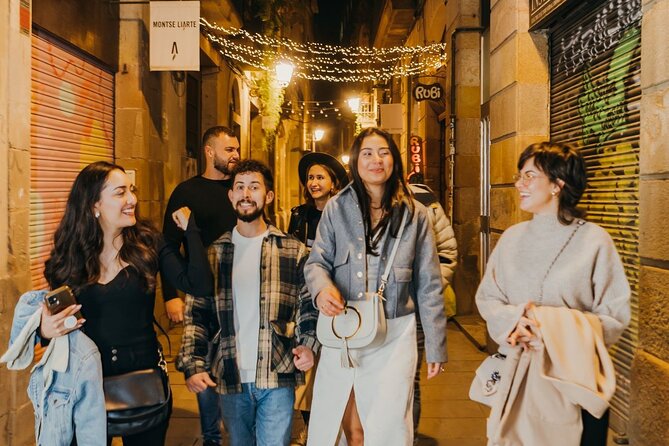
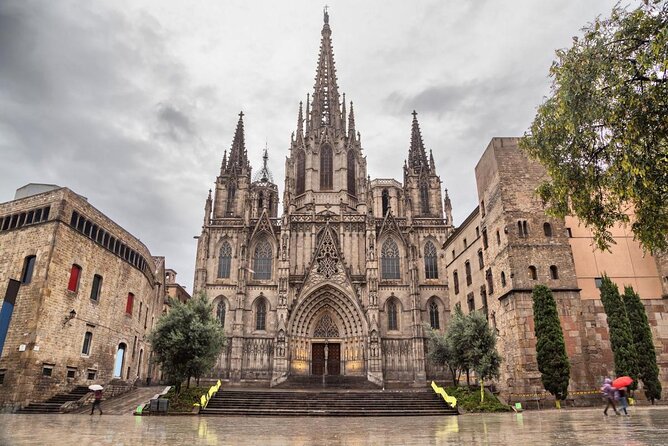
Then you reach Catedral de Barcelona, a Gothic-style church built over centuries in the heart of the city. Here, the focus is on the life and death of Eulalia, the patron saint of Barcelona, and the story of how she became a martyr.
This stop has an important planning note: admission is listed as not included. If you care about going inside, budget extra time and money so you do not feel rushed, especially on a day when lines might be longer.
Even if you only take in the exterior and the guide’s framing, Eulalia’s story gives you a lens for what you see. Barcelona’s old architecture often points at faith, power, and identity all at once, and the cathedral is where those strands meet.
Casa de l’Ardiaca: the tiny architectural time machine in the Gothic Quarter
Casa de l’Ardiaca is the kind of stop you appreciate more once the guide points out what to look for. It is a small standout in the Gothic Quarter that mixes elements of Gothic and Renaissance architecture, but the real thrill is the older layer beneath it.
The explanation ties the site back to Roman times, with remnants of wallwork and arcades connected to an aqueduct system that once supplied Barcino with water. That Roman-water angle is useful because it reminds you that Barcelona did not start in the Middle Ages. The city kept reusing the bones of earlier cities.
This stop is listed as admission ticket free, which makes it a smart use of your limited time. You get a lot of meaning without feeling like you are paying again and again.
Pont del Bisbe: legend, superstition, and a great photo spot
The tour hits Pont del Bisbe, often called the most photographed place in Barcelona, and for good reason. The legend tied to it plays with superstition, with a story meant to make you think twice before walking underneath it.
I like this stop because it gives you permission to enjoy Barcelona’s myths without needing to pick a side. You can treat the legend as folklore, or you can at least appreciate how people used stories to make spaces feel alive and personal.
This stop is admission ticket free. Since it is only around 10 minutes, it works well as a palate cleanser between heavier history stops.
Placa Sant Felip Neri: a quieter square with heavier Catalan history
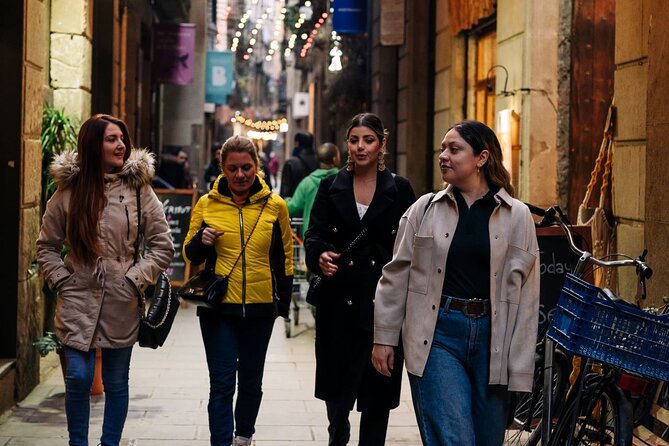
Now the walk turns more somber at Placa Sant Felip Neri. The square has a tragic past connected to the desire for Catalan independence, and it still shows scars from that history.
This is where a guided tour earns its keep. Without context, a tiny square can look like just another pretty corner in the old city. With context, it becomes a place where politics, identity, and collective memory show up in physical form.
This stop is listed as admission ticket free. It is short, but the mood shift is real, so it helps you understand why modern Catalan identity has long roots.
MUHBA – El Call: medieval streets and the Jewish quarter’s footprint
Next up is MUHBA – El Call, the area linked to Barcelona’s former Jewish population. The description highlights narrow medieval streets and architecture that helps you picture daily life in the past.
What I like here is that it widens the city story beyond just Christianity and civic power. El Call also helps you see how Barcelona’s neighborhoods were shaped by communities that are not always visible at street level today.
This stop is admission ticket free on the tour route, which makes it an easy win within a time-limited itinerary.
Placa de Sant Jaume and Placa Del Rei: power on display
You then reach two big civic squares: Placa de Sant Jaume and Placa Del Rei. Placa de Sant Jaume is the main square, home to the seat of Catalan government and City Hall. It is a place where celebration and protest can coexist, and the guide connects it to major holidays and civic identity.
Placa Del Rei shifts you into a darker register, with the Royal Palace area and the shadow of the Spanish Inquisition. These stops are not just about buildings. They are about how power gets performed in public space, and how governments and institutions used architecture and ritual to assert control.
Both stops are listed as admission ticket free, which is great in practice. You get the stories without paying extra per square.
Plaça de l’Àngel and Santa Maria del Mar: trade, miracle, and a seafaring church
Plaça de l’Àngel, once known as Wheat Square, ties Barcelona’s past to grain trading. The renaming story includes a heavenly apparition during the procession of Saint Eulalia’s body, which turns commerce into legend for a reason: stories were how people explained the big changes they felt in daily life.
Then comes Basilica de Santa Maria del Mar, a Gothic basilica strongly associated with El Born and tied to the city’s maritime history. This is the kind of church that makes you stop walking even if you are tired, because the scale and intention feel built for people who earned their living at sea and needed a place to gather.
Admission is listed as not included here, so plan ahead if you want to go inside. If you are happy seeing it from outside, you can still take in how the route ends at a strong point and gives you a reason to continue exploring the neighborhood.
Price and logistics: is $22.99 worth it for a 2-hour walk?
At $22.99 per person for an approximate 2-hour experience, you are buying three things: time saved, context delivered, and a route that keeps you from wandering in circles. In Barcelona’s old town, that matters, because good sightlines are often tucked behind streets that look similar until you know what you are looking for.
The value gets better because most stops are listed as admission ticket free. The exceptions are Catedral de Barcelona and Basilica de Santa Maria del Mar, which means you are not paying entry fees at every turn. So if you want a budget-friendly first pass that still feels meaningful, this fits well.
I also like the group size cap of 20 travelers. That tends to keep the guide interaction workable, instead of turning the walk into a slow-moving lecture. And being offered in English is a practical plus if you want clarity rather than guessing through translations.
The only real cost consideration is planning your church visits. If you decide both non-included churches are a priority, you should expect to spend a bit more beyond the tour price.
Who this tour suits best, and who might want a different plan
This is a strong fit if you want a first-day orientation and you like history, art, and political context more than pure checklist sightseeing. It is also great for people who want a walk that does not demand museum passes at every stop.
You will enjoy it if you like asking questions and letting a guide set the scene. In past sessions, guides such as Darren, Petra, Jorge, and Sonia have been singled out for keeping things clear and engaging in English, with added local recommendations that help you keep exploring after the walk.
You might consider a different plan if you are the type who wants deep time in one site. With stops around 10 minutes each, this is a smart overview, not a slow, detailed crawl through cathedrals.
Should you book Barcelona in 2 Hours?
If you are trying to make your first days in Barcelona count, I think this one is worth serious consideration. It gives you a compact route that connects cultural creativity, Catalan identity, and Gothic and Roman-era layers in a way that helps you navigate the city later with confidence.
Book it if you want a guided start, you are okay with quick stops, and you plan how you will handle the two churches with admission not included. Skip or change plans if you want a long, unbroken time inside major sites, or if you already have a strong grasp of Barcelona’s older history and want a more specialized focus.
FAQ
How long is the tour?
The tour lasts about 2 hours.
Is the tour offered in English?
Yes, it is offered in English.
What is the maximum group size?
The tour has a maximum of 20 travelers.
Are admission tickets included for every stop?
Most stops are listed as admission ticket free, but Catedral de Barcelona and Basilica de Santa Maria del Mar are listed as admission not included.
Where do I meet and where does the tour end?
The tour starts at Plaça del Vuit de Març, Ciutat Vella, 08002 Barcelona, Spain and ends at Basílica de Santa Maria del Mar, Plaça de Santa Maria, 1, Ciutat Vella, 08003 Barcelona, Spain.
Can I cancel for a full refund?
Yes. You can cancel for free up to 24 hours in advance of the experience start time for a full refund.
Recently reviewed in Barcelona
- Barcelona: Romantic Private Sailing Tour★ 4.1 · 19 reviews
- Barcelona: Rock Museum- Guitar Legends Hall★ 4.9 · 26 reviews
- Barcelona: Raval Street Art and Graffiti Walking Tour★ 4.9 · 60 reviews
- Barcelona: Rent a Jetski and speed through the ocean★ 4.0 · 4 reviews
- Barcelona: Professional Private Photoshoot★ 4.9 · 28 reviews
- Barcelona: Ramblas, Gothic & Gaudí Architecture Walking Tour★ 4.9 · 136 reviews
- Barcelona Photo Experience: famous landmarks or the beach!★ 4.9 · 48 reviews
- Barcelona Private Tour: Sagrada Familia,Park Güell & Pedrera★ 4.9 · 13 reviews
Historical Tours, compared.

Tapas Walking Tour with Food, Wine, and History
Read our review →
Barcelona Tapas Walking Tour: Food, Wine & History
Read our review →
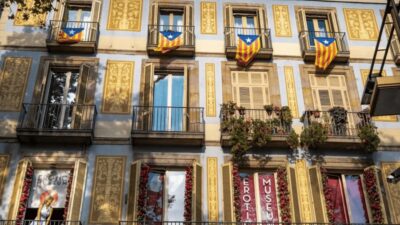
Barcelona Erotic Museum – Explore Art, History & Fun
Read our review →
Andorra Original History and Sightseeing Tour (Private, Pickup)
Read our review →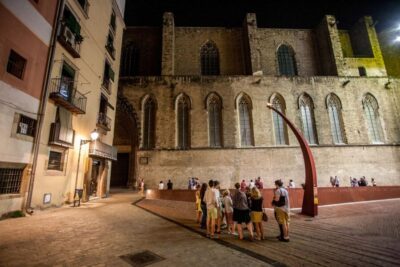
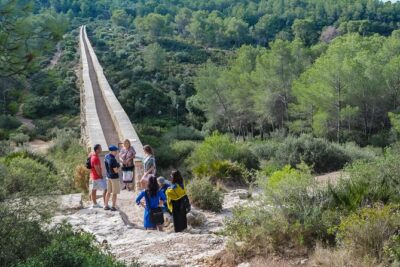
Tarragona and Sitges Small Group Tour – Roman History & Culture
Read our review →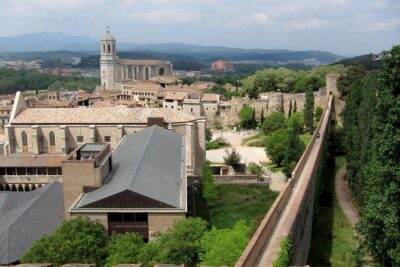
Girona History and Legends Tour Small Group from Girona
Read our review →Browse the lists this tour appears in