
Reviewed · HISTORICAL TOURS
Barcelona’s Dark History Walking Tour in El Raval
Barcelona’s El Raval has a reputation for being complicated, and that is exactly what makes this walking tour so interesting. You move through real streets and real old buildings, then you hear the legends that people say cling to them. Two things I really like are the way the stories connect to specific sites, and how the tour makes room for art and politics, not just spooky tales.
I also like the mix of Barcelona “firsts” and everyday landmarks. You get the old Hospital of la Santa Creu and the city’s oldest church, Sant Pau del Camp, plus a stop at Bar Marsella that has been drawing creative crowds for over 200 years. One consideration: this tour leans dark, including references to child abandonment and notorious crimes, so it may feel heavy if you prefer lighter sightseeing.
Key Highlights You’ll Remember
- Vampiress of the Raval legend and the location tied to it, where myth and fear get tangled with the city
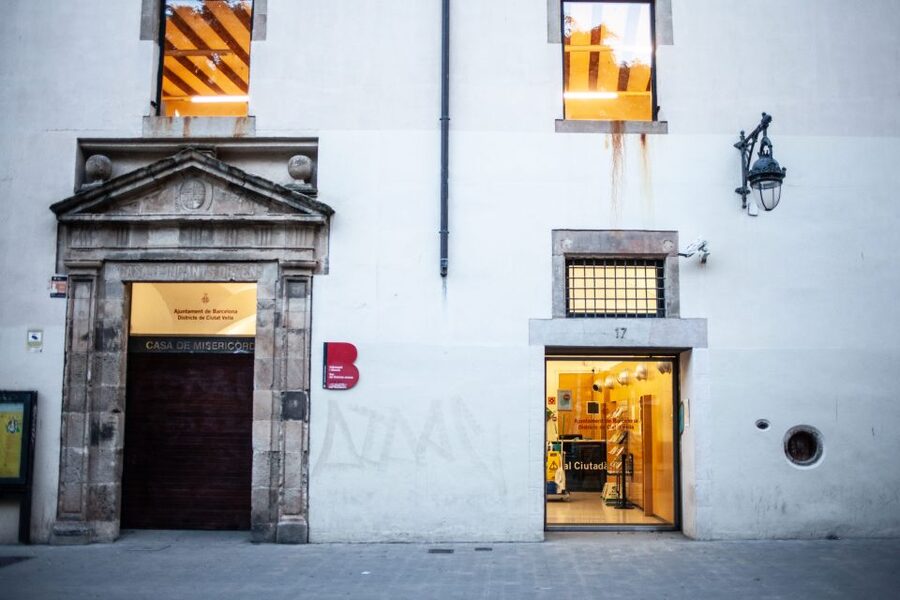
- Casa de la Misericòrdia (mercy house), with stories about children abandoned and unsettling rumors tied to the building
- Keith Haring mural at MACBA, including the politically charged message behind the stick-figure artwork
- Ancient Hospital of la Santa Creu, plus the grounds and a macabre-themed garden story
- Sant Pau del Camp, a Romanesque church over 1,000 years old with a troubled past
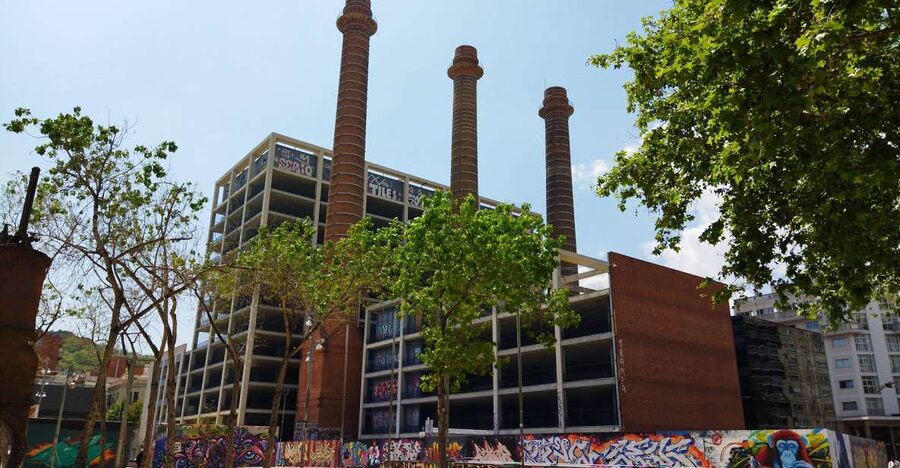
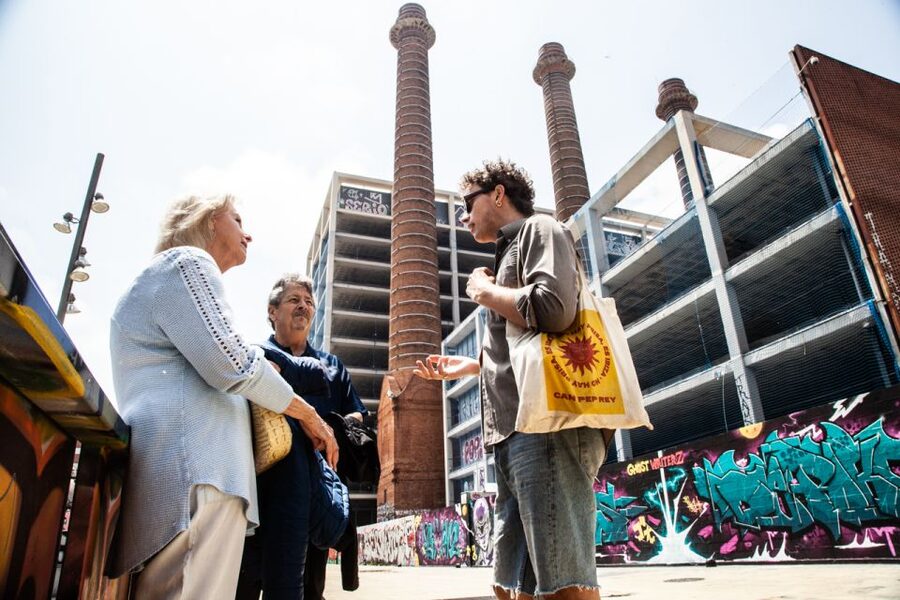
- Street art on Raval’s south side near the former power factory, with changing graffiti and the chance to see artists at work
Why This El Raval Dark-History Walk Fits Real Life
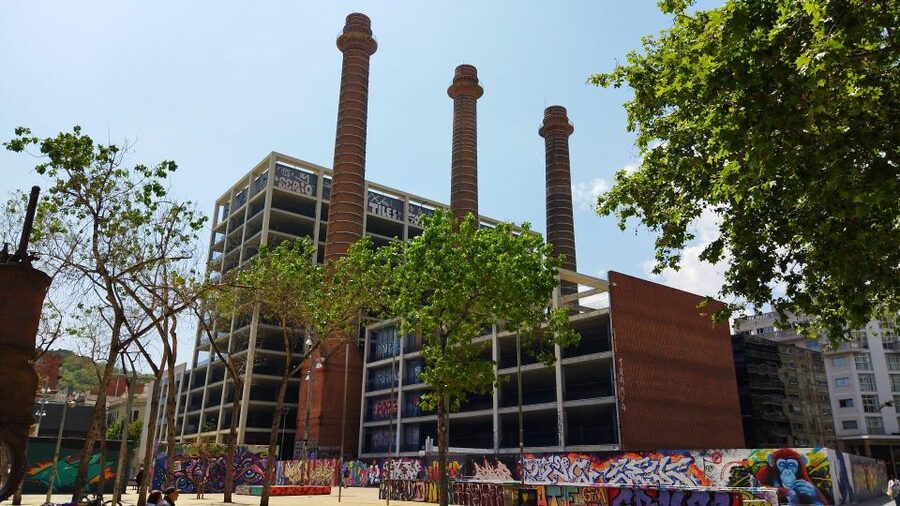
This is a focused 2-hour walk that covers about 2 miles at a leisurely pace. For $33, you are paying for more than generic narration. You’re paying for a guide who can stitch together legends, architecture, and Barcelona’s street-level history into something you can actually picture while you walk.
You will also get a very practical sightseeing rhythm. The tour starts at Plaça de Castella by the church of Sant Pere Nolasc Mercedaris, then you keep moving through narrow streets where the city’s past still shows up in doorways, walls, and old complexes. It’s a good way to learn El Raval without needing to do research on your phone the whole time.
The tone matters. This is not a haunted-house theme park. It’s “dark history” with an urban edge, so expect stories that turn grim, then shift into art, politics, and (briefly) creativity.
More walking tours in Barcelona:
- Barcelona Tapas and Wine Experience Small-Group Walking Tour
★ 5.0 · 5,804 reviews - Barcelona: Tapas Walking Tour with Food, Wine, and History
★ 4.8 · 4,261 reviews - Barcelona Tapas Walking Tour: Food, Wine & History
★ 4.5 · 1,928 reviews
Starting at Plaça de Castella and Sant Pere Nolasc Mercedaris
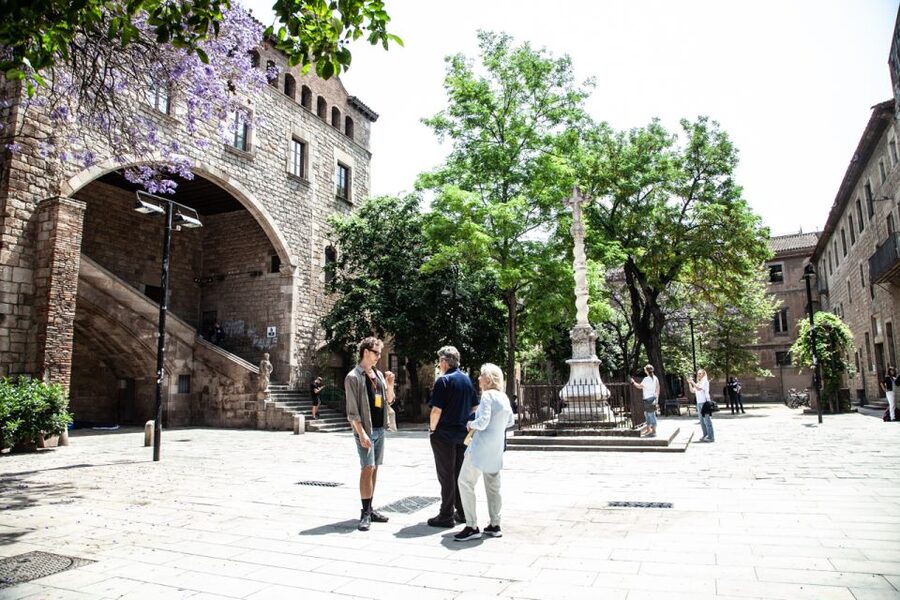
You begin outside Parròquia de Sant Pere Nolasc Mercedaris. That matters because you start in a clear public space, a real square where you can orient quickly. It’s also a smart starting point for a neighborhood walk, since it anchors you before the streets tighten and the setting turns more atmospheric.
From here, the tour immediately frames El Raval as a place where contrasts live side by side. You will hear how the neighborhood got its reputation, then you’ll start tracing that reputation through specific stops. If you want a quick sense of direction and theme before you go deeper, this opening works.
Wear comfortable shoes. Even though it’s leisurely, you’re still walking 2 miles on city terrain, and El Raval streets can be uneven in spots.
Casa de la Misericòrdia: Mercy That Turns Unsettling
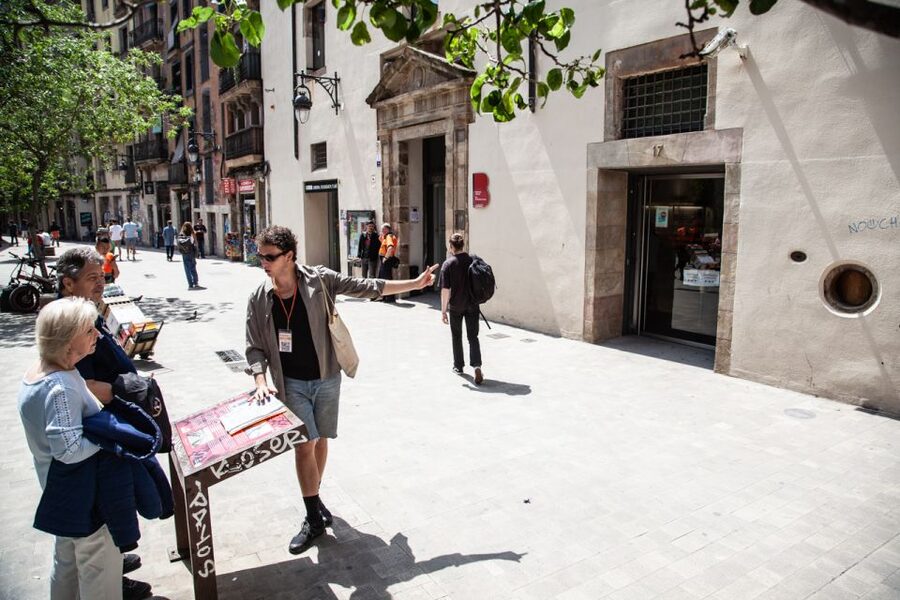
One of the strongest stops is the Fundació Privada Casa de Misericòrdia de Barcelona, the building tied to the tour’s spooky opening. The core story centers on children being abandoned there, and the rumors that some say linger in the halls.
Why this matters for you as a visitor: the tour uses this place to connect emotion to architecture. You’re not just hearing a legend. You’re looking at the setting and learning how an institution meant to provide mercy can also become a symbol of fear when a community holds onto ugly memories.
Practical tip: since you’re dealing with emotional subject matter, keep an open mind but also pace yourself. If you get squirmy, take a breath, look at details the guide points out, and remember the point here is historical context, not shock value.
MACBA and Keith Haring’s Stick Characters With a Political Message
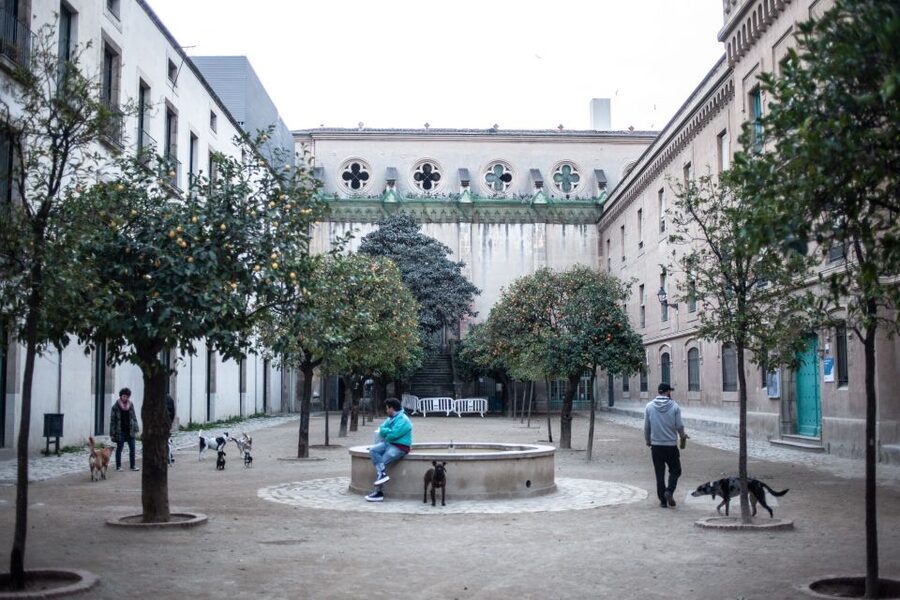
Next comes the stop at MACBA, the Barcelona Museum of Contemporary Art. Even if you’re not a museum person, it’s worth visiting through the tour lens, because this stop is about how modern art keeps arguing with the present.
Behind the bold museum architecture, the tour highlights a politically charged mural with whimsical stick characters created by Keith Haring. This is one of those moments where the tour gives you a shortcut. Instead of trying to interpret street-level art on your own, you get the story behind what you’re seeing and why it resonated enough to remain a landmark.
Then you move onward along Carrer de Joaquín Costa. This stretch helps you feel how art and conversation live on the same streets as daily life. It’s a useful reminder that El Raval isn’t frozen in the past, even when the tour is talking about old legends.
A few more ways to see Barcelona
- Barcelona: 2.5-Hour Bike or E-Bike Historical Tour
★ 4.5 · 1,262 reviews - Barcelona Erotic Museum – Explore Art, History & Fun
★ 4.4 · 450 reviews - Andorra Original History and Sightseeing Tour (Private, Pickup)
★ 5.0 · 350 reviews - Barcelona: Dark History Night Walking Tour
★ 4.8 · 344 reviews
The Vampire Story and the Old Hospital of la Santa Creu
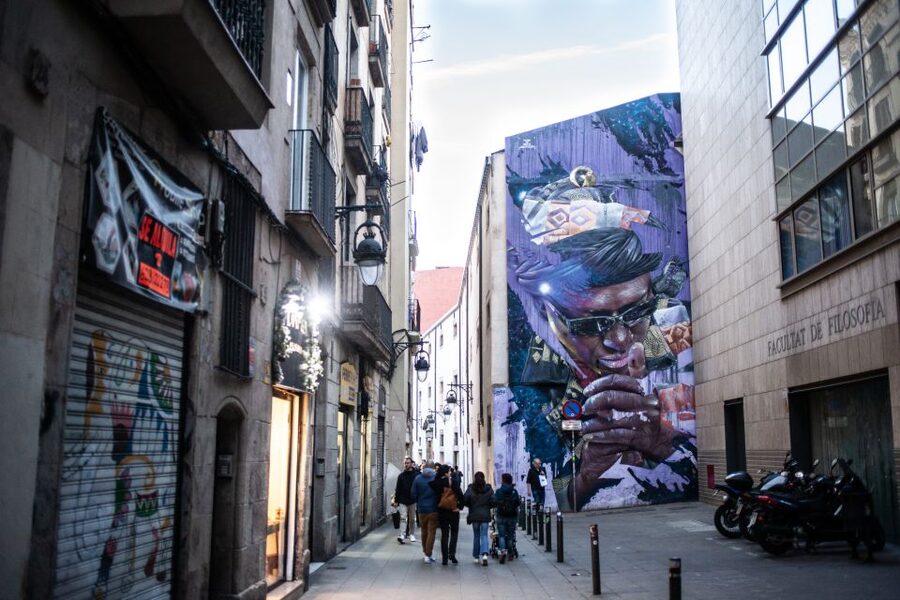
At some point, the tour points you toward the place connected to the Vampire of the Raval. The key here is framing: you are hearing a legend tied to an infamous serial killer, where the boundary between life and story starts to blur. You’ll see how that blur works in real places, not just in a scary anecdote.
After that, you get to the Old Hospital de la Santa Creu, one of the most historically anchored stops on the route. The grounds include a garden area where the guide tells stories about macabre shows and spells. Even if you take those stories as legend, the atmosphere fits the building’s weight and age.
Why I think you’ll appreciate this section: it balances fear with place-making. Hospitals, churches, and old institutions are where cities store their most layered memories. The tour uses that idea to show how Barcelona can hold violence, charity, belief, and spectacle all in the same neighborhood.
If you’re sensitive to dark themes, this is the part where you may want to slow down mentally. But if you like history with a pulse, this stop is a highlight.
Bar Marsella: The Oldest Bar in Town, Still Drawing Creative People
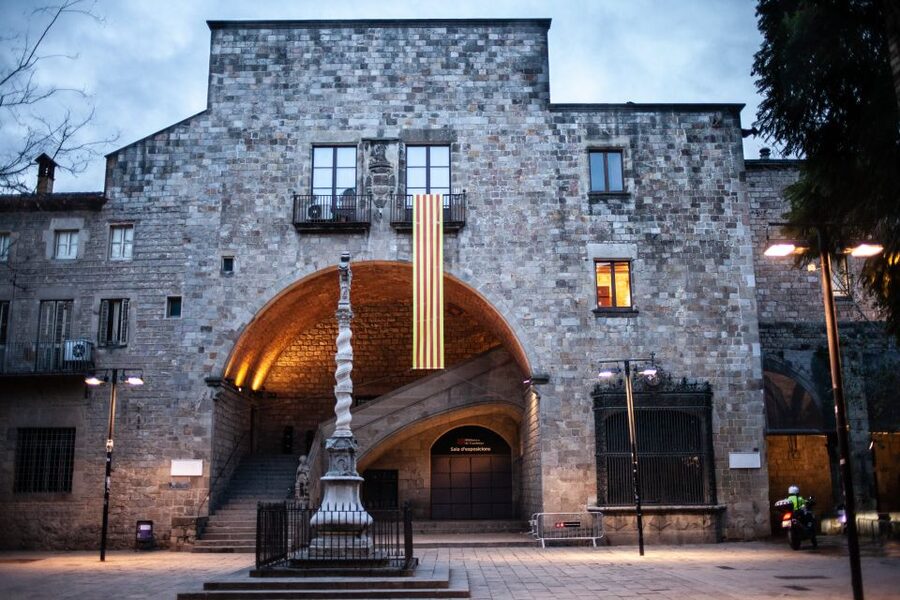
Then you shift gears with Bar Marsella, described as the oldest bar in Barcelona. It has been open for over 200 years, and it’s been a preferred watering hole for creative minds like Dalí, Gaudí, Picasso, and others.
Here’s the value for you: the tour doesn’t treat El Raval as only grim. It reminds you that creative scenes often grow in the same neighborhoods where outsiders feel uneasy. In other words, the darkness in the stories is real, but so is the neighborhood’s ability to produce art and conversation.
You’ll probably notice that this stop works as a mental reset. After hospitals and legends, stepping into a long-running bar gives you a place to regroup, even if you don’t order anything. (This tour includes the guided walk, but it does not say you get drinks, so go based on your own budget.)
Sant Pau del Camp: Barcelona’s Oldest Church and Its Troubles
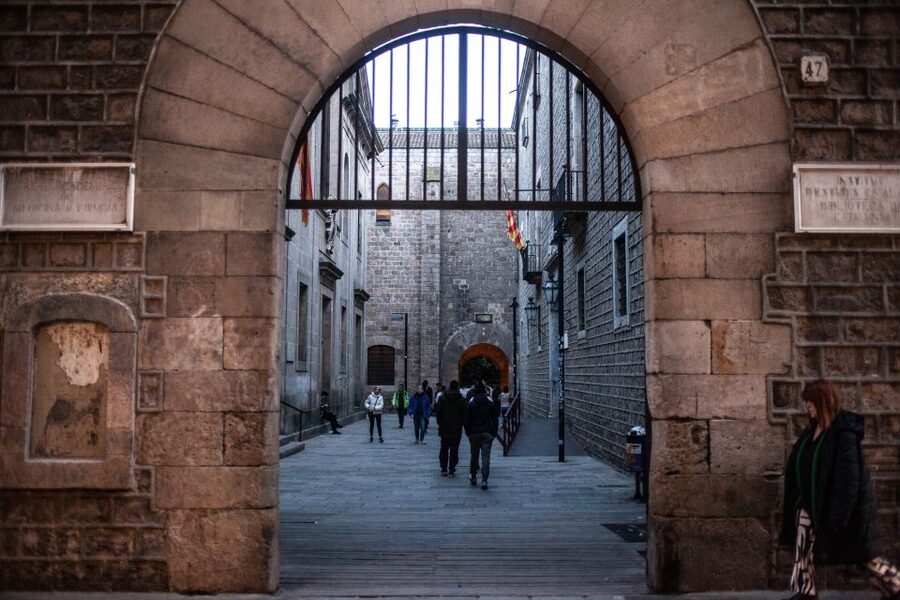
Next is Sant Pau del Camp, a Romanesque church that is over 1,000 years old and is described as Barcelona’s oldest church. The tour ties it to a troubled past and a local legend, which gives you a fresh way to look at the building.
What makes this stop work is how it adds layers. Churches are often treated as simple “sightseeing stops,” but this tour frames Sant Pau del Camp as part of the same neighborhood story, where faith, rumor, and past trauma share space.
Take your time with details here. The building’s age is the headline, but your enjoyment comes from noticing textures, shapes, and the sense that this place has survived change. The guide also helps you connect what you see to what people feared or believed around it.
Three Chimneys Gardens: South-Side Street Art and Surviving Nightlife
The walk finishes around The Three Chimneys, linked with the ending point at Jardins de les Tres Xemeneies. This is also where the tour turns toward Raval’s south side and the street-level pulse of the neighborhood.
You’ll hear shocking tales of the clubs, cabarets, and casinos that drew people here a century ago, and the guide points out a few that have survived into modern times. Even if some of the stories are hard to take, the point is clarity. The neighborhood’s reputation did not appear out of nowhere, and these places explain why.
You also get a strong street-art moment near a former power factory. The graffiti is described as colorful and constantly changing, and you might even spot street artists working if you’re lucky. This helps the tour land in the present. After legends and old stone, you see that Raval still writes its own messages in public.
Guide Style Matters, and This Tour Has Strong Storytelling
From the way the tour is described, the guide is central to the experience. One guide named Andreas is singled out for an even balance of informative and fun storytelling. Another guide, Owen (Eoghan), is praised for vivid, exciting telling of the historical locations.
So if you care about story quality, this is worth your attention. You’re not just scanning plaques. You’re getting a guided narrative that helps you understand why a mural matters, why a hospital matters, and why a church in the same neighborhood can carry both age and trouble.
Language is English, and the tour includes a live guide, which also helps. You should have no problem following even if you’re new to Barcelona history.
Value and Logistics: What $33 Really Buys You
For $33, you’re getting:
- a 2-hour guided walk
- around 2 miles total
- English live guide
- wheelchair accessibility
- rain-or-shine operation (with a full refund if canceled due to extreme weather)
That’s a solid value when you look at what’s included. This isn’t one stop with a museum entry fee. It’s multiple sites, each with context, and it takes the guesswork out of interpreting legends and street art.
It also ends back in the general start area, with the walk wrapping up around Jardins de les Tres Xemeneies. That makes it easier to connect to the rest of your day, because you’re not stuck far away in a maze of unfamiliar streets.
Who Should Book This Dark History Tour
I’d book this if you:
- like neighborhood walks that connect stories to real buildings
- enjoy street art context, not just photos
- can handle dark themes without needing them to be watered down
- want a guided way to understand El Raval’s reputation quickly, in a short time
You might skip it if you prefer light, easy sightseeing with minimal discomfort. The tour includes themes like child abandonment, notorious crimes, and troubled institutional pasts, even though it also balances in art and everyday landmarks.
If you’re traveling with someone who hates spooky history, bring them for the Keith Haring mural and Bar Marsella first. Then see if they can tolerate the legends to get the full picture.
Should You Book This El Raval Dark History Walking Tour?
Yes, with a clear expectation. This is a story-driven walking tour that uses El Raval’s real landmarks, from Sant Pere Nolasc Mercedaris and la Santa Creu to Sant Pau del Camp, to explain why the neighborhood carries both legend and reality. For $33 and about two miles of walking, it’s a good use of time.
I would book it if you want more than surface-level sightseeing and you’re curious about how Barcelona’s past survives in murals, churches, hospitals, and even the oldest bar on the block. Just go in knowing the tone turns dark, and you’ll come out understanding why people keep telling these stories long after the street lights come on.
FAQ
How long is the Barcelona’s Dark History Walking Tour in El Raval?
The tour lasts 2 hours.
Where does the tour start?
You meet your guide outside the Church of Sant Pere Nolasc Mercedaris, in Plaça de Castella, 08001, Barcelona.
Where does the tour end?
The tour finishes at Jardins de les Tres Xemeneies (The Three Chimneys area). The activity also indicates it ends back at the meeting point area.
How far will I walk?
You will cover around 2 miles at a leisurely pace.
What language is the tour guide?
The tour has a live English guide.
Is the tour wheelchair accessible?
Yes, the tour is listed as wheelchair accessible.
Does the tour run in the rain?
The tours run rain or shine. If extreme weather causes cancellation, you receive a full refund.
How much does it cost?
It costs $33 per person.
Is free cancellation available?
Yes, you can cancel up to 24 hours in advance for a full refund.
Is there an option to pay later?
Yes, you can reserve now and pay later.
What are the main stops and highlights?
Key stops include Casa de la Misericòrdia, a Keith Haring mural (MURAL DEL SIDA) near MACBA, the Old Hospital of la Santa Creu, Bar Marsella, Sant Pau del Camp, and the Three Chimneys/Jardins de les Tres Xemeneies area, plus street art and neighborhood stories.
Recently reviewed in Barcelona
- Barcelona: Sagrada Familia and Park Güell with Hotel Pickup★ 4.5 · 33 reviews
- Barcelona: Sagrada Familia, La Pedrera & Cava Tasting Tour★ 4.2 · 33 reviews
- Barcelona´s Lunch or Dinner Tapas Tour: Food and Happiness★ 5.0 · 8 reviews
- Barcelona: Sagrada Família and Park Güell Guided Tour★ 4.7 · 6 reviews
- Barcelona: Sagrada Familia, Park Guell & Tapas Private Tour★ 4.9 · 47 reviews
- Barcelona: Rooftop Tapas and Sangria Class with a Chef★ 5.0 · 60 reviews
- Barcelona: Fun & Unpretentious Rooftop Wine Tasting★ 4.1 · 26 reviews
- Barcelona: Rooftop Tango Lesson with Drinks and Videos★ 4.9 · 159 reviews
Historical Tours, compared.

Tapas Walking Tour with Food, Wine, and History
Read our review →
Barcelona Tapas Walking Tour: Food, Wine & History
Read our review →
Barcelona Erotic Museum – Explore Art, History & Fun
Read our review →
Andorra Original History and Sightseeing Tour (Private, Pickup)
Read our review →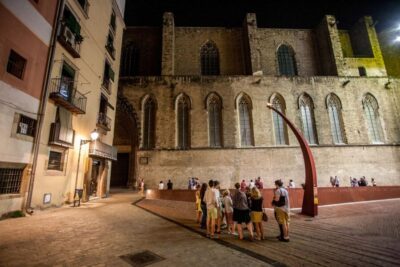

Tarragona and Sitges Small Group Tour – Roman History & Culture
Read our review →
Girona History and Legends Tour Small Group from Girona
Read our review →Browse the lists this tour appears in