

Reviewed · CITY TOURS
Barcelona: City Sightseeing Hop-On Hop-Off Bus Tour
Barcelona is a city where sights are spread out, and that can turn into a lot of walking, heat, and wrong turns. This open-top hop-on hop-off bus keeps you moving without stress, with enough stops to build your own mini itinerary. I like the way the route choices let you mix big-ticket sights with neighborhood time, and I like the Sagrada Família and Gaudí coverage that makes your first day easier. The one catch is that you still have to hop off and walk some distance for certain attractions, so plan for stairs and uphill bits.
If you want a simple way to get your bearings fast, this works well. It runs daily through most of the year, and the buses keep to a steady rhythm that makes reboarding painless. Just remember the last bus leaves at 7pm from Stop 1, so don’t treat it like it will wait all night wherever you got off.
Key things to know before you ride

- Two routes that actually complement each other so you can avoid repeating the same views all day
- 38 stops across central Barcelona plus coastal and hillside areas
- Open-top double-decker comfort with audio guide in 16 languages and headphones on site
- Frequent service (buses every 20 minutes, and in high season no queues with more frequent runs)
- Great for photo planning, especially around major landmarks like Sagrada Família and Gaudí’s buildings
Why this hop-on hop-off bus works in Barcelona
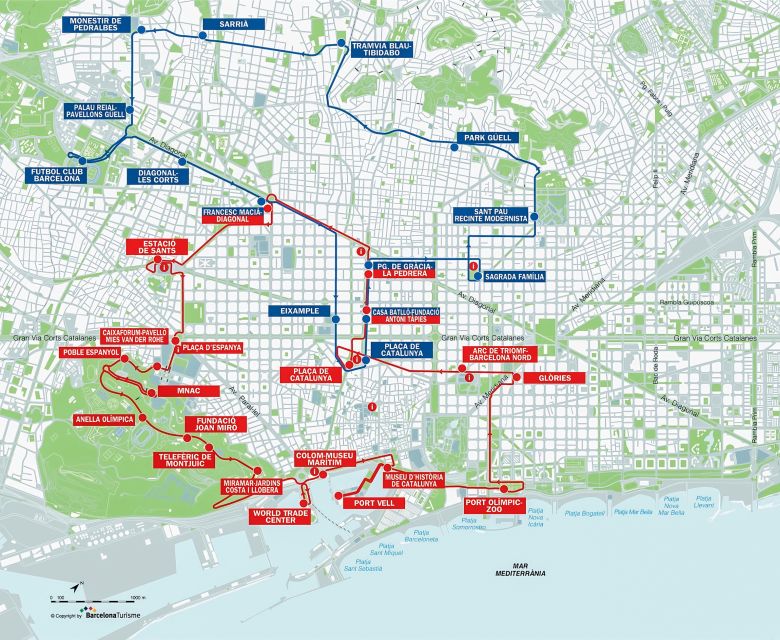
This tour is interesting because it turns Barcelona into a choose-your-own timeline. You are not stuck on one strict loop, and you are not forced to commit to long walks between far apart areas. Instead, you ride, look, listen, and jump off when something grabs you.
What I like most is the balance. The routes hit major icons like Sagrada Família, plus the more “Barcelona” moments like the stroll-worthy stretch around La Rambla and the medieval-feeling Gothic Quarter area. The second win is the flexibility for families and mixed groups. One person wants museums, another wants views, and everyone can break off without losing the day.
The main drawback is also simple. This is bus sightseeing, not a front-door shuttle to every attraction. Some stops are close, some are not, and uphill walks happen. For places like Park Güell, your final approach may involve a real climb depending on where the bus lets you off.
A few more ways to see Barcelona
- City Sightseeing Barcelona Hop-On Hop-Off Bus Tour: 24 or 48-Hour
★ 4.0 · 5,250 reviews - Barcelona City Tour Hop-On Hop-Off with Optional Boat
★ 4.0 · 3,012 reviews - Barcelona: Private City Tour by Eco Tuk Tuk
★ 4.9 · 1,339 reviews
Price and value: what $39 buys you
At about $39 per person, the big value is what’s bundled. You get a 24 or 48-hour ticket, an audio guide in 16 languages with headphones on site, plus free Wi-Fi and a Barcelona city map and discount booklet. That is not just entertainment, it is practical transport for two days if you play it smart.
Here is how to think about it. In Barcelona, you can spend the day buying multiple entry tickets and then still lose time getting between locations. This pass is a way to buy time back. Even if you only get off at a few stops, the bus can connect distant highlights in one afternoon, instead of turning it into a half-day logistics problem.
If you want the best value, do this early in your trip. Use the ride to spot what you genuinely want to revisit later. A lot of people also do a second pass day to fill in gaps, especially if one route covers the “center” and another covers the “views and outlying neighborhoods.”
How the routes map to real Barcelona
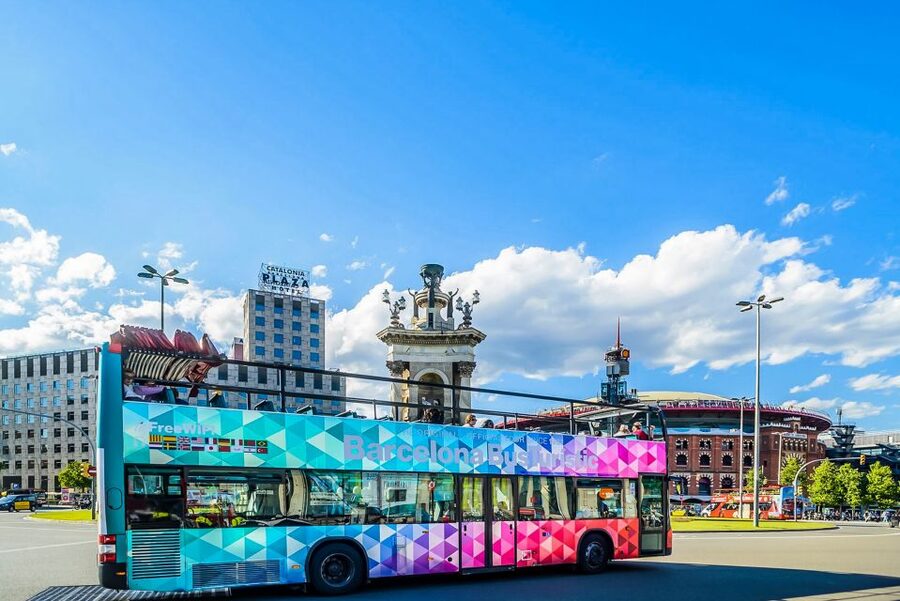
There are two routes and 38 stops, and they are designed to cover different sides of the city.
- The Red Line leans toward the waterfront, Montjuïc area viewpoints, and the city’s large cross-town connectors. It also includes a strong set of stops around the modern city and ends up near iconic landmarks.
- The Blue Line leans toward modernist Barcelona and the more hillside upper areas, plus the football focus for anyone timing a match-day visit.
Both routes start at Stop 1. The first bus departs at 9am and the last bus leaves at 7pm (from Stop 1), and buses run about every 20 minutes.
That timing detail matters. You can ride all day, but you should still treat the last hours as your “final hop” window. One review experience that shows up in real life is the surprise factor when people assume the bus will keep running on the far end. It does not. It ends for the day at the regular cutoff time.
Route Red: Montjuïc views, the coast, and a steady path to Sagrada Família
The Red Line is the route I’d pick if you want a mix of sweeping views, museums, and seaside neighborhoods. It starts at Plaça de Catalunya, then quickly moves into the “Gaudí and grand avenues” rhythm.
A few stops that stand out, and what they mean for your day:
Another side of Barcelona worth booking on the same trip:
- Barcelona: Park Güell Admission Ticket
★ 4.4 · 76,534 reviews - Barcelona: Casa Batlló Entry with Self-Audioguide Tour
★ 4.7 · 25,359 reviews - Barcelona: 24 or 48-Hour Hop-On Hop-Off Bus Tour
★ 4.4 · 20,872 reviews - Barcelona: Park Guell Guided Tour with Skip The Line Entry
★ 4.7 · 17,563 reviews
Plaça de Catalunya to Casa Batlló area
You begin at Plaça de Catalunya, which is a great orientation point because it anchors so many transit connections. From there you get into the architectural zone around Casa Batlló and the wider Eixample grid.
Even if you do not stop for an interior visit, seeing these buildings from the upper deck helps you understand why people obsess over Gaudí’s shapes.
Estació de Sants and Placa d’Espanya: big transport moments
Stops like Estació de Sants and Placa d’Espanya are useful because they show you how Barcelona’s transit and major plazas connect. If you plan to switch to trains, this is a good mental map builder.
CaixaForum, Mies van der Rohe area, and Poble Espanyol
When you hit CaixaForum and the Mies van der Rohe pavilion area, you get a blend of design and “downtown culture stops.” Then Poble Espanyol shows up, which can be a convenient place to break from pure sightseeing and get a more built-environment feel.
National Art Museum zone and the Olympic ring
Museu Nacional d’Art de Catalunya (MNAC) and the Anella Olímpica area are where the route starts to feel bigger and more “lookout-driven.” This is the part of the city where views and distance start to matter, so build in time if you want photos without feeling rushed.
Joan Miró, Teleferic access, and Montjuïc gardens
Stops like Fundacio Joan Miro and Teleferic de Montjuic are ideal if you want the Montjuïc vibe. There is also Miramar – Jardins Costa i Llobera, which is the kind of stop where even a short visit can pay off because the setting is half the attraction.
Colom to La Rambla: waterfront to classic strolling
As the Red Line heads toward Colom – La Rambla, you transition from viewpoint energy into street-level Barcelona. La Rambla is touristy, yes, but it is also one of the easiest “walk and people-watch” zones to build an evening around. This is a good section to hop off and just wander for a few hours, then return to the bus when you want to reset.
Port Olímpic, beaches, and the modern east side
The Red Line keeps going to Port Olimpic and then out toward Platja del Bogatell, Platja Nova Mar Bella, and the Forum area. That string of stops helps you understand Barcelona’s coastline, and it is a nice option when you want “sun and space” without planning a full beach day.
Poblenou and Torre Glòries: modern skyline views
Stops like Parc Diagonal Mar, Poblenou, and Torre Glories shift you into a more contemporary feel. This is where the city stops looking only medieval and Gaudí, and starts showing you its newer scale.
Sagrada Família and Arc de Triomf area
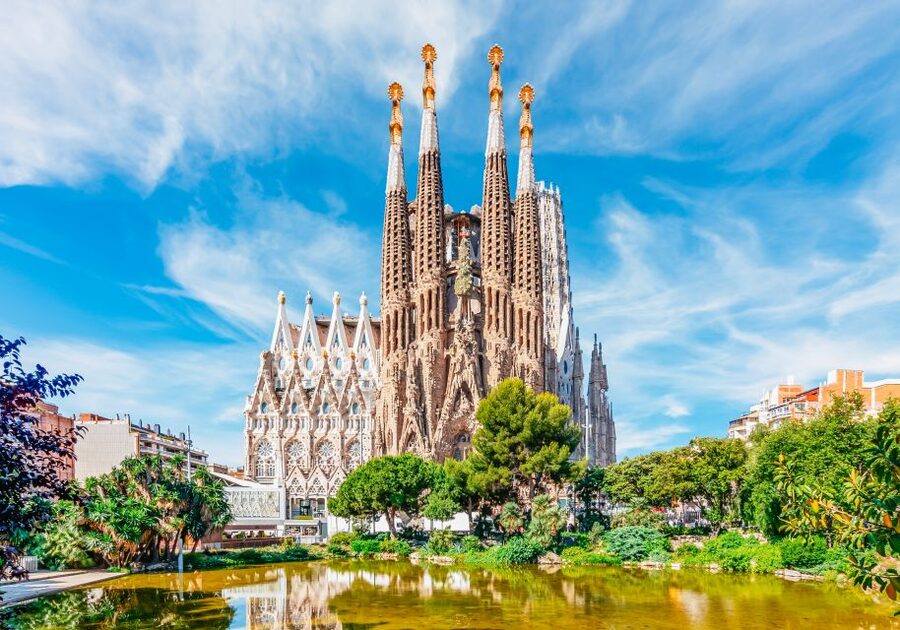
The Red Line includes Sagrada Familia and Arc de Triomf. This is valuable because Sagrada Família is not just a building, it is a visual anchor for planning. If you have not yet decided what you want to see in detail, this lets you choose what angle and what timing you prefer before going back later.
Route Blue: modernist Barcelona, Park Güell, and football at Camp Nou
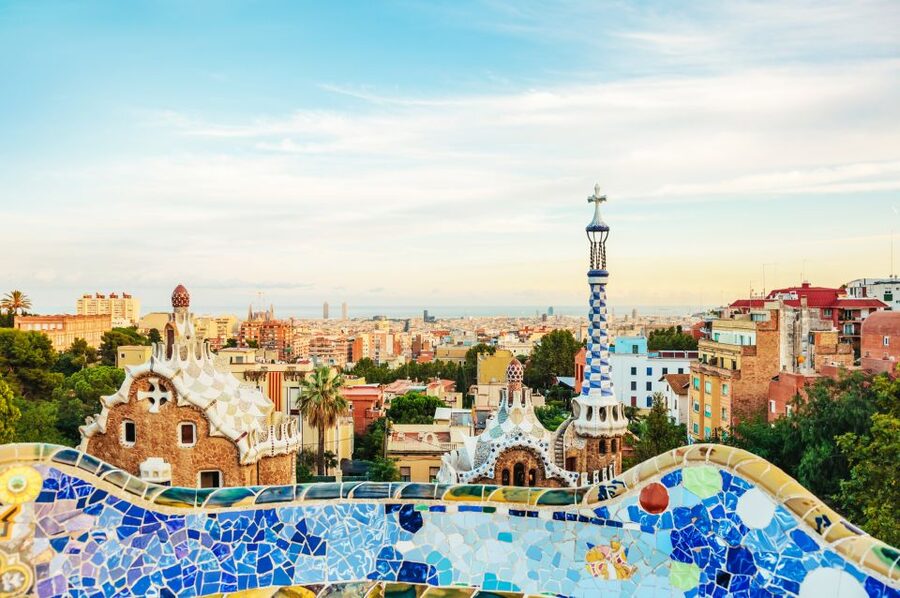
The Blue Line is built for a different mood: modernist architecture, upper-city neighborhoods, and that iconic football destination.
It also starts at Plaça de Catalunya, so you can easily switch from the Red Line without feeling lost.
Here are the Blue Line stops that tend to matter most for your itinerary:
Passeig de Gràcia: La Pedrera and Casa Batlló zone
Early on you get stops tied to the Passeig de Gracia area and La Pedrera. If you are the type who loves architecture, this segment is a strong payoff because the buildings are visually connected and easy to compare as you move along.
Sant Pau Recinte Modernista: a standout modernist stop
Sant Pau Recinte Modernista is on the Blue Line, and it is one of those places that can change your whole impression of Barcelona’s style. Even if you only get off for a look from the outside, you start to see how the city’s “modernist” story is more than just famous names.
Park Güell: the climb factor
Park Guell is a must for many people, but plan for effort. The bus can drop you at a point where you still have to walk uphill to reach the park proper. If your group includes kids, older adults, or anyone who dislikes steep stairs, you may want to choose your route timing and wear shoes for real terrain.
Tramvia Blau and Tibidabo area: old-time fun
The Tramvia Blau – Tibidabo stop is a great “what a city” moment. It also helps you see Barcelona from a higher vantage without committing to every optional extra.
Pedralbes and the Palau Reial area
Stops like Monestir de Pedralbes and Palau Reial – Pavellons Guell bring you into quieter, more residential territory. This is where the bus ride feels less like a checklist and more like “oh, so this is how Barcelona lives.”
Futbol Club Barcelona stop for Camp Nou visits
For football fans, this is the key stop: Futbol Club Barcelona. If you are planning match-day timing or a stadium visit, hopping off at this stop can save you from the stress of figuring out the last mile.
Diagonal – Les Corts and Francesc Macià – Diagonal
These stops help you connect back toward central corridors, and they can be useful if you want to pair the Blue Line with shopping, casual lunch, or evening plans.
Sant Antoni: finishing point energy
The route ends at Sant Antoni, which is a sensible place to link up with dinner plans. It also gives you a reason to see Barcelona beyond the most photographed corners.
Timing and hopping rules that make your day smoother
The tour runs for about 120 minutes per loop, but the real experience is how you use your 24 or 48-hour window. For the first day, I treat the bus like an orientation tool. I get on, ride a big chunk, and pick stops that match what I care about most.
A few practical tips:
- Buses run often, around every 20 minutes, and in high season the operation is designed to avoid long waits.
- The top deck is great for views, but photos can be tricky if the bus is moving fast at certain points. If a landmark matters for your camera, I would time it so you can hop off briefly.
- If you are sensitive to audio interruptions, keep an eye on your headphones volume and device. The audio guide can cut out occasionally, so don’t rely on it as your only source of orientation.
- Wi-Fi is included, but it may not be rock-solid on every bus. Treat it as a bonus, not a necessity.
One more timing reality: the bus stops start and end with the daily schedule. The first bus is at 9am, and the last bus departs at 7pm from Stop 1. Your best bet is to plan a final hop that gets you back to the main sights or a convenient dinner zone before late afternoon.
Open-top comfort, rain moments, and what it feels like onboard
This is an open-deck double-decker experience, and that matters in Barcelona because weather can change quickly. On sunny days, you will enjoy the breezes and easy sightlines. In cooler months, the top deck can feel chilly, so a light layer helps.
When rain shows up, the experience gets smarter. Some drivers activate a roof cover automatically so passengers stay drier. That is a small detail, but it changes how much of the day you lose to weather.
Onboard comfort also seems consistently good. Buses are kept clean, and staff are generally helpful. There can be moments where drivers do not allow a long time window for everyone to get to the top deck, so if you are riding with a group that loves photos, tell your party to be ready quickly when you pull in.
Stop-by-stop strategy: how I’d build your itinerary
You do not need to get off at every stop. Doing so turns the day into a lot of rerouting. Instead, choose a theme per outing.
Here is a simple way to build it:
If it is your first day
- Start around Plaça de Catalunya.
- Ride the route that matches your must-dos, then hop off near one or two “explore on foot” areas.
- For the iconic stop, plan Sagrada Família as one of your final major stops for the day, then use the return ride to reorient toward dinner.
If you have two days
- Do one route per day, then swap routes if you realize you missed something.
- One smart move is to do the Blue Line first in the morning when the city feels fresh, then do the Red Line later for Montjuïc, coast, and that La Rambla wandering time.
If your group includes mixed mobility
Pick fewer stops and longer breaks. Some stops involve a walk that is not just flat sidewalk. Park Güell is the big example where you may face steep uphill walking after you get off. If that is a concern, decide in advance where your group can handle walking and where the bus is mainly for scenic transit.
What this tour includes, and what you must plan separately
Included in your ticket:
- 24 or 48-hour hop-on hop-off bus tour
- Audio guide commentary in 16 languages with headphones on site
- Free Wi-Fi
- Barcelona city map
- Discount booklet for local attractions, eateries, and shopping
Not included:
- Attraction tickets
- Food and drink
That division is helpful. It means you should treat this tour as transport plus storytelling, then buy specific entry tickets only where you decide it is worth it. The discount booklet can help, but you still want to check what’s actually useful for your plans.
Also note the route vehicles are branded and labeled by Barcelona Bus Turistic, so you are looking for those bus signs at stops.
Who should book this, and who might skip it
This is a great match for you if:
- you want an easy way to cover a lot of Barcelona without planning multiple routes
- you are traveling with kids or a mixed-interest group
- you want audio narration in your language and a comfortable way to move between far apart highlights
- you want a practical first-day plan to build the rest of your trip around
You might skip it or choose a different strategy if:
- you hate walking and steep approaches and would rather do fewer, fully walkable neighborhoods
- you are mainly focused on just one attraction and already have a tight plan for transit
Value-wise, it is a strong pick when you use the pass as transportation, not just as a quick ride. With two routes, a 48-hour window can turn into a very efficient way to avoid wasting time crossing the city more than once.
Should you book the Barcelona City Sightseeing hop-on hop-off bus?
Yes, book it if you want a low-stress way to see major Barcelona highlights and understand how the city is laid out. The combination of two routes, 38 stops, audio guide in 16 languages, and steady service makes it a smart backbone for your itinerary. It is especially worth it if you plan to do more than one “zone,” like mixing central Gaudí buildings with Montjuïc viewpoints or seaside neighborhoods.
If you are price sensitive, commit to using it across the valid window. The more you actually hop off, explore, and reboard, the more the $39 turns into real savings in time and effort.
FAQ
How long is the bus tour loop?
The tour duration is 120 minutes per loop.
How often do the buses run?
Buses run every 20 minutes.
What time do the buses start and end?
Both routes depart from Stop 1 with the first bus at 9am and the last bus at 7pm.
Are the 24-hour and 48-hour tickets different?
Yes. A 24-hour ticket lets you use it for 1 day, and a 48-hour ticket must be used on consecutive days.
What language options are available for the audio guide?
The audio guide is available in Spanish, Catalan, Chinese, English, French, German, Italian, Japanese, Portuguese, Russian, Dutch, Hebrew, Swedish, Arabic, Turkish, and Norwegian.
What is included in the ticket price?
Your ticket includes the hop-on hop-off bus tour (24 or 48 hours), the audio guide with headphones, free Wi-Fi, a city map, and a discount booklet.
Are attraction tickets included?
No. Attraction tickets are not included, and food and drink are also not included.
Recently reviewed in Barcelona
- Barcelona: Romantic Private Sailing Tour★ 4.1 · 19 reviews
- Barcelona: Rock Museum- Guitar Legends Hall★ 4.9 · 26 reviews
- Barcelona: Raval Street Art and Graffiti Walking Tour★ 4.9 · 60 reviews
- Barcelona: Rent a Jetski and speed through the ocean★ 4.0 · 4 reviews
- Barcelona: Professional Private Photoshoot★ 4.9 · 28 reviews
- Barcelona: Ramblas, Gothic & Gaudí Architecture Walking Tour★ 4.9 · 136 reviews
- Barcelona Photo Experience: famous landmarks or the beach!★ 4.9 · 48 reviews
- Barcelona Private Tour: Sagrada Familia,Park Güell & Pedrera★ 4.9 · 13 reviews
City Tours, compared.

City Sightseeing Barcelona Hop-On Hop-Off Bus Tour: 24 or 48-Hour
Read our review →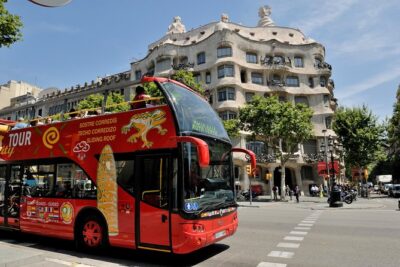
Barcelona City Tour Hop-On Hop-Off with Optional Boat
Read our review →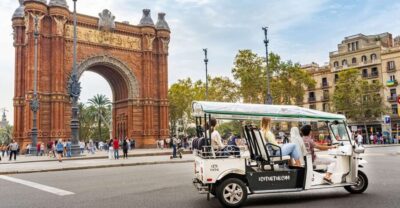

Flamenco Show Ticket at Theatre Barcelona City Hall
Read our review →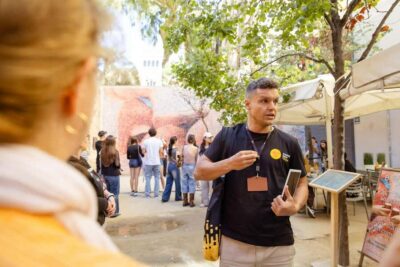
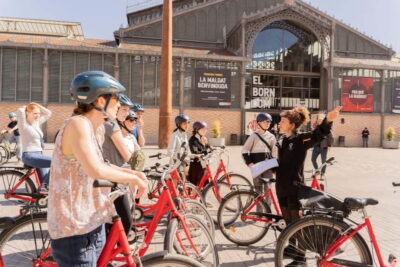
Sagrada Familia or Coastal City Sights by eBike
Read our review →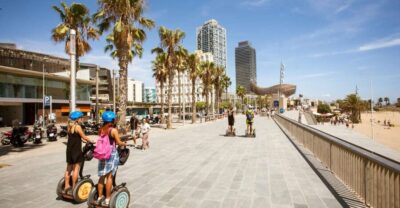
Browse the lists this tour appears in