
Reviewed · SELF-GUIDED TOURS
Barcelona: Mies van der Rohe Pavilion Ticket and Audio Guide
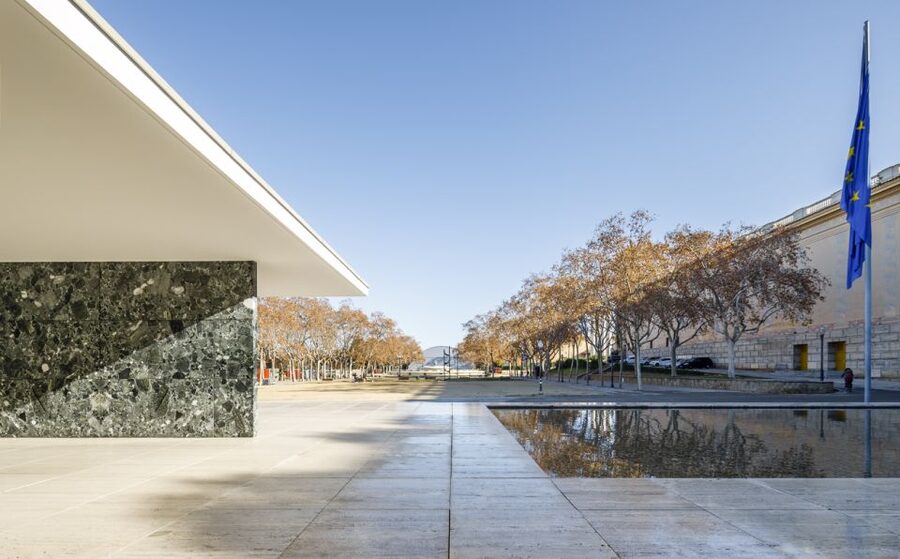
The Mies van der Rohe Pavilion is interesting because it takes big architectural ideas and trims them to their cleanest lines, then lets you feel the result in person. I love how architecture here is pared down to essence, not decoration. You also get that rare calm, because the building is designed to make your attention slow down.
The second thing I really like is that the included audio guide (English, French, German, Spanish, Catalan) helps you read what you’re seeing, including why the pavilion matters. The main drawback to consider is that the site is small and can be used for professional photos or occasional artistic interventions, so it’s smart to arrive on time and expect it to be a little less quiet than a big museum.
Key Highlights You’ll Care About
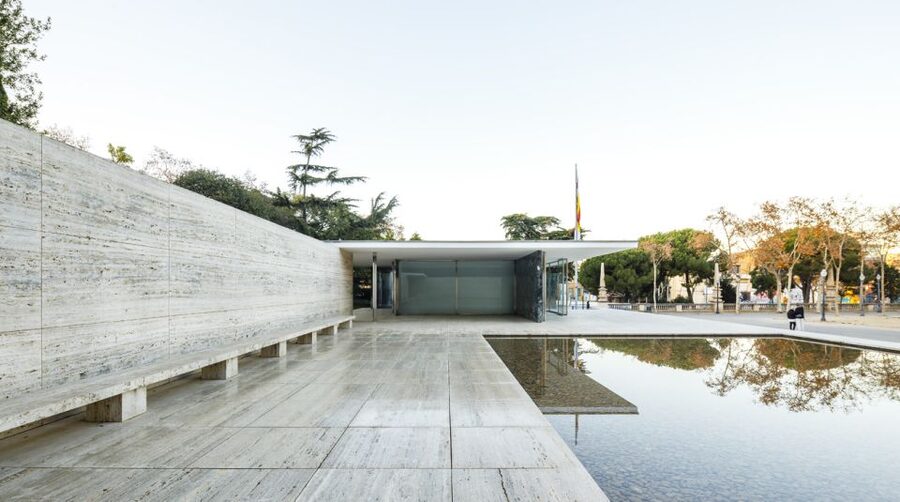
- Minimal, modern design you can actually see up close without getting lost in crowds
- 5-language audio guide that turns the space into an understandable lesson
- Mies van der Rohe and Lily Reich background, plus what happened after the 1929 exhibition
- Rebuilt and reopened in 1986, so you’re not just touring a theory, you’re touring a living work
- Material contrast drawn from far places like the Alps, Tivoli, Atlas, and Tinos
- Rules that shape the visit, like no tripods and no food, which keeps the experience respectful and focused
Mies van der Rohe Pavilion Ticket: Why This Tiny Building Feels So Big
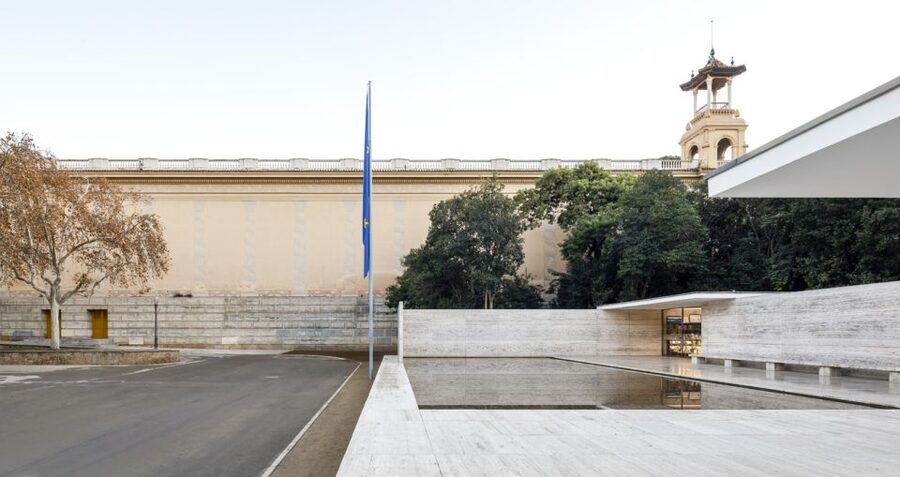
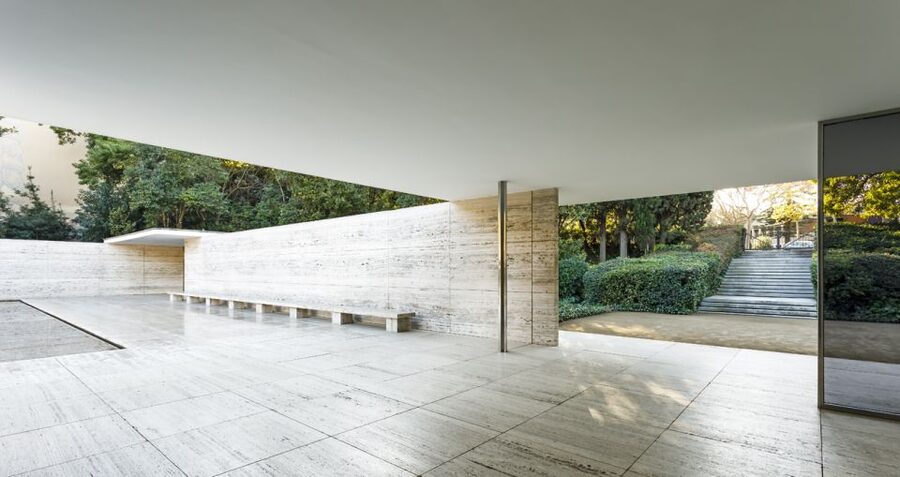
This is one of those places that proves modern architecture isn’t only for architects. The pavilion works for anyone who likes clear thinking, honest materials, and spaces that feel intentionally balanced. You walk into a structure where everything is controlled, from the way the roof lines sit above you to how the inside and outside keep talking to each other.
I like that it is not trying to overwhelm you. The design is almost stubborn in its simplicity. That makes the details pop: the crisp planes, the strict geometry, and the careful separation (and connection) between rooms and terraces.
The other reason it feels big is the story behind it. Designed for a world exhibition, taken apart afterward, and then reconstructed decades later, the pavilion carries both design ambition and real-world complexity. When you know that, you pay more attention to what Mies and Lily Reich were aiming for.
A few more ways to see Barcelona
- Barcelona: Park Güell Admission Ticket
★ 4.4 · 76,534 reviews - Barcelona Aquarium: Entry Ticket
★ 4.3 · 13,335 reviews - Barcelona: Sagrada Familia Skip-the-Line Entry Ticket & Tour
★ 4.8 · 12,789 reviews
Entering with a Skip the Line Ticket and Audio Guide
Your experience starts with straightforward access. The ticket includes entry to the pavilion and an audio guide, and the setup is designed to help you avoid the slow points. Once you’re inside, the audio guide becomes your best way to get oriented, because the pavilion is visually subtle. You can easily miss the meaning if you only glance at the forms.
Plan to arrive ready to listen. Put your phone on quiet and give the audio a chance to guide your pace. The visit works best when you don’t rush to check off photos, but instead walk, stop, listen, then look again with new eyes.
Languages matter here. The guide is available in Spanish, Catalan, English, French, and German, so you can stay with your comfort language and follow the explanations without constantly switching back and forth mentally.
One practical note: the pavilion is sometimes used for professional photography sessions. That means you might see people setting up or moving with purpose. If you want a calmer flow, arriving early in the day and staying flexible helps you have more breathing room.
The Pavilion’s Story, From 1929 to the 1986 Rebuild
The pavilion was designed by Mies van der Rohe and Lily Reich for the German national pavilion at the 1929 Barcelona International Exhibition. That matters, because the building was originally part of a big public event, not a permanent monument built for decades of daily tourism.
After the exhibition ended, the pavilion was dismantled. Then came the part that makes the site feel almost alive today. Because the pavilion is considered so important to the Modern Movement, it was reconstructed later and reopened on its original site in 1986.
When you understand that timeline, you stop treating it like a static postcard. You realize it is also about preservation, interpretation, and the challenge of rebuilding an architectural idea with care. You’re seeing a modernist work that has had to survive time in more than one way.
Interiors, Exteriors, and the Calm Feeling You Get Here
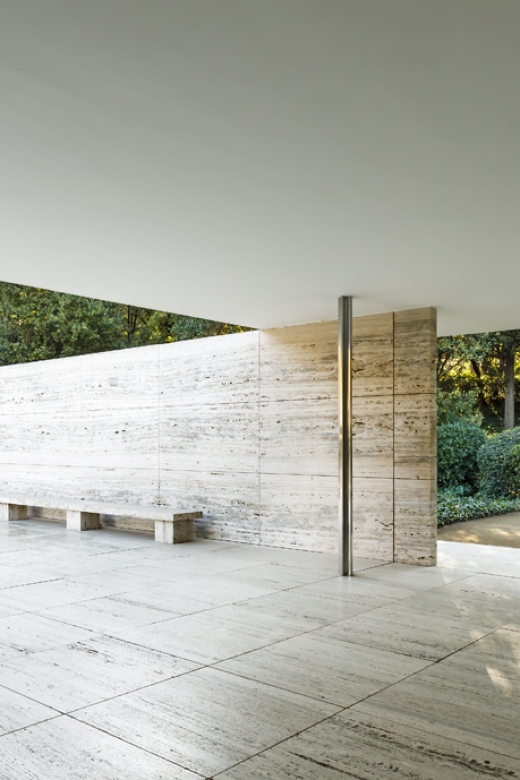
The pavilion is famous for a reason: its design is built around balance between inside and outside. The roof line and the glass-like boundaries create a sense that rooms do not end the way you expect. Instead, they soften into the terrace and sky.
You’ll likely notice the purity of forms right away. The design doesn’t compete with your attention. It asks you to slow down enough to register proportion. That’s why the best visits feel quiet even if people are present.
One of the reviews that stood out to me described this as a space that can include professionals photographing or modeling, and that those people became part of the scene. That’s a good mindset. If the pavilion is being used in that way during your visit, try to watch how the architecture frames them, rather than only thinking about your own comfort.
Also, watch your timing. Arriving at the planned time tends to help you avoid the moments when the space is most “in use.” If you want to take your time with the audio guide, a slightly earlier start is usually the easiest choice.
Another side of Barcelona worth booking on the same trip:
- Barcelona: Casa Batlló Entry with Self-Audioguide Tour
★ 4.7 · 25,359 reviews - Barcelona: 24 or 48-Hour Hop-On Hop-Off Bus Tour
★ 4.4 · 20,872 reviews - Barcelona: Park Guell Guided Tour with Skip The Line Entry
★ 4.7 · 17,563 reviews - Barcelona in 1 Day: Sagrada Familia, Park Guell,Old Town & Pickup
★ 5.0 · 13,541 reviews
Materials Matter More Than You Think
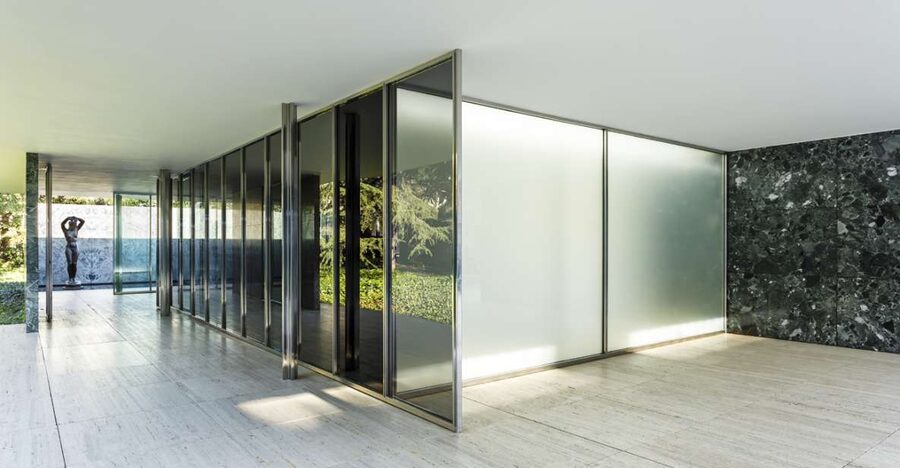
Modern architecture can look like a set of lines from far away. Up close, the pavilion proves that material choice is half the message.
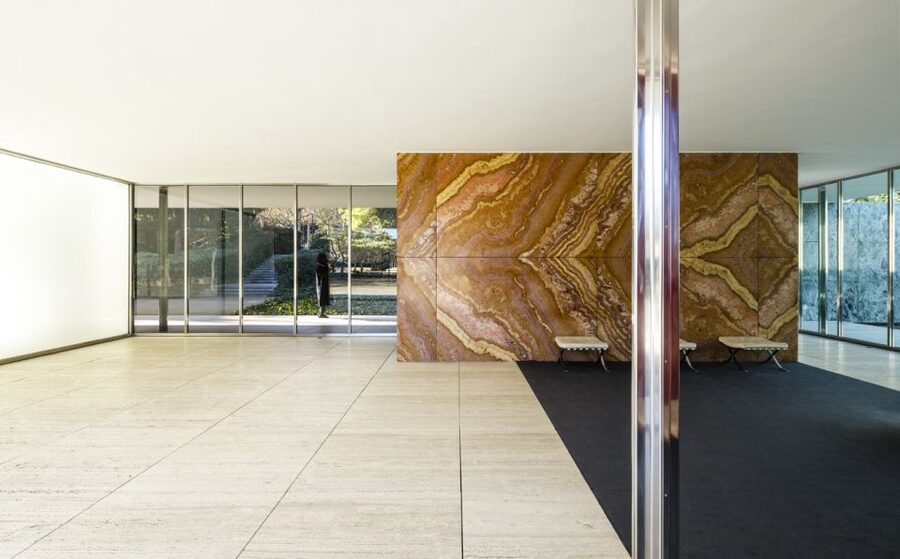
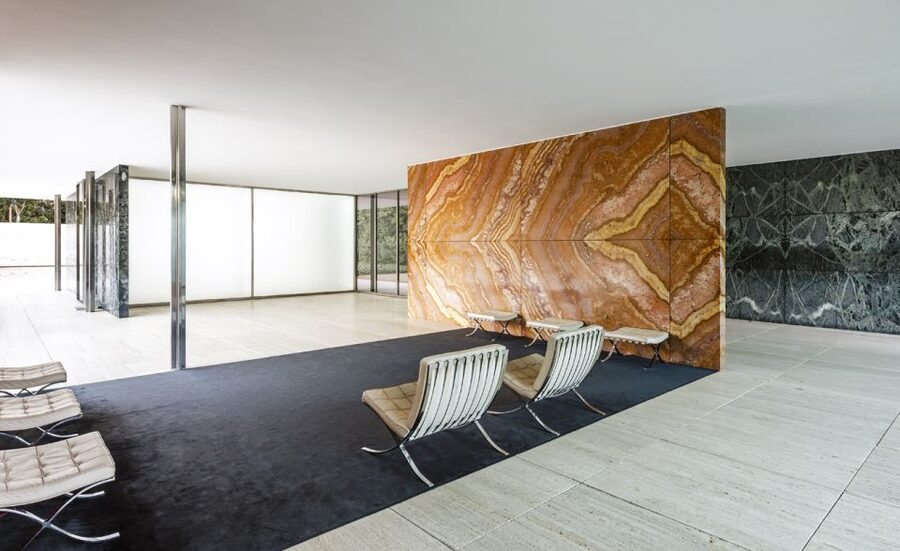
The pavilion uses a palette of materials selected with precision, including stones brought from distant places such as the Alps, Tivoli, Atlas, and Tinos. That sounds abstract, but you can feel it in the way surfaces read under daylight. Color and texture do the work that decoration would normally do.
As you move through the pavilion, look for contrast. It is not about dramatic colors. It is about sober differences that keep the space from feeling flat. The design uses these material choices to create order and calm, then uses contrast to prevent monotony.
Because the building is minimalist, your own perception becomes part of the experience. You might find yourself noticing small shifts as you change your angle, especially when the audio guide prompts you to look at what you would otherwise overlook.
Rules You Should Know Before You Go (So You Don’t Get Stopped)
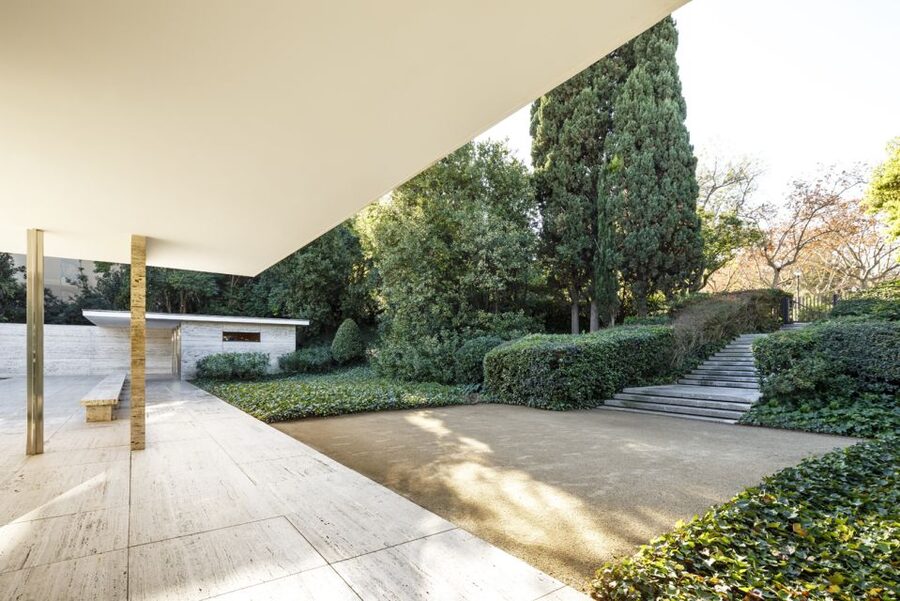
This is a controlled environment, and it stays that way with clear rules. For a smooth visit, remember:
- No smoking
- No food and drinks
- No pets (assistance dogs are allowed)
- No tripods
Those restrictions are not just “for enforcement.” They also help keep the pavilion focused and calm. No tripods, for example, reduces the chance of someone turning the space into a setup zone that blocks others for long stretches.
If you’re thinking about photography, handheld is usually fine, but keep it respectful of others and avoid actions that slow people down. If the pavilion is hosting an artistic intervention, the experience may look a bit different than in your photos online. That’s normal here, and it’s worth treating as part of the site’s living present rather than a disruption.
Best Time to Visit: Small Space, Real Flow
The pavilion is not huge. That’s part of its charm, but it also means crowding has more impact. If you’re paying attention to comfort and calm, you’ll benefit from smart timing.
One review advice point that makes sense: arrive on time. If you arrive late, you may find the space already working at full capacity, or you may end up waiting while you try to listen to the audio guide. If you’re early, you can get your bearings fast, settle into the rhythm of the audio, and take in the architecture without feeling rushed.
Also keep in mind that the pavilion occasionally hosts artistic interventions, which can alter its appearance. If your goal is to see the building exactly as expected, plan for some variability. If your goal is to understand how modern design handles changing contexts, this can actually make the visit more interesting.
A Short Nature Trail Nearby for a Reset
One neat detail from a review: there may be a short nature trail near the site. If you have time after your audio guide finishes, that can be a nice way to reset your eyes and head before you move on to the rest of your day.
This is not the kind of building where you want to force a full-day plan inside the pavilion itself. It’s better as a focused stop, then a walk. Even a short stretch outdoors can help you process what you just saw, because the pavilion is all about proportion and the interplay of form and space.
Price and Value: Is $10 Worth It for the Pavilion and Audio Guide?
At about $10 per person, the price is fairly easy to justify if you use what’s included. You’re not just paying for a doorway. You’re paying for entry plus an audio guide in five languages, which is exactly what turns a minimalist building into something you can actually interpret.
There are also mixed feelings because some people think modern architecture should be free, especially when it feels like a simple structure. I get that reaction. The pavilion looks small compared to big ticket museums.
But this is where value shows up: you’re paying for guided understanding and time efficiency (skip-the-line entry), and the pavilion’s importance is real. It’s a benchmark for the Modern Movement and a design that helped shape generations of architects and artists. In practical terms, the audio guide can make the ticket feel like a lesson you can take your time with, not just a photo stop.
If you’re tight on budget, you might also consider whether you truly love architecture explanations. If you just want a quick look with no interest in the design story, the admission may feel less satisfying. If you do care about design, $10 is a low-stakes way to get deep context quickly.
Who This Ticket Fits Best (And Who Might Want Another Plan)
This visit suits you best if you fall into one of these categories:
- You like architecture that depends on proportion, not ornament
- You want a calm, focused stop rather than a high-energy museum day
- You’re the type who enjoys reading design decisions in real materials, not only in textbooks
- You appreciate audio guidance and want the story in your language
It might feel less ideal if you only have patience for long, immersive walkthroughs. The pavilion visit is more like a precise visit, and the best results come from walking slowly, listening, then looking again.
It also works well for photography fans, as long as you keep things respectful and follow the no-tripod rule. If you’re hoping for a completely empty set, it’s smart to set expectations. This building can attract professionals, and the space is small enough that that influence becomes visible.
Should You Book This Mies van der Rohe Pavilion Ticket?
Book it if you want an efficient, thoughtful entry to one of the most influential modernist works in Barcelona, with an audio guide included so you understand what you’re seeing. The pavilion’s story, its reconstruction in 1986, and the material choices from far-off regions are all the kind of context that makes the visit more meaningful.
Skip or reconsider if you dislike paying for small sites, or if you only want quick sightseeing with no interest in design background. Also, if you strongly need a completely quiet environment with no professional activity, plan extra time and be flexible, because the pavilion can be used for photography and occasional interventions.
FAQ
How much does the Mies van der Rohe Pavilion ticket cost?
The ticket price is listed at $10 per person.
How long is the ticket valid?
The ticket is valid for 1 day. You can also check available starting times.
What’s included with the ticket?
Your ticket includes entrance to the Mies van der Rohe Pavilion and an audio guide.
Which languages is the audio guide available in?
The audio guide is available in Spanish, Catalan, English, French, and German.
Is the pavilion wheelchair accessible?
Yes, the pavilion is wheelchair accessible.
Are pets allowed?
Pets are not allowed. Assistance dogs are allowed.
Is there free cancellation?
Yes, you can cancel up to 24 hours in advance for a full refund.
Recently reviewed in Barcelona
- Barcelona: Sagrada Familia and Park Güell with Hotel Pickup★ 4.5 · 33 reviews
- Barcelona: Sagrada Familia, La Pedrera & Cava Tasting Tour★ 4.2 · 33 reviews
- Barcelona: Sagrada Familia, Park Guell & Tapas Private Tour★ 4.9 · 47 reviews
- Barcelona´s Lunch or Dinner Tapas Tour: Food and Happiness★ 5.0 · 8 reviews
- Barcelona: Sagrada Família and Park Güell Guided Tour★ 4.7 · 6 reviews
- Barcelona: Rooftop Tapas and Sangria Class with a Chef★ 5.0 · 60 reviews
- Barcelona: Fun & Unpretentious Rooftop Wine Tasting★ 4.1 · 26 reviews
- Barcelona: Rooftop Tango Lesson with Drinks and Videos★ 4.9 · 159 reviews
Self-Guided Tours, compared.

Casa Batllo Admission Ticket with Intelligent Audio Guide
Read our review →
Barcelona Audioguide – TravelMate app for your smartphone
Read our review →Browse the lists this tour appears in