
Reviewed · GOTHIC QUARTER TOURS
Discover Barcelona’s Gothic Quarter | Private & Semi-Private
This is an efficient way to understand Barcelona fast, because the Gothic Quarter is basically one long storybook of Roman, medieval, and Spanish-era layers in the same few blocks. You’ll walk past real landmarks, then connect them into a clear timeline as you go, not as a lecture.
I love the small group size of only 6. I also love that your Cathedral of Barcelona tickets include a visit to the top, so you’re not just looking at stone, you get views and photo time too. The only catch is the walking, plus dress rules at places of worship, so plan your outfit before you meet your guide.
If you want a totally hands-off tour where you never walk, this may feel a bit active for 2 hours. Otherwise, it’s a strong choice for first timers and anyone with limited time who still wants the “why does this place look like this?” answers.
Key highlights you should care about
- Small group of 6 keeps it conversational and easier to ask questions
- Cathedral entry with top access adds payoff beyond a street-level stroll
- Well of Geese in the cloisters (13 white geese tied to St Eulalia’s story)
- Plaza Sant Felipe Neri and the Church of Sant Felipe Neri, shaped by the Spanish Civil War
- Roman Barcino to Catalan government at Place de Sant Jaume
- Temple of Augustus with towering columns and a link to the city’s oldest roots
Why this Gothic Quarter walk feels practical, not just scenic
Barcelona’s Gothic Quarter can overwhelm you if you wander alone. Streets look gorgeous, but it’s easy to miss what you’re actually looking at, or why one building sits next to another that seems totally different.
On this tour, I like that you get a tight route through the essentials and a few quieter stops. Your guide puts the pieces together as you move, which is exactly what you want when you only have a couple hours. And since the group is capped at 6, it’s easier to keep the momentum without being shuffled around.
You’ll start in Ciutat Vella, the Old Town area, so the whole walk feels like the city’s original center. Expect classic Gothic sights plus Roman-era reminders you can’t really see as well from guidebooks alone.
More Gothic Quarter walks:
- Barcelona Gothic Quarter Tapas & Taverns Food & Wine Tour
★ 5.0 · 1,470 reviews - Barcelona: Old Town and Gothic Quarter Walking Tour
★ 4.8 · 1,393 reviews - Barcelona Old Town & Gothic Quarter Small Group Tour
★ 5.0 · 1,308 reviews
Meeting at Plaça Nova, then getting your bearings fast
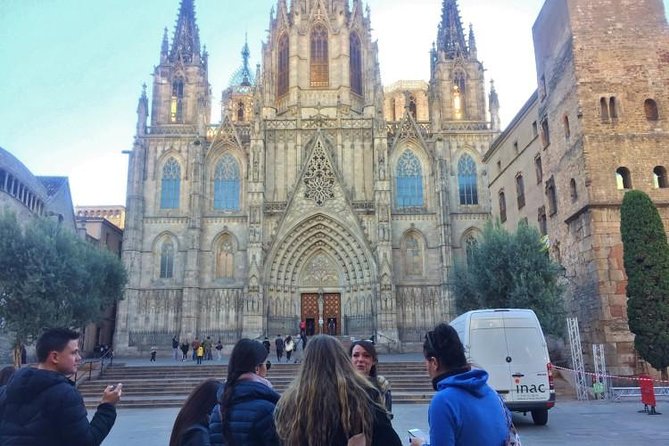
The tour meets at Plaça Nova, 5, in Ciutat Vella, and it ends back at the same spot. That matters more than it sounds. When a tour returns you to the start, you can keep exploring right after without backtracking through the maze.
You’re also near public transportation, so it’s simpler to fit this into a day that includes other sights. And since the tour is offered in English and uses a mobile ticket, you can travel light and avoid fussing with printed vouchers.
One practical note: this is a walking tour. Comfortable shoes are your best friend here, because “2 hours” can still mean a fair number of steps when you’re stopping frequently to look, listen, and take photos.
Barcelona Cathedral, St Eulalia, and the views that make the climb worth it
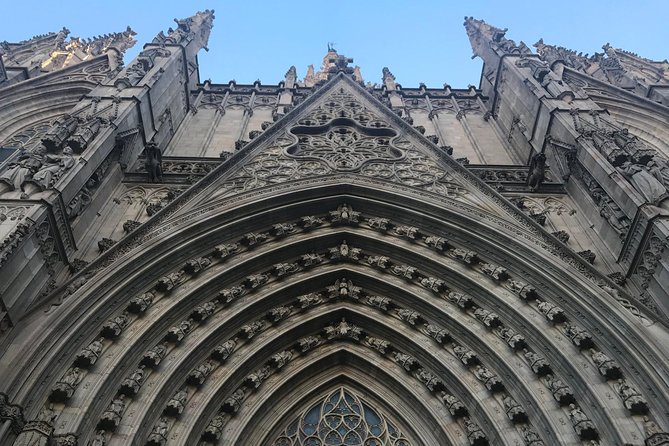
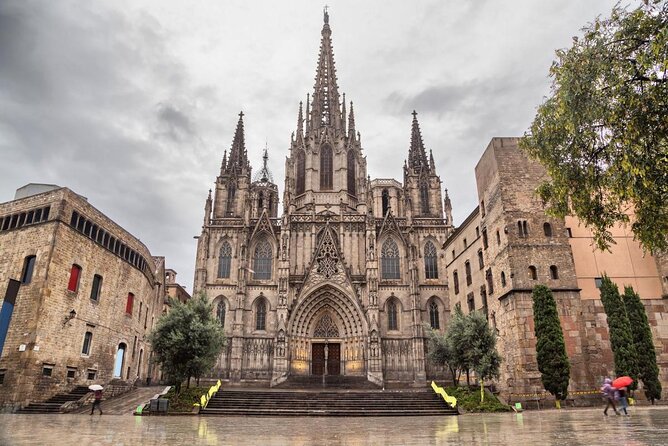
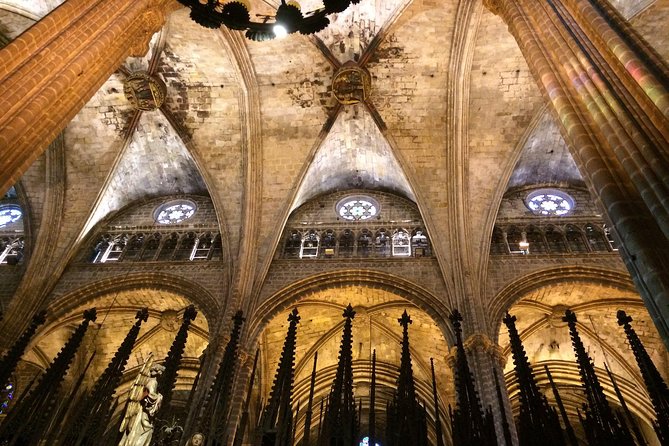
Your first stop is Catedral de Barcelona, also known as the Cathedral of St. Eulalia. Even if you’ve seen Gothic cathedrals elsewhere, this one hits differently because you’re in the middle of Barcelona’s old core, not on a postcard edge of town.
The cathedral is a top-tier example of Gothic architecture, and the tour gives you just enough time to understand the big picture without feeling rushed. You’ll also visit the cloisters, but first you’ll connect the cathedral to the broader Gothic Quarter story as you stand there taking it all in.
Here’s where the value really kicks in: your entrance ticket includes a visit to the top. If you like skyline photos, or you just want to see how the neighborhood lays out below, this part is a big payoff. It turns the tour from “look at buildings” into “see the city’s layout in one glance.”
The cloisters and the Well of Geese, a small detail with big meaning
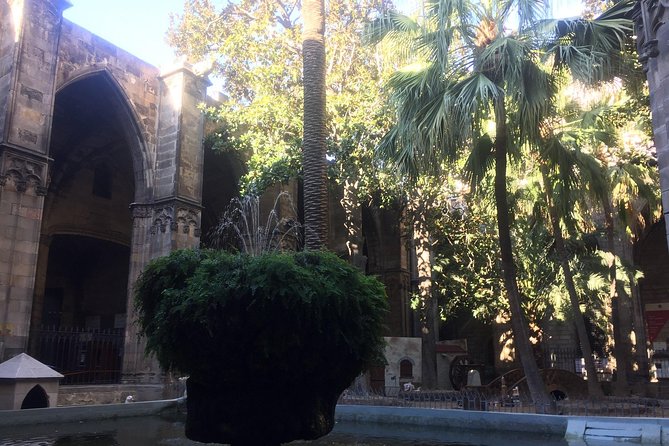
Inside the cathedral complex, you’ll spend time in the cloisters at the courtyard where 13 white geese live. This is connected to St Eulalia’s story, with the 13 geese tied to the years of her life before she was taken away by the Romans.
What I like about this stop is how it’s specific. It’s not just a general religious backdrop. You get one concrete detail that makes the story easy to remember, and the symbolism is something your guide can explain in a way that feels like trivia you actually want to keep.
It also helps you slow down. The Gothic Quarter can move fast when you’re sightseeing, and a cloister pause gives you a breather while still staying on theme.
Dress rules apply when you’re in churches, so plan for shoulders and knees covered. That’s not just about comfort. It also helps you avoid the awkward scramble right before entering.
A few more ways to see Barcelona
- Montserrat Monastery Small Group or Private Tour Hotel pick-up
★ 5.0 · 5,144 reviews - Tour Welcome Barcelona with Local Guide in Eco Tuk Tuk Private
★ 5.0 · 1,882 reviews - Barcelona Private Tour by Sidecar Motorcycle
★ 5.0 · 1,750 reviews - Barcelona Helicopter, Sailboat & Old Town Private Walking Tour
★ 5.0 · 1,395 reviews
Plaza Sant Felipe Neri: a calmer church story with a wartime survival arc
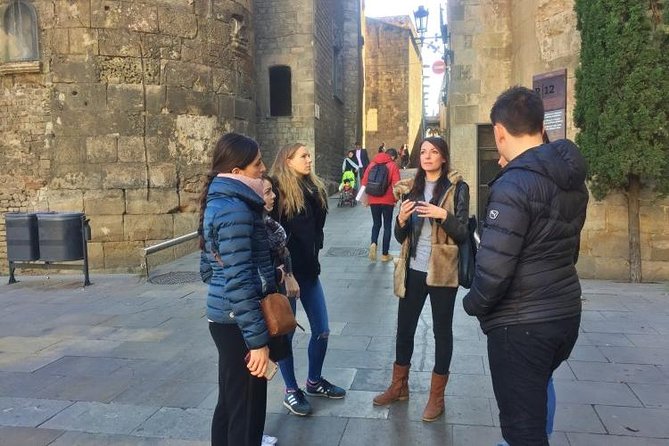
After the cathedral, you head toward Plaza Sant Felipe Neri, where you’ll visit the Church of Sant Felipe Neri. This is one of those stops that feels like it exists just a little off the main tourist radar, which makes it satisfying when you’re trying to see Barcelona beyond the main squares.
This church has a story tied to the Spanish Civil War, including how it survived and later how it was restored to what you see today. When your guide explains that timeline, you start to realize how architecture can carry scars, then also how communities repair and reclaim places.
If you’re the kind of traveler who likes to understand why a building looks the way it does, this is a strong moment. It turns “pretty facade” into “here’s what changed, and why you can still read that change.”
Place de Sant Jaume: Roman Barcino roots and Barcelona’s governing center
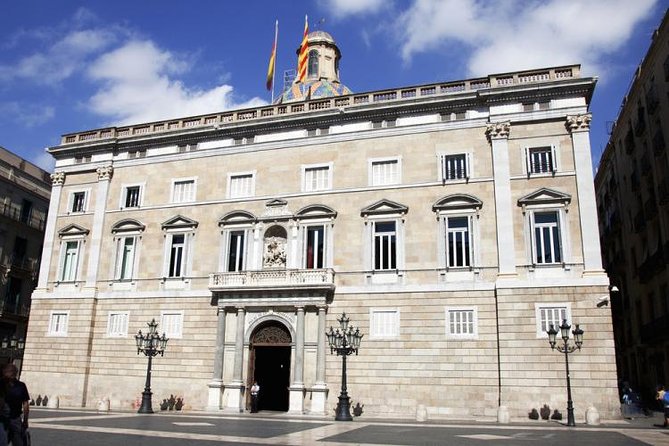
Next you walk to Place de Sant Jaume, one of the key squares in the Gothic Quarter. This is where the tour becomes more than sightseeing because the guide connects the square to the city’s layers.
You’ll learn that Place de Sant Jaume was once at the heart of the Roman city of Barcino, and later it became the administrative district for both Barcelona and Catalonia. Today, it’s the home of Barcelona City Hall and the Generalitat de Catalunya, so the area is still functioning as an important civic center.
Even if you’re not a political-history person, this stop helps you “see” how power and settlement patterns shaped the city. Squares like this often feel timeless, but they actually change roles over centuries. The tour makes that shift obvious.
Temple of Augustus: proof that Barcelona’s oldest pages are right under your feet
Then you move on to the Temple of Augustus. You’ll be walking by, taking in the columns that are considered the pinnacle of Roman architecture, reaching about 30 feet tall and tied to the city’s very old roots.
This stop works well because it interrupts the Gothic focus. Barcelona isn’t only medieval stone. You get a reminder that the city has Roman DNA, and the remaining structures show how the city’s identity keeps getting rewritten while old foundations stay in place.
If you like architecture with a timeline behind it, this is a great moment to slow down and look upward. The height and age make it hard to dismiss as a random ruin.
Plaza del Dei and Columbus: a sunny break with a historical punch
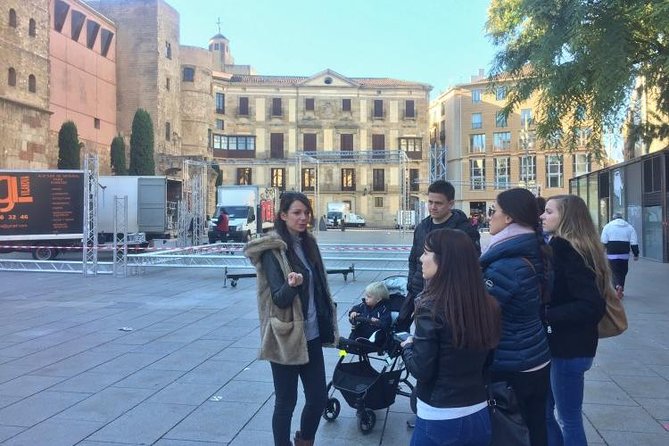
Your stroll continues to Plaza del Dei, a square connected to Christopher Columbus meeting King Ferdinand and Queen Isabella after his first journey to the New World. That’s the kind of story that could feel distant, but in this location it lands more naturally because you’re moving through the same old-town web that hosted those turning points in European history.
Today, Plaza del Dei functions like a neighborhood gathering place, with cafés, cocktail bars, and restaurants nearby. That’s useful. After an hour of details, it gives you a chance to reset, look around, and decide where you want to go next for a drink or snack.
If you’re building a day plan, this is a good “staging area” point. You’ll finish the tour back near where you started, but you can also use this square as a direction marker for the rest of your evening.
Guide quality matters, and Pabelo makes the story click
One of the best parts of this experience is the guide. In particular, Pabelo gets high marks for being interesting and for explaining the Gothic area in a way that makes the changes across years feel understandable, not confusing.
That style matters in the Gothic Quarter. The buildings are beautiful, but without context they can blur together. A good guide helps you keep a mental map: what you’re seeing, when it fits, and how different periods layered into one neighborhood.
With a group size capped at 6, you’re not competing for attention in a crowd. You can ask questions and still move at a normal walking pace.
Price and value: $130.97 for 2 hours, what you’re really paying for
At $130.97 per person for about 2 hours, this tour isn’t the cheapest thing you can book in Barcelona. But it also isn’t a pure pay-for-a-walk option.
You’re paying for three value drivers that add up:
- A small group instead of a larger herd
- A professional local expert guide doing the interpretive work
- Entrance tickets to the Cathedral, including time at the top for views
If you’ve ever bought cathedral tickets separately, you know admission plus skyline access can already take a bite out of your budget. Here, the ticket is included in the experience package, so the price feels more aligned with what you’re getting.
I’d call this a good value for travelers who want direction and context without spending a whole day on one neighborhood. It also makes sense if you’re visiting for the first time and want the Gothic Quarter’s big beats in a tight window.
Who this tour suits best, and who might want something else
This walk is a great fit if you:
- Are a first-time Barcelona visitor and want your bearings fast in Ciutat Vella
- Have limited time but still want more than “look at the pretty stuff”
- Like architecture plus story, especially Roman and Gothic connections
- Prefer small groups and easier question time
It might be less ideal if you:
- Hate walking or want a very slow pace
- Are sensitive to church dress rules and don’t plan ahead for covered shoulders and knees
- Want a tour that focuses heavily on only one type of architecture, like purely Roman ruins or purely medieval churches
Practical tips before you go, so nothing derails your photos
For places of worship, you need shoulders and knees covered, no tank tops or short dresses. If you’re traveling with summer clothes, pack a light layer you can wear under an open outer top. It will save you from last-minute frustration.
Bring comfortable walking shoes. Even on a short tour, you’re on uneven old-street surfaces and stopping often, so cushioned support helps.
For photos, pay attention to timing around the cathedral top. That included viewpoint is one of the main photo opportunities, so treat it like a priority and don’t spend all your camera time before you get there.
If you want to keep the rest of your day flexible, plan to keep this tour near the beginning or middle of your itinerary. Finishing back at Plaça Nova makes it easy to branch out.
Should you book this Gothic Quarter tour?
Book it if you want a structured, efficient introduction to the Gothic Quarter with included Cathedral access and a guide who can explain the neighborhood’s changes without turning it into a lecture. The combination of key landmarks plus a couple of quieter stops makes it feel complete without being too long.
Skip it if you’re the type who prefers to wander entirely on your own, or if you don’t want to deal with dress requirements in churches. In that case, you might be happier with a self-guided route and your own pace.
FAQ
How long is the Gothic Quarter walking tour?
It’s about 2 hours.
How many people are in the group?
The small group is limited to only 6 people.
What language is the tour offered in?
The tour is offered in English.
What does the tour include for the Cathedral of Barcelona?
Your entrance tickets include a visit to the top of the Cathedral.
Where does the tour start and end?
It starts at Plaça Nova, 5, Vestibul, Ciutat Vella, 08002 Barcelona, Spain, and ends back at the same meeting point.
Is there a dress code for church stops?
Yes. You need shoulders and knees covered, so avoid tank tops and short dresses.
Can I upgrade to a private tour?
There is a possibility to upgrade to a private tour.
Is cancellation free, and how far in advance do I need to cancel?
Cancellation is free. You can cancel up to 24 hours in advance for a full refund.
Recently reviewed in Barcelona
- Barcelona: Citizen Segway Tour★ 5.0 · 53 reviews
- Cathedral of Barcelona Entrance Ticket – Optional Private Guide★ 4.0 · 114 reviews
- Sagrada Familia Private Tour in Barcelona★ 4.5 · 23 reviews
- Montjuïc Cemetery Walking Tour – Hidden Art, History & Views★ 5.0 · 62 reviews
- Barcelona Gracia Neighborhood Local Food & History Tour★ 5.0 · 92 reviews
- Castle of Montjuic- 3H Segway Tour★ 5.0 · 3 reviews
- Barcelona Old Town Tour With Optional Flamenco Show★ 5.0 · 42 reviews
- Guided private morning tour of La Pedrera with Casa Batlló ticket★ 5.0 · 14 reviews
Gothic Quarter Tours, compared.

Barcelona Gothic Quarter Tapas & Taverns Food & Wine Tour
Read our review →
Gothic Quarter Ghosts and Legends Walking Tour
Read our review →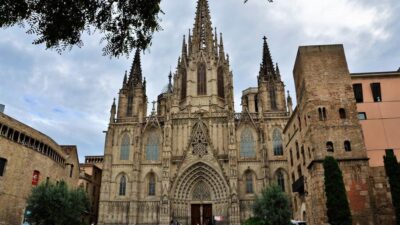
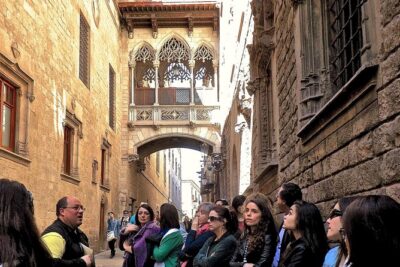
Barcelona Old Town & Gothic Quarter Small Group Tour
Read our review →
El Born and Gothic Quarter Wine & Tapas Bar Tour
Read our review →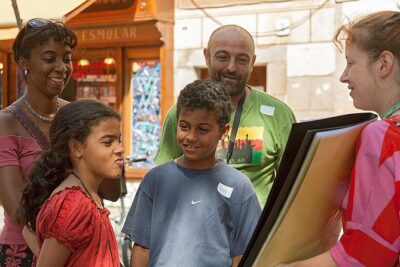
Kids and Family Gothic Quarter Walking Tour in Barcelona
Read our review →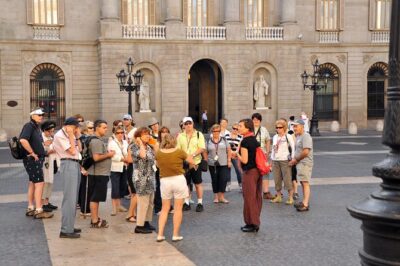
Browse the lists this tour appears in