
Reviewed · BARCELONA
Palau de la Música & Sant Pau Art Nouveau Site
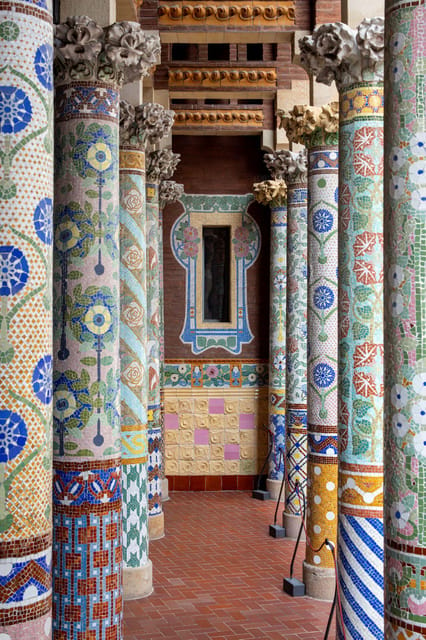
This is an efficient, high-impact way to see two of Domènech i Montaner’s best-known works in one day. You’ll get Palau de la Música first, then head to the Recinte Modernista de Sant Pau, described as the largest modernist complex in the world. I like that it’s self-guided, so you can move at your pace, and I like that the combined setup is built around simple access.
The main thing to consider is timing. You pick a visit time for Palau during purchase, and Sant Pau has season hours plus a last-entry window, so you’ll want to plan your route and not wander too long outside the sites.
Key Highlights You’ll Actually Use
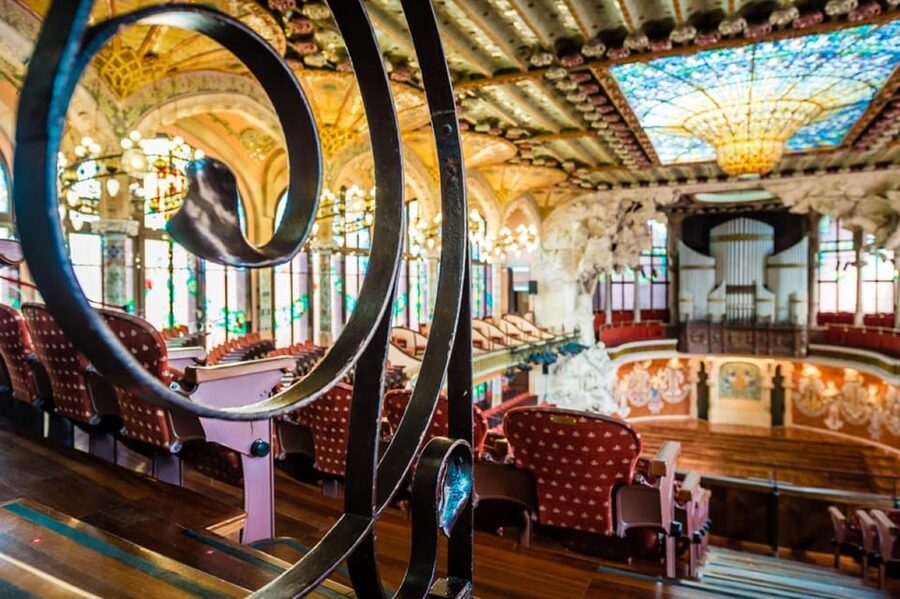
- Two monuments, one combined ticket: Palau time slot plus Sant Pau entry using the same ticket
- Self-guided Palau with a digital brochure: no group schedule inside the building
- Sant Pau with a map and staff support: easy to navigate a large modernist complex
- Domènech i Montaner focus: two emblematic works by the same architect
- Many language options: brochures and staff support include English and French, plus more
- Wheelchair accessible: the experience is built to be usable for mobility needs
Two Domènech i Montaner Icons in Barcelona, in One Ticket
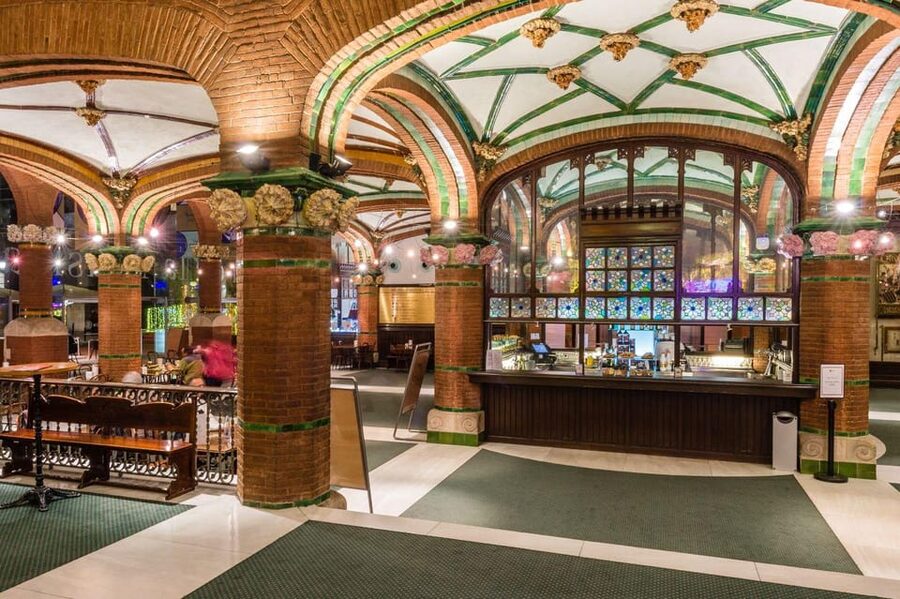
If you’re trying to understand Catalan modernism without spending the whole day in lines, this is a smart combo. For $34 per person, you’re paying for coordinated access to two major sites, not a long guided program with a big production.
The big idea is simple. Palau de la Música is accessed with your chosen time and a digital brochure during a self-visit. Then Sant Pau Art Nouveau Site can be visited freely using the same ticket, with a map and help staff in the complex. That means you’re not forced into a rigid march from room to room.
I also like how the experience is practical about languages. The support listed includes Catalan, Spanish, English, French, German, Italian, and many others, which matters in modernist buildings where small details can be easier to appreciate when you understand the labels.
More of Barcelona that reviewers rate highly:
- Barcelona: Park Güell Admission Ticket
★ 4.4 · 76,534 reviews - Barcelona: Casa Batlló Entry with Self-Audioguide Tour
★ 4.7 · 25,359 reviews - Barcelona: 24 or 48-Hour Hop-On Hop-Off Bus Tour
★ 4.4 · 20,872 reviews
What makes this combo extra appealing
- Both sites are by Domènech i Montaner, so your brain starts forming connections fast.
- You’re not limited to one building type. Palau is about performance hall elegance. Sant Pau is about a huge modernist layout.
- The visit setup leans self-paced. That’s great if you like quiet moments, and it’s also good if you’re traveling with different walking speeds.
How the Combined Ticket Works (So You Don’t Get Stuck)
Here’s the workflow you should expect.
- When you buy, you choose your day and time to visit Palau de la Música Catalana.
- For Palau, your visit is free with the help of an explanatory digital brochure.
- For Sant Pau, your admission is free upon presentation of the same ticket that gives you access to Palau.
- Sant Pau is visited freely with the help of a map and information staff located in different areas.
The value in this system is that it’s not two separate ticket battles. You aren’t buying twice, and you aren’t trying to coordinate two separate time windows during a busy city day. One of the review notes highlighted that buying together can be cheaper than purchasing separately for two people, which lines up with the whole “combined access” goal.
Palau de la Música Catalana: Self-Visit With a Digital Brochure (9:00 to 15:30)
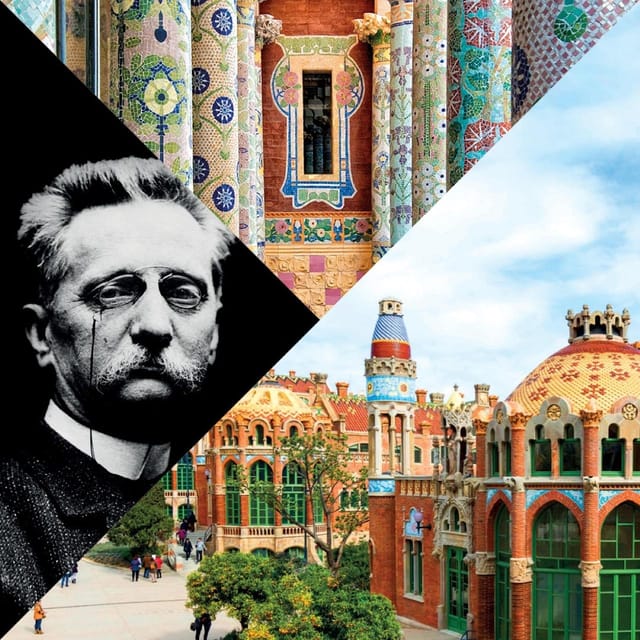
Palau de la Música is your first stop, and it’s the one that often grabs people by the eyes immediately. The ticket info frames it as an architectural pearl of Catalan modernism, and the experience style matches that. You enter and explore on your own, using a digital brochure for context.
Another side of Barcelona worth booking on the same trip:
- Barcelona: Park Guell Guided Tour with Skip The Line Entry
★ 4.7 · 17,563 reviews - Barcelona in 1 Day: Sagrada Familia, Park Guell,Old Town & Pickup
★ 5.0 · 13,541 reviews - Barcelona Aquarium: Entry Ticket
★ 4.3 · 13,335 reviews - Barcelona: Sagrada Familia Skip-the-Line Entry Ticket & Tour
★ 4.8 · 12,789 reviews
Plan your time for Palau
Palau is open for visits from 9:00 a.m. to 3:30 p.m. Your booking process includes selecting a time slot when you purchase. In practice, that means you should arrive a little early so you’re not rushed into the first rooms.
Also note the experience is built as a self-guided stop. There’s no mention of a required live guide, and what’s provided is a digital brochure. That’s good if you like to linger. It’s also good if you’re not trying to absorb everything at once.
What you’re doing inside
Because the visit is self-paced, you’ll get the most out of Palau if you treat the digital brochure like a “spotlight” tool. Instead of trying to read everything end-to-end, pick a few moments where you want the explanation to match what you’re seeing.
Here are the kinds of things that are usually worth slowing down for in a building like this, and the brochure format is designed for that:
- How decorative elements relate to the structure
- How materials and color cues guide your eye
- Architectural choices that tell you this is a landmark, not just a pretty hall
The overall promise here is that you’ll understand what you’re looking at, without needing a full tour script.
A possible drawback
Palau can feel like the kind of place where you want time to settle in. But your access is time-based. If your schedule is tight, you might feel a little pressure to keep moving. My advice is to set a realistic window and treat the first building as a “precision stop,” where you look closely rather than trying to speed-run.
Sant Pau Art Nouveau Site: The Large Modernist Complex (Seasonal Hours + Map Navigation)
Then you move to Recinte Modernista de Sant Pau, described as the largest modernist complex in the world. This is the contrast stop. Palau is one showpiece. Sant Pau is a whole complex, and that changes how you should approach it.
Opening hours you need to know
Sant Pau hours vary by season:
- April to October: 9:30 a.m. to 6:30 p.m.
- November to March: 9:30 a.m. to 5:00 p.m.
Last access is 30 minutes before closing. That matters. If you arrive late, you can end up doing only a small portion, and you’ll feel like you missed the point of a complex site.
How you navigate
Sant Pau uses a map plus help from information staff located in different areas. That’s a big deal for a large site. Without that, complex modernist layouts can turn into “random wandering,” which is fun sometimes, but not if you paid for a structured visit.
With the map and staff, you can:
- Find the key sections without second-guessing yourself for every turn
- Ask questions on the spot when signage isn’t enough for your language
- Adjust your route based on how much time you actually have
What to expect from the experience style
The visit is described as free, with the map guiding you and staff available for help. So you should expect a self-guided walk through multiple parts of the modernist complex.
My best advice for Sant Pau is to do it in “chunks.” Give yourself two or three internal mini-goals, like:
- One area where you focus on how the complex is laid out
- Another area where you focus on the modernist details
- A final area where you slow down, take photos, and double-check what you missed
Since you’re not on a timed group schedule inside, you can adapt to your energy level. Just don’t let the opening hours run out while you’re in photo mode.
Timing Your Day: Where the 180 Minutes Actually Helps
The experience info lists 180 minutes as the duration to plan for. That’s a helpful anchor because it keeps you from underestimating either site.
A simple pacing idea that usually works:
- Spend enough time at Palau to read and look without rushing
- Then use Sant Pau as your longer walk where you follow the map and take breaks
Also, remember Palau’s window ends at 3:30 p.m. If you want a relaxed day, try to start Palau earlier rather than later. If you start Palau right before the end of its hours, you can end up cutting Sant Pau shorter than you intended.
Language support can affect pacing
You don’t need perfect knowledge of Catalan to enjoy modernism, but reading at your preferred language is one of the most comfortable ways to connect details to meaning. Since the brochure and staff support include many languages, you can slow down without losing context.
Easy route mindset
This is a Barcelona day that makes sense as a “nearby monuments” plan. But the data doesn’t list exact transport instructions. So rather than inventing routes, I’ll suggest the practical approach: build a small buffer between the two stops, and plan to arrive with time to settle, not sprint.
Price and Value: Is $34 Worth It?
$34 per person is the price listed for the combined ticket.
Here’s how I’d judge whether that’s fair value, based on what’s included:
- You’re getting access to two major monuments of the same architect
- You’re not paying for a paid guided tour or a paid program inside
- You get Palau with an explanatory digital brochure
- You get Sant Pau with a map plus staff help
- The experience has a high rating (4.8) across 13 reviews
The biggest value driver is the combined design. One review specifically noted that buying the two areas together worked out cheaper than purchasing them separately for two people. Even if you’re traveling solo, the combined setup usually saves friction and time, which often matters more than saving a few euros.
In plain terms, you’re paying so you can visit two headline sites with support tools, instead of spending your day hunting for individual tickets and figuring out navigation on your own.
Who This Works Best For
This combined ticket is a strong match if you:
- Want to see two Domènech i Montaner landmarks without a full-day guided tour
- Prefer self-guided visits with interpretive support (digital brochure and map)
- Like modernism details and want context in your language
- Are traveling with someone who walks slower, because you aren’t tied to a group schedule
It also fits well if you’re the type who likes to arrive, look around, and then pause when something catches your attention. Self-guided doesn’t mean “ignore everything.” It means you decide what deserves your time.
People who might feel less happy
If you’re someone who gets lost easily and hates maps, you’ll want to rely on the staff at Sant Pau. The info says staff are present in different areas, so you’re not on your own, but you should still expect to spend some time orienting.
If your schedule is extremely tight, Palau’s time slot requirement could feel like one more constraint. It’s manageable, but it’s not fully “anytime” entry at Palau.
Practical Tips That Make This Visit Smoother
The data doesn’t list a lot of rules, but it gives enough to plan smart.
- Use the digital brochure at Palau like a tool, not a homework assignment. Read what matters while you’re standing in front of the relevant area.
- Bring a plan for Sant Pau navigation. Use the map early, then pick your route. Don’t wait until you’re far in to decide what you’re doing.
- Aim to arrive before last entry at Sant Pau. Last access is 30 minutes before closing, and that can shrink your final chunk of the visit fast.
- Pick a realistic Palau time. Palau ends at 3:30 p.m., so choose a slot that gives you breathing room.
- Wear comfortable walking shoes. Sant Pau is a large complex, and even when you move at a moderate pace, you’ll cover more ground than you might expect.
Should You Book the Combined Ticket for Palau de la Música and Sant Pau?
I’d book it if you want maximum modernism for your day, with self-guided support that helps you understand what you’re seeing. The structure is simple: Palau is tied to a time you choose, Sant Pau uses the same ticket and a map.
The decision comes down to two things. First, are you okay with a self-guided format? The included support is solid, but it’s not a live guided tour. Second, can you protect enough time before Sant Pau’s closing and Palau’s last entry window?
If yes, then this combined ticket is a strong value play. For the $34 price, you get two headline Domènech i Montaner experiences, with brochure and map help that makes the visits feel like more than just sightseeing.
FAQ
What locations does this combined ticket cover?
It covers Palau de la Música Catalana and the Sant Pau Art Nouveau Site (Recinte Modernista de Sant Pau) in Catalonia, Spain.
How does the combined ticket work between Palau and Sant Pau?
You choose your day and time to visit Palau de la Música Catalana during purchase. Admission to Sant Pau Art Nouveau Site is free when you present the same ticket that gives you access to Palau.
What are the visiting hours for Palau de la Música?
Palau visits are listed from 9:00 a.m. to 3:30 p.m.
What are the visiting hours for Sant Pau?
Sant Pau is open from 9:30 a.m. to 6:30 p.m. from April to October, and from 9:30 a.m. to 5:00 p.m. from November to March. Last access is 30 minutes before closing time.
How long should I plan for the combined visit?
The listed duration to plan is 180 minutes.
What languages are available for the experience?
Languages listed include Aranese, Catalan, Spanish, English, French, Italian, Galician, German, Portuguese, Russian, Japanese, Korean, Chinese, Arabic, Hebrew, Polish, and Basque.
Is food included in the ticket?
No. Food and a tour guide are not included.
Recently reviewed in Barcelona
- Barcelona: Citizen Segway Tour★ 5.0 · 53 reviews
- Cathedral of Barcelona Entrance Ticket – Optional Private Guide★ 4.0 · 114 reviews
- Sagrada Familia Private Tour in Barcelona★ 4.5 · 23 reviews
- Montjuïc Cemetery Walking Tour – Hidden Art, History & Views★ 5.0 · 62 reviews
- Barcelona Old Town Tour With Optional Flamenco Show★ 5.0 · 42 reviews
- Barcelona Gracia Neighborhood Local Food & History Tour★ 5.0 · 92 reviews
- Castle of Montjuic- 3H Segway Tour★ 5.0 · 3 reviews
- Guided private morning tour of La Pedrera with Casa Batlló ticket★ 5.0 · 14 reviews