
Reviewed · BARCELONA
The Timeless Beauty of Barcelona’s Gothic and Born Quarters
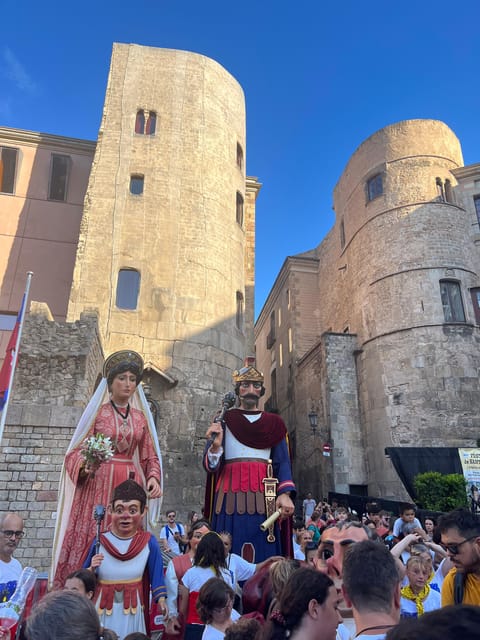
This 2-hour walking tour through Barcelona’s Gothic Quarter and El Born is interesting because it stitches together Roman traces, medieval drama, and Civil War stories on foot, in a tight route. I like that it is a true one-person walk run by Luca BCN, so the pacing feels consistent and direct.
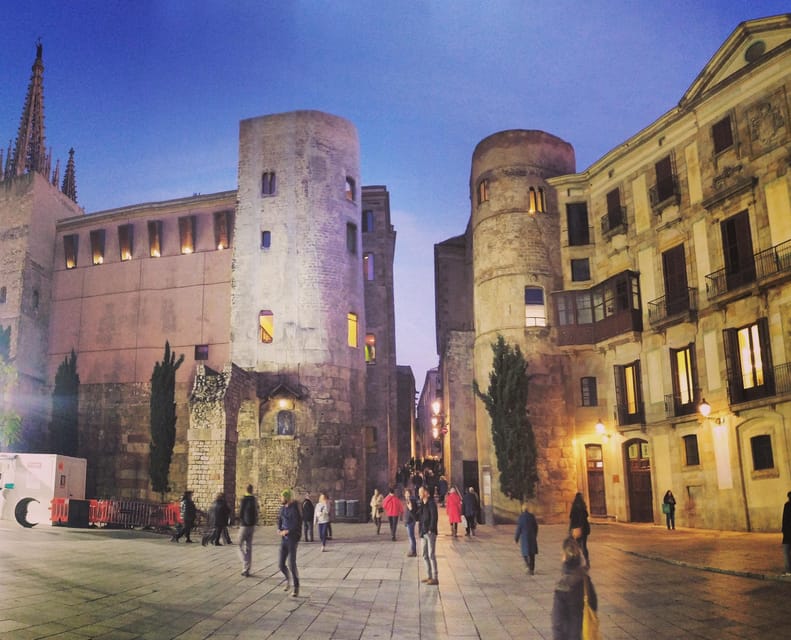
I also like the strong mix of big-name sights and story-based wayfinding, from the Temple of Augustus to Cathedral del Mar. You do not just pass buildings, you get names, legends, and context that help you read the city as you walk.
One possible drawback is the walking. Expect moderate time on foot and tight, old-street corners, and the tour is not suitable for mobility impairments or wheelchair users.
Key points to know before you go
- One-man guiding style: Luca BCN runs the walk, with no switching between guides and no add-ons you did not ask for.
- Roman to medieval connections: You see how Barcino’s Roman layer leads into Gothic-era Barcelona.
- Jewish Quarter focus: You get the story of a lost medieval Jewish Quarter and an ancient synagogue tied to the oldest synagogue in Europe claim.
- Civil War memory in everyday squares: You stop in San Felipe Neri square for resistance stories during Franco’s uprising.
- Local Catalan culture through legends: Santa Eulalia, San Jordi, Wilfred the Hairy, and el Caganer show up in the storytelling.
- Photo-friendly religious landmarks: Cathedrals and plazas along the route give you plenty of angles, especially with a camera ready.
Barcelona in 2 hours: a time machine you can actually finish
Barcelona’s old center can feel like a blur if you wander alone. This walk gives you a guided thread, so the Gothic Quarter and El Born stop being separate neighborhoods and start feeling like a continuous story.
The best part is how quickly the tour moves between eras. One minute you are looking at medieval street life, the next you are tracing Roman ideas under the city.
You will also feel a deliberate focus on culture, not just architecture. The guide’s storytelling includes heroes, legends, and everyday Catalan quirks, so you leave with more than a checklist.
More of Barcelona that reviewers rate highly:
- Barcelona: Park Güell Admission Ticket
★ 4.4 · 76,534 reviews - Barcelona: Casa Batlló Entry with Self-Audioguide Tour
★ 4.7 · 25,359 reviews - Barcelona: 24 or 48-Hour Hop-On Hop-Off Bus Tour
★ 4.4 · 20,872 reviews
Price and pacing: what $14 buys you on foot
At $14 per person for a 2-hour guided walk, this is budget-friendly for a city where many themed tours cost a lot more. You are paying for interpretation, not transportation, and the route is built around walkable highlights.
That said, value depends on what you want. If you are looking for lots of time standing still for quiet, in-depth explanations at one stop, a 2-hour city walk may feel fast.
A key practical note: plan for a range rather than a rigid clock. If crowds or pacing run tight, you might spend a bit less time at each stop than you expect, even though the duration is listed as 2 hours.
Luca BCN’s one-person approach: no fluff, no detours
This is a one-man operation. Luca BCN runs every walk, and the experience is presented as a straightforward, reliable route with no surprises, no cheating, and no umbrellas used during the walk.
I like this style because it usually means you get consistent direction. You are less likely to feel like you are learning half a story, since the same person guides the whole route.
It also helps that the tour is in English. You can follow the explanations without playing catch-up, and the guide’s book-and-story passion comes through in the way names and details get tied together.
Getting started at Plaça de Sant Jaume and into the Gothic Quarter
You meet your guide in front of Starbucks, then you begin near Plaça de Sant Jaume. This is a useful starting point because the area places you right in the middle of the city’s historic gravity.
From there, you head into the Gothic Quarter. Expect narrow lanes where locals live side by side with tapas bars and medieval details like carved stone faces high above eye level.
What makes this section work is the way the guide helps you look. Instead of telling you what to photograph, you learn what to notice, so your photos end up with meaning.
Another side of Barcelona worth booking on the same trip:
- Barcelona: Park Guell Guided Tour with Skip The Line Entry
★ 4.7 · 17,563 reviews - Barcelona in 1 Day: Sagrada Familia, Park Guell,Old Town & Pickup
★ 5.0 · 13,541 reviews - Barcelona Aquarium: Entry Ticket
★ 4.3 · 13,335 reviews - Barcelona: Sagrada Familia Skip-the-Line Entry Ticket & Tour
★ 4.8 · 12,789 reviews
The ancient synagogue area: where lost quarters become visible again
A standout part of the walk is the stop tied to the ancient synagogue in Barcelona. You get guided time around the idea of a lost medieval Jewish Quarter, along with the connection to the oldest synagogue in Europe claim.
Even if you have seen synagogue architecture before, this place lands differently because the guide frames it as a story of a city that changed over time. You start to understand why these streets feel layered, even when buildings look timeless.
Practical tip: have your camera ready, but also pause with your feet planted. The value here is in the explanation, not just the view.
San Felipe Neri square: civil-war resistance in a city you can feel today
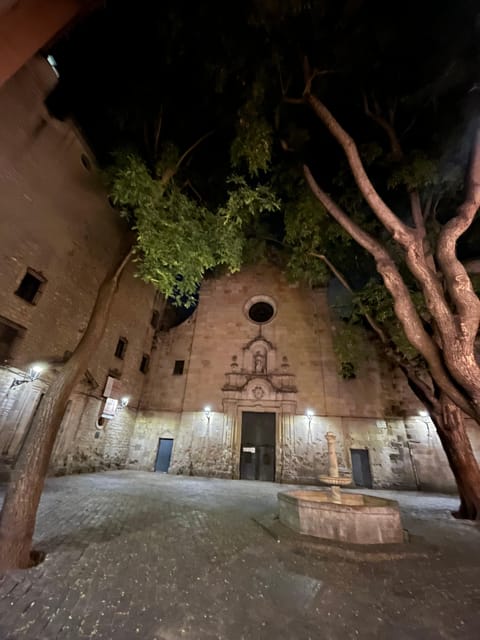
Next comes Plaça Sant Felip Neri. This is one of those squares where history is not behind glass, it is in the surrounding stone and the names you hear out loud.
The tour connects this stop to heroic resistance against Franco’s uprising during the Spanish Civil War. You will likely find this moment more emotionally intense than the Roman and medieval stops, because the story is about people and decisions, not just dates.
I like that the guide does not isolate this as a sad footnote. It gets woven into a wider picture of Barcelona’s identity and stubborn spirit.
Bishop’s Bridge and the street-level geometry of Barcelona
You also pass through the area connected with Bishop’s Bridge. The short stop is timed to let you orient yourself without racing.
This is a good moment to slow down and look at how the city lines up. In old European centers, bridges, arches, and passageways often act like visual anchors, and Barcelona is no exception.
If you are prone to walking past small details, this stop is a reminder to check your surroundings. A bridge viewpoint can also give you cleaner photos than trying to shoot straight at tall facades from a crowded sidewalk.
Roman Barcino thread: Temple of Augustus and the city under your feet
One of the tour’s smartest moves is bringing you to the Temple of Augustus and linking it to the ancient Roman city of Barcino. You get guided time here that helps the Roman layer stop being abstract.
A lot of people think of Rome as a separate place, but the lesson here is that Barcelona has its own Roman spine. When you understand the spine, the medieval city starts to make more sense.
The short stop format works well because it does not overwhelm you with facts. It gives you the key idea, then moves on while you still have the mental framework in place.
Barcelona Cathedral and the Gothic big picture
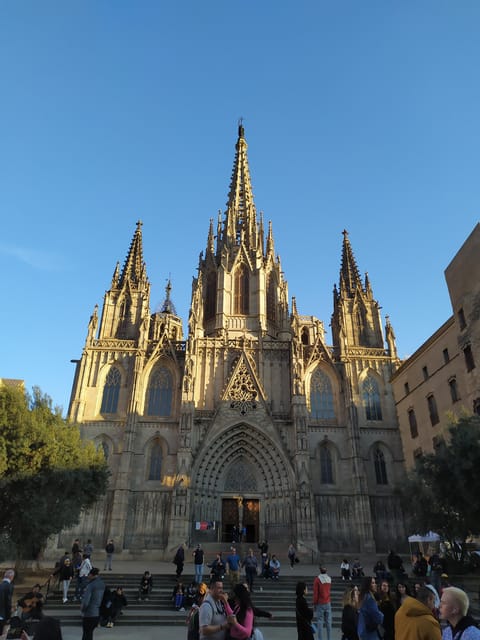
You continue to Barcelona Cathedral. This is where the tour’s Gothic focus turns from street scale to monument scale.
The guide’s storytelling matters here because cathedrals can feel like generic backdrops if you only look at the facade. With context, you can read the building as part of community life, not just a tourist stop.
If you are a photographer, this is a good place to frame both the architecture and the surrounding alleys. You get a visual contrast between open cathedral space and tight medieval passageways.
Palau Reial Major and the idea of royal power in old Barcelona
You also stop near Palau Reial Major. Even with a short guided segment, you get a sense of how royal and civic power sat next to religious influence in daily life.
This part of the walk is useful if you want a balanced view. The Gothic Quarter can skew you toward churches and legend, but the palace reminder helps you remember that governance and society shaped the same streets.
If you like your tours to cover more than one angle of power, this stop keeps the walk from becoming one-note.
El Born: artisan side streets and Catalan culture you can see
Then the tour transitions into El Born, including the Barri de La Ribera area. This is where the mood shifts toward bohemian energy and local rhythm.
The guide points you toward El Born’s charming little artisan shops and some of the best bars and restaurants in the city. Even if you do not plan to eat on the tour, it helps to know where locals actually go.
This section also brings Catalan culture into focus. You hear how Catalans express identity through passions and peculiarities, with stories tied to heroes and legends.
I particularly like when legends are included in a practical way. Santa Eulalia, San Jordi, Wilfred the Hairy, and el Caganer are not random trivia when the guide connects them to what you see around you.
St. Mary of the Sea and the Cathedral del Mar finale
The walk finishes at the Basilica de Santa Maria del Mar, with guided time near St. Mary of the Sea Cathedral and the Cathedral del Mar area along the way.
This is a strong closing choice. Cathedral del Mar is described as a spiritual people’s temple since the XIV century, and it is also known today through books and even Netflix. That blend of old devotion and modern attention makes the ending feel current, not stuck in the past.
If you are wondering why this matters, it is simple. When you end at Santa Maria del Mar, you end at a place that invites you to slow down, look up, and take in details without being pushed back onto the street in five minutes.
What to bring so the walk stays comfortable
This is a walking tour with moderate walking on historic, narrow streets. Wear comfortable shoes first, and everything else second.
Bring a camera, sunscreen, and water. Barcelona can be hot, and even when the sun is mild, long stone lanes can drain you faster than you expect.
Also keep your belongings close. Busy old-city streets attract pickpockets, especially in areas where people naturally stop for photos.
And if weather turns, come prepared. A jacket is a smart idea for cooler moments, and plan for rain in whatever practical way fits your style. The guide’s approach is no fuss, so you should show up with your own comfort gear.
Is this tour for you?
Book this tour if you want a guided walk that connects multiple layers of Barcelona, Roman references through medieval streets to Civil War memory. It is especially good if you like storytelling that names people, ties legends to places, and teaches you how to look.
You might skip it if you need an accessible route. The Gothic streets are narrow, and the tour is not suitable for wheelchair users or people with mobility impairments.
If you prefer quiet, slow academic explanations, consider that the walk is built for movement and time management. One 2-hour listing does not mean you will linger equally at every stop.
Should you book?
If your goal is to see the Gothic Quarter and El Born with a clear narrative, this tour is a strong value. The $14 price point is hard to beat for a guided walk that includes Cathedral del Mar, Temple of Augustus, the ancient synagogue area, and story stops like San Felipe Neri square.
If you want your Barcelona experience to feel organized and meaningful rather than random, I would book it. Start with comfy shoes, bring water, and let Luca BCN’s one-person storytelling do the heavy lifting while you focus on looking up, walking, and taking photos.
FAQ
How long is the tour?
The walking tour lasts about 2 hours.
Where does the tour start and where does it end?
You meet your guide in front of Starbucks. The tour ends at the Basilica de Santa Maria del Mar.
What is included in the price?
You get a local guide and a walking tour of the Gothic Quarter, El Born district, and more.
What should I bring?
Bring comfortable shoes, a camera, sunscreen, and water.
Is the tour wheelchair accessible or suitable for mobility impairments?
No. It is not suitable for people with mobility impairments or wheelchair users due to the historic nature of the Gothic Quarter’s narrow streets.
Are food and drinks included?
No. Food and drinks are not included.
Recently reviewed in Barcelona
- Barcelona: Romantic Private Sailing Tour★ 4.1 · 19 reviews
- Barcelona: Rock Museum- Guitar Legends Hall★ 4.9 · 26 reviews
- Barcelona: Raval Street Art and Graffiti Walking Tour★ 4.9 · 60 reviews
- Barcelona: Rent a Jetski and speed through the ocean★ 4.0 · 4 reviews
- Barcelona: Professional Private Photoshoot★ 4.9 · 28 reviews
- Barcelona: Ramblas, Gothic & Gaudí Architecture Walking Tour★ 4.9 · 136 reviews
- Barcelona Photo Experience: famous landmarks or the beach!★ 4.9 · 48 reviews
- Barcelona Private Tour: Sagrada Familia,Park Güell & Pedrera★ 4.9 · 13 reviews