Reviewed · TOURS
Barcelona & Gothic to Modern. Regular Tour
A Barcelona architecture walk that follows one clear way of looking at the city, through Enric Miralles, is more interesting than it sounds. You start in Roman Barcelona, then hop through eras like the post-Franco years and Olympic Barcelona, ending with a hands-on moment that helps you see how architecture really works. It is a practical way to stop treating buildings like postcards and start treating them like evidence. Enric Miralles and Gothic-to-modern Barcelona are the main storyline.
I love that the guide, often an architect like Pia, explains how politics, religion, and cultural imagination shape the streets you walk. I also like the mix of big monuments and quieter, more experimental details, plus the architecture microguide and market fieldwork that test Miralles methods as you go. With a maximum of 20 travelers, you can actually ask questions and get answers.
One possible drawback: this is not a watered-down “architecture 101” tour. If you want pure storytelling with minimal terms, you might find it more like an engineering-and-art class than a casual stroll.
Key things that make this tour worth your time
- Enric Miralles as the lens: you learn how the city is shaped by ideas, not just style.
- Four major stops, one evolving timeline: Roman to Carolingian eras, then modern political Barcelona.
- Hands-on market work: you do fieldwork at the end to check Miralles’ methods in practice.
- Small group size (up to 20): pacing stays thoughtful and discussion is realistic.
- Architect-guided explanations (often Pia): deep content, delivered in clear English, with charts when needed.
- Gothic and La Ribera focus: you get the medieval core and the neighborhood vibe, not just the headline sites.
How Miralles turns Barcelona into a political timeline
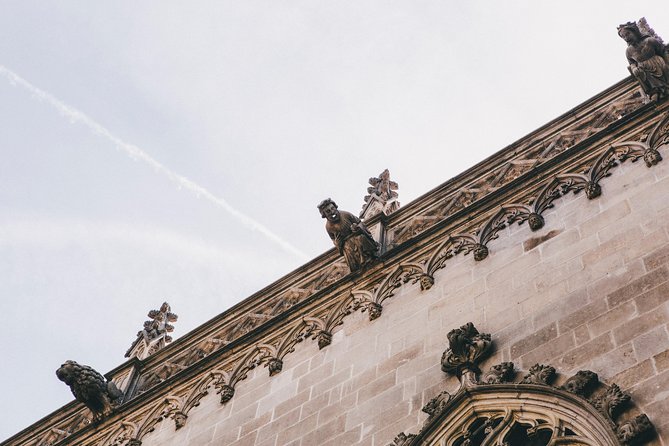
This tour works because it gives you a way to read Barcelona, not just a list of monuments. Instead of asking you to memorize dates, it pushes you to notice cause and effect, how power and belief leave physical fingerprints on stone, brick, and street layouts. You walk through big shifts like Roman foundations, later medieval layers, and then the modern city remaking itself under new rules.
What I like about this approach is that it keeps your eyes busy. You are not simply “seeing Gothic,” you are spotting why Gothic appeared, what it was used for, and what later eras tried to correct or hide. That idea shows up in the tour’s arc too, including the era linked to el forat de la vergonya (the hole of shame), which helps explain why not every modern decision ends up looking clean in hindsight.
More of Barcelona that reviewers rate highly:
- Barcelona: Park Güell Admission Ticket
★ 4.4 · 76,534 reviews - Barcelona: Casa Batlló Entry with Self-Audioguide Tour
★ 4.7 · 25,359 reviews - Barcelona: 24 or 48-Hour Hop-On Hop-Off Bus Tour
★ 4.4 · 20,872 reviews
Meet at Plaça Nova, then move from Barcino roots to modern Barcelona
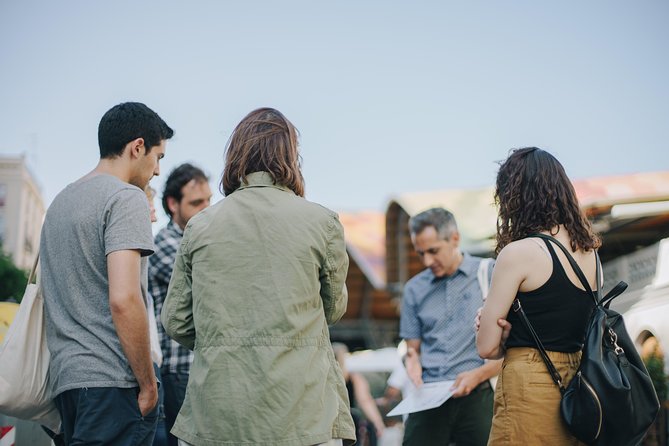
Your tour starts at the Barcino Sculpture at Plaça Nova, 40, in Ciutat Vella. From that point, you can do the smart thing and reset your mental map fast: Barcelona’s old city sits on layers, and you will spend the walk learning how those layers survived, changed, or got covered.
Even if you are not an architecture person, this setting helps. You are already in the medieval zone, where the city feels tight and layered, so it is easier to understand why historians argue about what is original, what was rebuilt, and what was added for a new purpose. And because the group is capped at 20, you are not stuck behind a swarm, trying to read details at arm’s length.
The timeline you walk, Roman, Carolingian, post-Franco, Olympic, and beyond
A lot of “Gothic tours” stop at the medieval look. This one keeps going, and that is a big deal. You learn about several historical chapters that shaped how the city built itself, and how each period carried different priorities.
Here is the practical version of what you are walking through:
- Roman Barcelona sets the earliest foundation ideas.
- Carolingian-era references show how older structures and concepts can resurface later.
- Post-Franco Barcelona connects politics to how public space and buildings were handled.
- Olympic Barcelona links urban planning to a visible makeover.
- The tour also mentions the era tied to el forat de la vergonya, which brings a cautionary note about what modern development can cost.
If you love architecture as a system, not just as style, this is where the tour earns its keep. The city becomes readable, like it is teaching you how to interpret the present by understanding the past that made it.
Stop at Mercado de Santa Caterina, start and finish with fieldwork
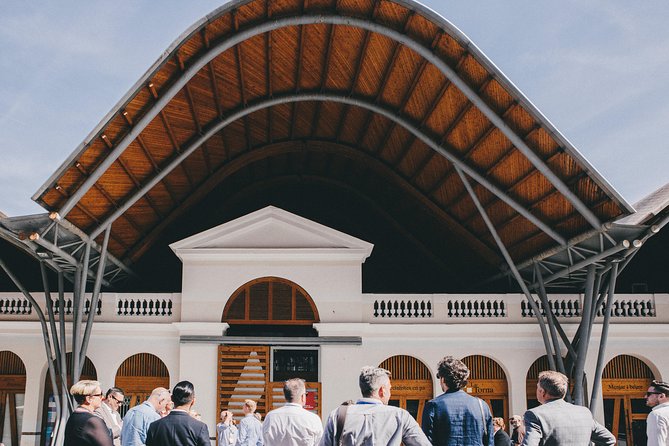
Mercado de Santa Caterina is a strong place to begin because food markets are where architecture meets daily life. Even if you only have time for one market in Barcelona, this one gives you a reason to look beyond the stalls. You are learning to connect built form with use, and how a market space reflects the city’s shifts.
The best part is that the tour ends in the same market area for fieldwork. That means you do not just listen and walk away, you actively check Miralles’ methods while you are standing in the real environment. It is a simple idea, but it changes the way you remember the tour. You leave with a practice you can reuse when you wander on your own later.
How to get the most from this market moment:
- Pay attention to how movement works, where people naturally pause, and how space guides the flow.
- Listen for the explanation that ties the market’s evolution to the city’s political and cultural changes.
- Treat it like a mini lab, not a snack break.
Another side of Barcelona worth booking on the same trip:
- Barcelona: Park Guell Guided Tour with Skip The Line Entry
★ 4.7 · 17,563 reviews - Barcelona in 1 Day: Sagrada Familia, Park Guell,Old Town & Pickup
★ 5.0 · 13,541 reviews - Barcelona Aquarium: Entry Ticket
★ 4.3 · 13,335 reviews - Barcelona: Sagrada Familia Skip-the-Line Entry Ticket & Tour
★ 4.8 · 12,789 reviews
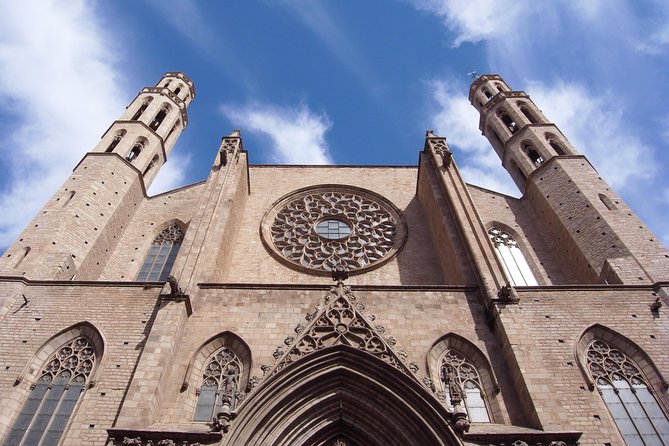
Basilica de Santa Maria del Mar, Gothic that feels built for real people
Basilica de Santa Maria del Mar is the kind of church that makes you slow down. It is famously tied to the medieval neighborhood that created it, and that is exactly why it fits this tour’s method. You are not just admiring a Gothic exterior, you are learning how religious architecture connects to community identity.
During your visit, you get context that helps you understand why styles change when social power changes. Gothic here is not presented as a purely artistic decision, it is connected to how people organized their world and what they wanted their public spaces to communicate.
A practical tip for this stop: when the guide talks about what to notice, follow it with your eyes immediately. Gothic details can be easy to skim, but the tour pushes you to see structure and intent as the same thing.
Barcelona Cathedral, when religious design becomes public messaging
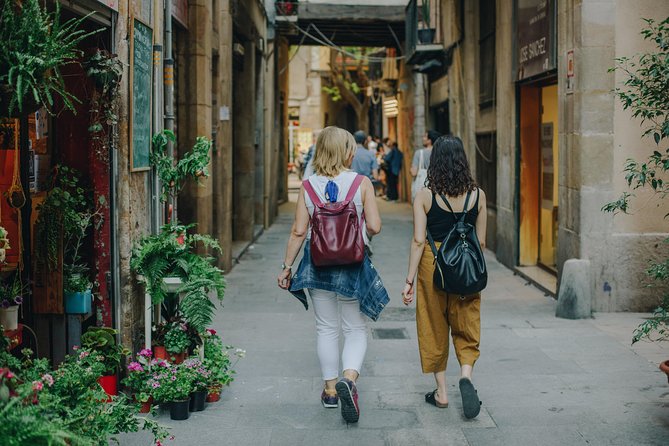
The Barcelona Cathedral is the headline site everyone recognizes. The value of this tour is that you do not stay in “big building” mode. You learn how architecture can function as public messaging, tied to religious authority and the political realities surrounding that authority.
This is also where the tour’s Miralles lens really starts to click. You see that architecture is never only about beauty, it is about legitimacy and influence. Even if you are not fluent in architectural vocabulary, the guide’s explanations aim to connect the visual features to their purpose.
One plus from the tour experience: you are not left with a wall of jargon. The guide often uses charts and structured explanations to keep the story understandable, especially for non-specialists. That matters if you want to learn without feeling like you need a textbook open in your lap.
MUHBA Temple d’August, Roman layers you can actually sense
MUHBA Temple d’August brings the timeline into sharper focus because it is literally about earlier foundations and how later Barcelona absorbed them. Roman-era presence changes the emotional temperature of the walk. Suddenly, the city feels less like one era frozen in stone and more like a long-running conversation across centuries.
This stop also helps with understanding why medieval and modern building choices make sense in context. If you can recognize that earlier structures existed and influenced later decisions, it becomes easier to understand why certain lines, placements, and building behaviors show up again and again.
If you like “spotting patterns,” this is the moment. You will start seeing echoes, the way older logic can survive even when surfaces change.
Why Pia’s style matters for first-timers and architecture fans
From what I’ve seen in how this tour is led, it often comes down to the guide. In this case, Pia stands out because she explains complex ideas in clear English, and she mixes depth with organization. She also has an architect’s perspective, so you get reasoning, not just description.
The other thing I appreciate is that the tour can scale to your interest level. People in the group may include architecture lovers and people seeing these sites for the first time. The guide can tailor the overview, which helps if you do not want to feel lost.
At the same time, there is a fair warning. Some architecture tours feel like encyclopedias delivered at walking speed. This one tries to avoid that, but it still leans into architecture thinking, meaning you get more analysis than casual sightseeing chatter.
What the small group size does for your experience
A maximum of 20 travelers sounds like a detail, but it affects how much you get from each stop. You can hear the guide, you can ask questions without shouting, and you are less likely to be stuck behind a photo line.
It also supports the tour’s educational goal. When fieldwork happens at the end, you cannot do it well with a huge group. The market work makes more sense when people can look closely and respond to prompts.
Value for your time, 3 hours that actually changes how you see Barcelona
This is a 3-hour experience, so you should expect a curated path. What makes it good value is that it covers major architecture stops in a route that connects them with a single logic, rather than treating each site as unrelated trivia.
Also, there is an included architecture microguide, which supports the learning you are doing on the street. In practice, that kind of takeaway helps you revisit the tour’s ideas later when you are wandering, because you are not starting from scratch again.
If you already love architecture, you likely will feel like the tour gives you the kind of framework that makes the city more satisfying. If you are new to it, you still can enjoy it, but come with curiosity about why buildings look the way they do, not just what year they were built.
Drawback to consider if you want a lighter, more casual tour
This tour is built for people who want to look with the eyes of an architect. If you prefer a purely narrative style with minimal theory, you might feel the pacing is more academic than chatty. One review sentiment I think you should take seriously is that it can feel like an advanced course rather than a starter course.
You can still do it if you are willing to listen and ask questions. But if your idea of a great tour is mostly stories with quick, simple takeaways, it may not fully match your taste.
Who should book this Barcelona architecture walk
You’ll get the most from this tour if you:
- Want to understand Barcelona’s architecture as a product of politics, religion, and culture.
- Enjoy structured explanations, charts, and clear reasoning over vague impressions.
- Like Gothic plus the less obvious modern layers of Barcelona, including the post-Franco and Olympic eras.
- Want a small-group experience where you can actually talk to the guide.
You might consider skipping if you:
- Want a low-effort, casual sightseeing loop.
- Do not enjoy architectural terminology or analytical tours.
- Are looking for a purely entertainment-style walk with minimal explanation.
FAQ
Is the tour offered in English?
Yes. This experience is offered in English.
How long is the Barcelona Gothic to Modern tour?
It runs for about 3 hours.
How many people are in the group?
The tour has a maximum of 20 travelers.
Where do we meet for the tour?
You meet at Barcino Sculpture, Plaça Nova, 40, Ciutat Vella, 08002 Barcelona, Spain.
Where does the tour end?
The activity ends back at the meeting point.
Is the tour flexible with weather conditions?
It requires good weather. If it is canceled due to poor weather, you will be offered a different date or a full refund.
Is there a mobile ticket and can service animals join?
Yes, it includes a mobile ticket. Service animals are allowed.
Should you book Barcelona Gothic to Modern?
If you care about how cities change, this is an excellent use of your time. The best reason to book is the way it connects major architecture sites with a single architect-focused worldview, then backs it up with hands-on fieldwork at the market. You come away seeing Barcelona with new habits, not just new facts.
If you want a light, easy tour with minimal analysis, you might find it too academic. But if you are willing to think for a few hours, this one tends to feel like a “this is how I should be looking” upgrade to your whole trip.
Recently reviewed in Barcelona
- Barcelona: Citizen Segway Tour★ 5.0 · 53 reviews
- Cathedral of Barcelona Entrance Ticket – Optional Private Guide★ 4.0 · 114 reviews
- Sagrada Familia Private Tour in Barcelona★ 4.5 · 23 reviews
- Montjuïc Cemetery Walking Tour – Hidden Art, History & Views★ 5.0 · 62 reviews
- Barcelona Gracia Neighborhood Local Food & History Tour★ 5.0 · 92 reviews
- Castle of Montjuic- 3H Segway Tour★ 5.0 · 3 reviews
- Barcelona Old Town Tour With Optional Flamenco Show★ 5.0 · 42 reviews
- Guided private morning tour of La Pedrera with Casa Batlló ticket★ 5.0 · 14 reviews
Tours, compared.

Park Guell Guided Tour with Skip The Line Entry
Read our review →
Sagrada Familia Skip-the-Line Entry Ticket & Tour
Read our review →
FC Barcelona Museum “Barça Immersive Tour” Ticket
Read our review →