
Reviewed · CITY TOURS
Barcelona: City Center and Olympic Park GoCar Experience
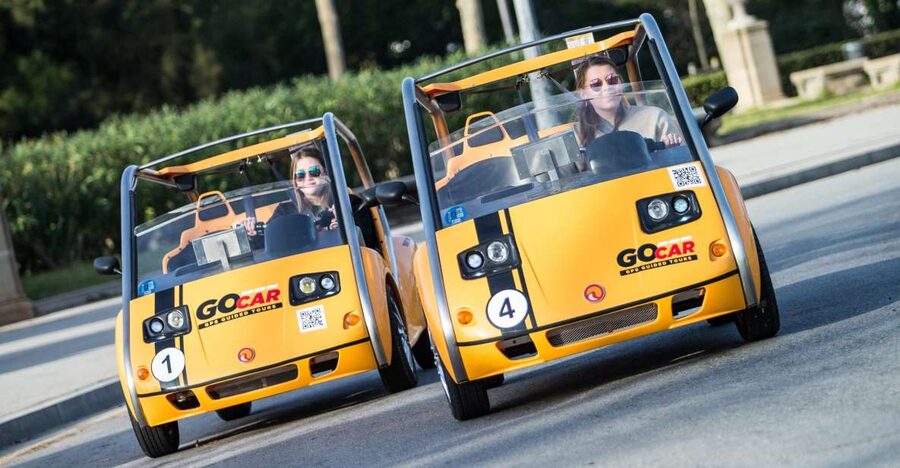
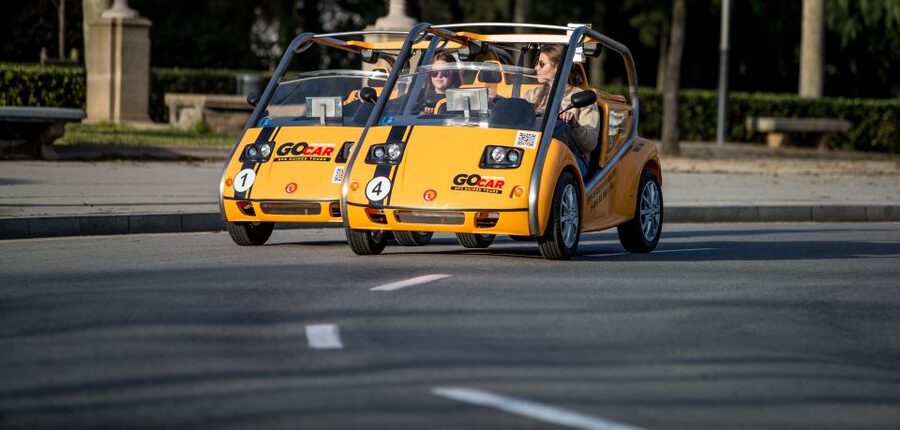
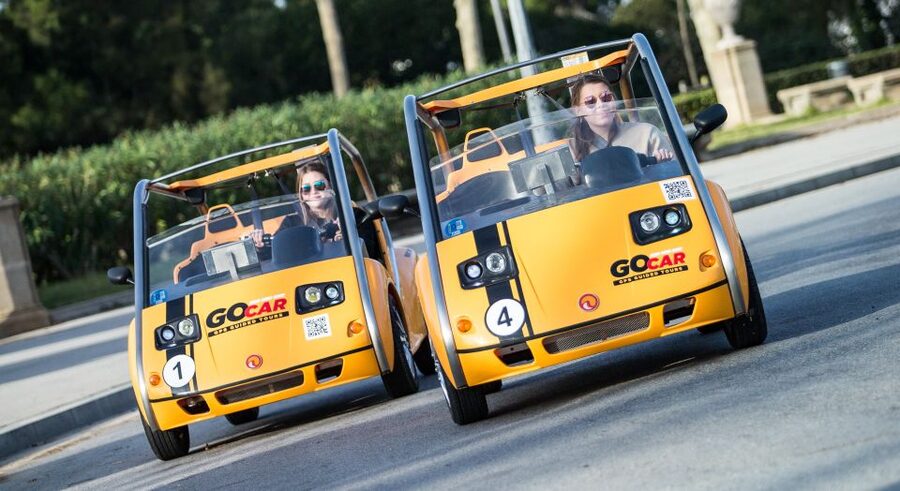
This GoCar experience is fun because you get your own electric car and a voice-guided GPS that tells you what you are seeing as you roll through town. It is a self-drive way to cover major sights without lining up for another bus.
I love the way the route strings together iconic Barcelona stops, from the Sagrada Familia area to the viewpoint-rich streets of Montjuic. I also like that the ride includes GPS navigation plus an audio guide, so you get context while you focus on driving, not reading.
One thing to consider: the car is compact, and if it is rainy, the half windscreen setup can make you wish you had ponchos on right away.
Key highlights you will feel fast
- Pick-up near Arc de Triomf: Start in the city’s north-center zone, easy to find.
- Talking GPS route: The GPS narrates what to look for while you drive.
- Big sights on Montjuic: You hit Poble Espanyol, MNAC, the Olympic Stadium area, the Miro Foundation area, and Montjuic Castle.
- Easy rhythm through the city center: Sagrada Familia, Passeig de Gràcia, Las Ramblas, El Raval, and Poble Sec all fit into the loop.
- Coastal finale: The ride comes down toward Port Olímpic for sea views at the end.
- Value perks included: Unlimited mileage and third-party insurance are part of the price.
Entering Barcelona by GoCar, starting at the Arc de Triomf area
Barcelona can be tricky on a tight schedule. Streets are narrow in places, major roads get crowded, and you lose time waiting for transit or regrouping with a tour group. A GoCar solves that with a simple format: you drive, the GPS guides, and you still get a structured route that covers the places people come for.
Your experience starts in the Arc de Triomf area, with the meeting point at Passeig de Pujades 7, Barcelona 08018. From there, the route sets you up to move into the city center first, then climb into Montjuic for the views.
One practical note I like about this setup is that it is designed to be doable without a lot of planning. You still need to be comfortable driving in a busy European city, but the GPS keeps you from making wrong turns and wasting time.
A few more ways to see Barcelona
- Barcelona: City Sightseeing Hop-On Hop-Off Bus Tour
★ 4.4 · 10,061 reviews - City Sightseeing Barcelona Hop-On Hop-Off Bus Tour: 24 or 48-Hour
★ 4.0 · 5,250 reviews - Barcelona City Tour Hop-On Hop-Off with Optional Boat
★ 4.0 · 3,012 reviews
From Sagrada Familia to Passeig de Gràcia, a great way to set your bearings
The first stretch matters. It is where you get used to the car, learn the pace, and start recognizing Barcelona’s layout. You roll from the Arc de Triomf area toward Sagrada Familia, then continue through Passeig de Gràcia, one of the city’s most recognizable avenues.
This part of the route is a smart intro because it mixes architecture and movement. You are not just passing famous façades from the sidewalk. You are driving through the neighborhoods and streets that connect them, which makes the rest of the trip click into place.
If you like to photograph and you also like not stopping every two minutes, this is the sweet spot. You can slow down for quick looks, then keep going. The GPS prompts help you decide when it is worth focusing.
Also, you are not stuck on one type of street. You get a blend of “main avenue” feel on Passeig de Gràcia and then more local-city energy as the route heads farther south and west. It is a smooth ramp into the heavier areas later.
Las Ramblas, El Raval, and Poble Sec, when the ride turns louder and funnier
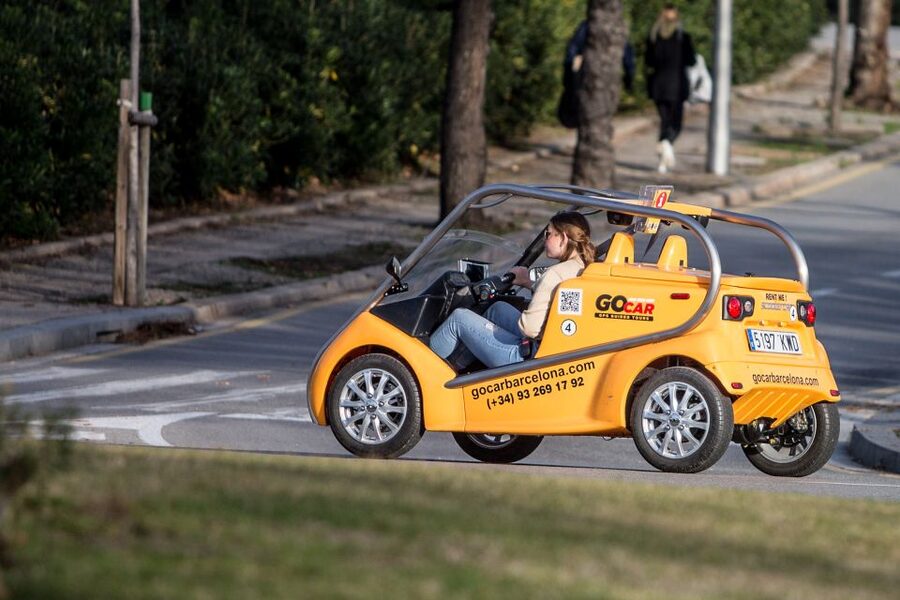
After Passeig de Gràcia, the route moves toward Las Ramblas. The vibe here is part tourist spectacle, part street-life corridor, and you drive through it like you belong in the middle of it. The cars are funky and bright, so expect attention as you pass.
Then the loop moves into El Raval and Poble Sec, neighborhoods with a different feel than the grand avenues. This is the part where the GPS narration helps most. It is easy to see buildings and streets without understanding the why, and audio guidance can turn a “pass-through” into an actual moment.
A couple of practical tips from experience with self-drive city loops: keep your speed steady, give yourself extra time near crossings, and watch for bikes and scooters. You do not need to drive like a robot, but you do need smooth control. If you are anxious about tight turns, take a breath and move slowly.
This section can also be where you notice how social driving can be. When the streets are active, people look your way, and you may end up with extra smiles and attention. If rain hits, this is also where you will notice how open or protected you feel inside the car.
Climbing Montjuic on open roads, the moment the views earn their keep
Then comes the switch you will probably remember most: the route gradually climbs onto the roads leading up to Montjuic. Once you reach that hill zone, the city changes scale. It stops feeling like just streets and starts becoming viewpoints, terraces, and big horizons.
The Montjuic climb is valuable for two reasons. First, it is a natural “transition moment” where you shift from city-center sightseeing to a concentrated sights-and-views area. Second, you are traveling by car, so the route can connect spots that would be a pain to hop between on foot.
As you head up, you get to see famous areas such as Poble Espanyol, and then you continue through the Montjuic cluster of attractions. The structure is helpful because Montjuic has multiple layers, and arriving in the right order saves energy and keeps you from zigzagging.
This is also a good time to slow down mentally. Check how the GPS directions are phrased, and if the screen is hard to read, adjust your position before you miss a turn. A compact car is forgiving, but confusion is what makes people rush.
Another side of Barcelona worth booking on the same trip:
- Barcelona: Park Güell Admission Ticket
★ 4.4 · 76,534 reviews - Barcelona: Casa Batlló Entry with Self-Audioguide Tour
★ 4.7 · 25,359 reviews - Barcelona: 24 or 48-Hour Hop-On Hop-Off Bus Tour
★ 4.4 · 20,872 reviews - Barcelona: Park Guell Guided Tour with Skip The Line Entry
★ 4.7 · 17,563 reviews
Poble Espanyol and MNAC, then the Olympic zone and Miro area
On Montjuic, the route hits a well-chosen lineup. You pass by Poble Espanyol and MNAC. Even if you only glance, both stops signal you are in the Montjuic “culture and display” area where Barcelona gathers major sights.
From there, you move toward the Olympic Stadium area, and the route is set up so that you do not just drive past. You get the context to understand why this zone is so important for the city’s modern identity.
Next you see the Miro Foundation area, and the route continues toward Montjuic Castle. Each of these spots gives you a different kind of payoff. Poble Espanyol is a dramatic, film-set-like stop. MNAC brings the museum viewpoint feel. The Olympic zone gives you scale and open space. Montjuic Castle adds the classic hilltop “control the horizon” vibe.
What I like about this section is pacing. You are not expected to turn it into a full-day museum crawl. Instead, you get an efficient connection between landmarks, with enough time to park, look, and absorb.
One more practical point: Montjuic roads can feel a bit calmer than the city center streets, but they also ask for focus. Keep an eye on signage and driving cues, then let yourself enjoy the sky and the long sightlines when the GPS tells you to pay attention.
Olympic Stadium views to Montjuic Castle, and why the order works
A lot of self-guided routes fail because they try to do too much. This one works better because it follows a logical flow across Montjuic. You are guided from the cultural zone toward the sports landmarks, then onward to the castle area.
The Olympic Stadium and nearby viewpoints are a strong mid-route payoff. You have already climbed, so you get rewarded with the feeling of arriving at a major landmark rather than just another viewpoint pull-off.
Then, heading toward Montjuic Castle, the scenery becomes more about panorama and orientation. Even if you do not go inside a museum or castle, the perspective helps you connect what you saw earlier in the day with the geography you are now on top of.
If you are traveling with someone who wants photos and someone who wants explanations, this order helps. The audio guidance gives you the story, and the driving gives you the angles.
The best way to enjoy this part is to keep stops brief but intentional. Look where the GPS prompts you to look, take a few photos, then move on. If you linger too long at one place, you may feel rushed later when you want to reach the coastline.
Down the hill to Port Olímpic, finishing with sea air
Once you leave the Montjuic cluster, the route starts working its way down. You follow the coastline toward Port Olímpic, which is a satisfying final act after the hilltop viewpoints.
This coastline section is not just scenic filler. It gives you contrast. The hills can make a city feel layered and dramatic. The sea level makes it feel open and easy to read.
When the route reaches Port Olímpic, you make the final turn back toward GoCar HQ. The whole experience lands with a “wrap-up” sensation because you move from concentrated sightseeing to a visual reset by the water.
If you are thinking about timing, this finale is where you want your energy to be decent. If you spent extra time earlier, you might feel the squeeze here. Keep that in mind when you are making quick stop decisions on Montjuic.
Driving the electric GoCar, what to know before you sit behind the wheel
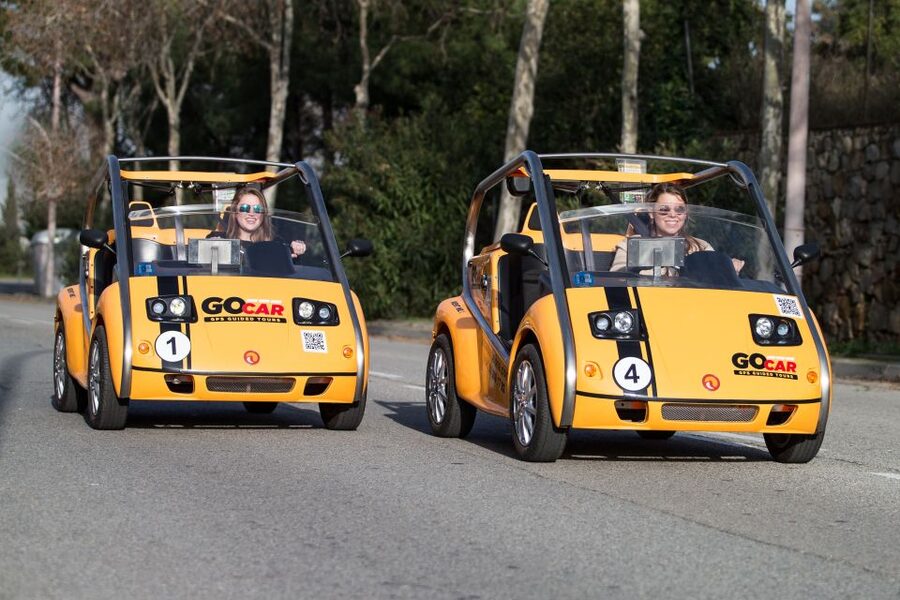
This is the big practical piece. You drive the car yourself, and you need to be comfortable doing that in Barcelona traffic. The GoCar experience uses a GPS navigation system that talks and provides directions, plus an audio guide.
A few non-negotiables come straight from the rules:
- You must be at least 21 years old to drive.
- A passenger must be at least 7 years old.
- It seats 2 people.
- It is not suitable for pregnant women.
- Drivers under 21 are not allowed.
You also need the right documents and payment tools. Bring your driver’s license, plus a credit card and cash. You will also need a €300 deposit in the form of credit card or cash.
In real-world terms, the deposit is why you should come prepared and not assume your card is enough if you had planned to pay cash for everything else. Reviews also point out that the pickup process feels easy, and the deposit gets handled smoothly when you follow the instructions.
Weather is another factor. If it is raining, the car’s half windscreen is practical for driving visibility, but it also means you feel rain more than you would in a fully enclosed vehicle. Ponchos may be provided, and you should use them early rather than waiting until you are soaked.
What you get for the money, and why $65 can make sense
At about $65 per person for a 3-hour self-drive experience, this can be good value if you want both flexibility and solid coverage.
Here is what is included in that price:
- Unlimited mileage
- Third-party insurance
- GPS navigation system
- Tax
What is not included:
- Food and drinks
- Hotel pickup and drop-off
So yes, you are paying for the car time plus the guidance and coverage basics. You are not paying for a driver who takes you door to door. That difference matters. If you are staying near the meeting point and you do not want to spend the day on transit, this can be a cost-effective way to stack Barcelona highlights into one afternoon.
Also, unlimited mileage means you are not locked into one strict corridor. You still follow the route, but it gives you breathing room if you want to slow down, adjust, or re-center after a quick stop.
If you compare it to a standard guided tour that runs on a fixed pace, this approach can feel less tiring because you can choose when to pay close attention. The audio keeps you informed, and the driving keeps you moving.
The languages and guidance style, so you actually understand what you see
This is not just a random drive with a map. There is a live tour guide available in multiple languages, and there is also an audio guide included.
Languages listed are: Spanish, Catalan, English, French, German, Italian, Portuguese, Russian. That matters because Barcelona can be “visually obvious” but historically and culturally layered. When the narration is in your language, you pick up the details that you would miss if you only had signage.
In practice, you will hear stories while you roll, then see the sights when the GPS prompts you. You do not need to interrupt the ride every time you want context. That is one reason self-drive tours like this can feel more efficient than group tours that require lots of waiting.
One small caution: the GPS can take a minute to get used to, especially if you are new to driving in a foreign city. If the route prompts feel confusing at first, slow down and reset your attention. Once you get it, the flow gets easier.
Should you book this Barcelona GoCar loop?
Book it if you want a fun, independent way to cover Barcelona’s city-center highlights and then climb into Montjuic without turning the day into a museum marathon. It is a strong fit for couples, friends, and adults who like the mix of driving plus narration, and who want to finish with coastline views at Port Olímpic.
Skip it if you are not comfortable driving in busy city streets, if weather exposure would ruin the experience for you, or if you fall into the age or personal-rules limits. Also, if you are the type who needs a lot of time inside major sites, you may find three hours feels tight, since the plan is built for moving between landmarks rather than long stops.
If you do decide to go, do the simple prep well: bring the documents, bring the deposit payment method, and wear ponchos immediately if rain starts. That small move turns the experience from uncomfortable to genuinely enjoyable.
FAQ
Where do I meet the GoCar in Barcelona?
You meet at Passeig de Pujades 7, Barcelona 08018.
How long is the GoCar experience?
The duration is 3 hours.
How old do I need to be to drive or ride as a passenger?
You must be at least 21 years old to drive. Passengers must be at least 7 years old.
What deposit do I need to leave, and how do I pay it?
You need a €300 deposit, paid by credit card or cash.
What is included in the price?
The price includes unlimited mileage, third-party insurance, a GPS navigation system, and tax.
Can I cancel for a full refund?
Yes, you can cancel up to 24 hours in advance for a full refund.
Recently reviewed in Barcelona
- Barcelona: Sagrada Familia, La Pedrera & Cava Tasting Tour★ 4.2 · 33 reviews
- Barcelona: Sagrada Familia and Park Güell with Hotel Pickup★ 4.5 · 33 reviews
- Barcelona: Sagrada Familia, Park Guell & Tapas Private Tour★ 4.9 · 47 reviews
- Barcelona´s Lunch or Dinner Tapas Tour: Food and Happiness★ 5.0 · 8 reviews
- Barcelona: Sagrada Família and Park Güell Guided Tour★ 4.7 · 6 reviews
- Barcelona: Rooftop Tapas and Sangria Class with a Chef★ 5.0 · 60 reviews
- Barcelona: Fun & Unpretentious Rooftop Wine Tasting★ 4.1 · 26 reviews
- Barcelona: Rooftop Tango Lesson with Drinks and Videos★ 4.9 · 159 reviews
City Tours, compared.
City Sightseeing Barcelona Hop-On Hop-Off Bus Tour: 24 or 48-Hour
Read our review →
Barcelona City Tour Hop-On Hop-Off with Optional Boat
Read our review →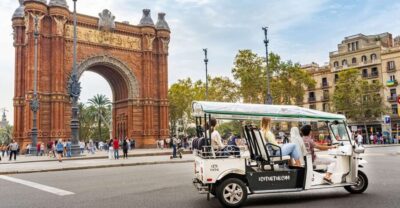

Flamenco Show Ticket at Theatre Barcelona City Hall
Read our review →
Sagrada Familia or Coastal City Sights by eBike
Read our review →
Browse the lists this tour appears in