Reviewed · TOURS
Barcelona & The Sea. Regular Tour
Barcelona has a funny way of working. At first, it can feel like the city center is pulling you away from the sea. Then, this walk brings you back step by step, with an architect and critic guiding the story of how the shoreline and the skyline evolved over time.
I especially love the architecture-to-street-level angle. You’re not just looking at pretty buildings, you’re learning why each era shaped what you see today. I also like that the guide is a practicing professional, and you may meet experts like Pia or Ricard, who come across as both friendly and entertaining. One consideration: it’s a good-weather experience, and you’ll be moving through narrow streets, parks, beaches, and breakwaters, so wear comfortable shoes.
Key points to know before you go
- Architect-led storytelling that connects Roman, Gothic, and modern design, so you understand what changed and why
- Stops with real designers’ names, including Manuel de Solà-Morales, Josep Miàs, and Jose Antonio Coderch
- Small group size (max 20) for a walk that stays personal and interactive
- Architecture microguide included, helpful for follow-up photos and recall afterward
- You end where you started, keeping logistics simple while you explore Barceloneta and the waterline
A shoreline story told from street level, not from a postcard
This is one of those Barcelona experiences that makes the city feel more legible fast. You start in the old center and then work your way toward the waterfront, watching how the city’s relationship with the sea changes as you move through different periods. The emphasis is practical and visual: facades, entrances, street plans, and the shape of public spaces near the water.
What makes it work so well is the guiding lens. A practicing architect and critic can point out what most people miss, like how building choices and urban design respond to defense needs, trade, tourism, and daily life. And because the pace is on foot, you can actually connect the explanations to what you see in front of you.
The tour also has a clear emotional arc. Early stops remind you that the harbor and coastline were never just scenery. Later stops shift into real neighborhood life, with markets and apartments that show how people lived close to the water long before the skyline became a global attraction.
Meet your guide, get a microguide, and enjoy a small-group pace
You’ll join a guided architecture walk run by Barcelona Architecture Walks, with a maximum group size of 20. In a city like Barcelona, that small number matters. It keeps the conversation from feeling like a lecture shouted over footsteps. It also gives the guide room to tailor explanations when someone asks a question on the spot.
The guide team is a big reason to book. From the feedback, people really respond to the way the architects and critics teach. They don’t only list facts. They make architecture feel like a living system, and they keep the tone friendly and fun. If your guide is Pia or Ricard, you can expect an energetic, clear approach that links history to how Barcelona looks and works today.
A handy extra is the architecture microguide included with the tour. Even if you’re the kind of traveler who usually skips handouts, this is the type that helps you remember details once you’re back on your own. Think of it as a short memory tool for the buildings and ideas you’ll be hearing about.
More of Barcelona that reviewers rate highly:
- Barcelona: Park Güell Admission Ticket
★ 4.4 · 76,534 reviews - Barcelona: Casa Batlló Entry with Self-Audioguide Tour
★ 4.7 · 25,359 reviews - Barcelona: 24 or 48-Hour Hop-On Hop-Off Bus Tour
★ 4.4 · 20,872 reviews
Plaça Nova to Barcino roots: starting in the center, then moving toward the sea
Your walk begins at the Barcino Sculpture in Plaça Nova, in Ciutat Vella. That location is a smart starting point because it frames Barcelona as layered. You begin in a historic part of the city center, but the route soon starts pulling you seaward, so you can compare the urban feel of inland Barcelona with the waterfront edge.
In the first stretch, you’re likely to notice how narrow streets and nearby open spaces change the way you see buildings. Up close, architecture stops being abstract. You start paying attention to alignment, entrances, material choices, and how public space behaves when it gets closer to water.
If you’re new to Barcelona, this early segment helps you get your bearings fast. If you’ve been here before, it still works, because it tells you what to look for instead of just where to walk.
Roman defensive walls and the Temple of Augustus: power at the edge
One of the most compelling parts of this walk is the chance to see the Roman defensive walls in the context of today’s city. You’re not learning Rome as a museum story. You’re watching how old military infrastructure shaped where the city grew and how it protected itself near key routes.
The Roman section also ties into the presence of the Temple of Augustus. Even if you only see parts of it or it’s framed in a way that’s different from a full-standing ruin, the idea is clear: this wasn’t a sleepy outpost. It was a strategically important place, and architecture and planning were part of that power system.
What I like about this segment is the way it teaches you to read the city like a timeline. You stop thinking of streets as random lines. You start seeing them as outcomes of defense, control, and movement across the city.
Practical note: Roman and early layers of the city can mean standing near streets or moving slowly through tight spaces. If you like photos, keep your phone ready, but don’t rush the explanations.
Santa María del Mar: why Gothic church scale feels different near the water
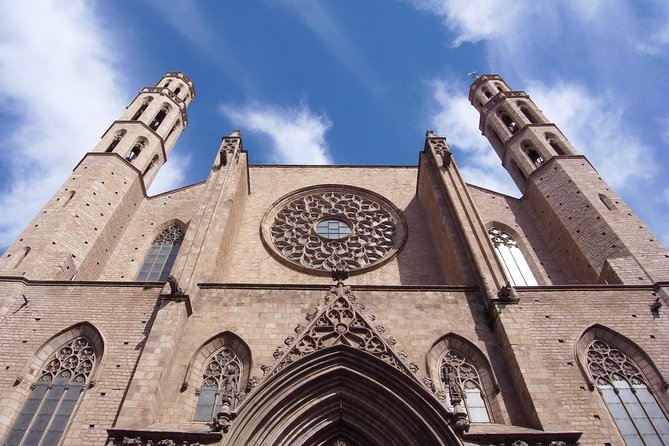
Next comes Santa María del Mar, one of Barcelona’s standout churches. This isn’t just a “look, it’s pretty” stop. The guide’s architect lens is useful here, because churches are social buildings as much as spiritual ones.
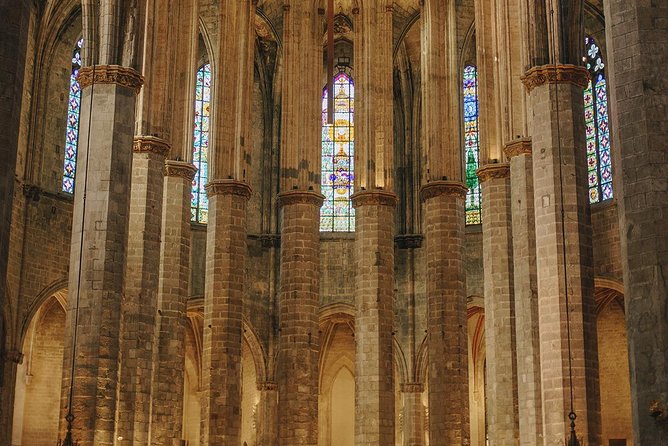
Santa María del Mar’s style and sense of proportion help you understand how communities expressed identity through construction. And because the tour is slowly steering you toward the sea, it adds an extra layer. You start to sense the link between maritime trade, working neighborhoods, and the kind of architecture people wanted around them.
Even if you’ve toured other Catalan churches before, this stop tends to stick. It’s large enough to feel impressive, but grounded enough to feel human. You get time to take it in without it turning into a race through a checklist.
Another side of Barcelona worth booking on the same trip:
- Barcelona: Park Guell Guided Tour with Skip The Line Entry
★ 4.7 · 17,563 reviews - Barcelona in 1 Day: Sagrada Familia, Park Guell,Old Town & Pickup
★ 5.0 · 13,541 reviews - Barcelona Aquarium: Entry Ticket
★ 4.3 · 13,335 reviews - Barcelona: Sagrada Familia Skip-the-Line Entry Ticket & Tour
★ 4.8 · 12,789 reviews
Moll de la Fusta, Barceloneta Market, and the designs that shape daily life
As you get closer to Barceloneta, the architecture shifts from monumental to practical. This is where the tour becomes especially satisfying, because you see designed spaces built for movement and for people doing normal things.
At Moll de la Fusta, you’ll hear about the wharf designed by Manuel de Solà-Morales. A wharf might sound like the boring cousin of a famous cathedral, but waterfront design tells a real story. It shows how the city handles public access to the water, circulation, and the relationship between boats, pedestrians, and the surrounding neighborhoods.
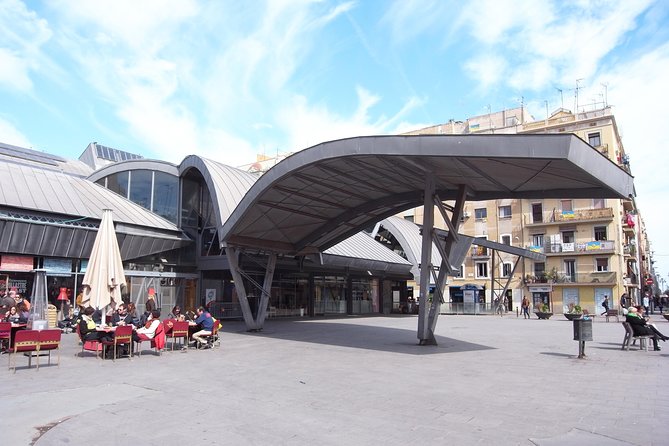
Then you’ll move to Barceloneta Market, linked to architect Josep Miàs. Markets are one of the best places to understand a neighborhood’s rhythm. They’re architecture, yes, but they’re also culture in action. You can think of this stop as a “how people lived and still live here” checkpoint, right along the sea route.
Together, Moll de la Fusta and Barceloneta Market help you grasp why the skyline story isn’t only about tall buildings. It’s also about infrastructure that supports everyday life near the harbor.
Casa de la Marina by Jose Antonio Coderch: apartments with a point of view
Casa de la Marina is another highlight, tied to Jose Antonio Coderch. Apartments in historic waterfront neighborhoods are often where you can see social change without needing big speeches. Over time, housing choices respond to tourism pressures, economic shifts, and how people want to live relative to the sea.
This stop works well on the tour because you’ve been building context. You’ve seen defensive planning in earlier segments. You’ve seen religious architecture. Now you’re watching how residential design takes the story into modern life.
If you like architectural details, you’ll have a chance to focus your attention. If you’re more of a “big-picture” traveler, it still makes sense, because the guide can connect the building to wider urban changes you can feel while walking.
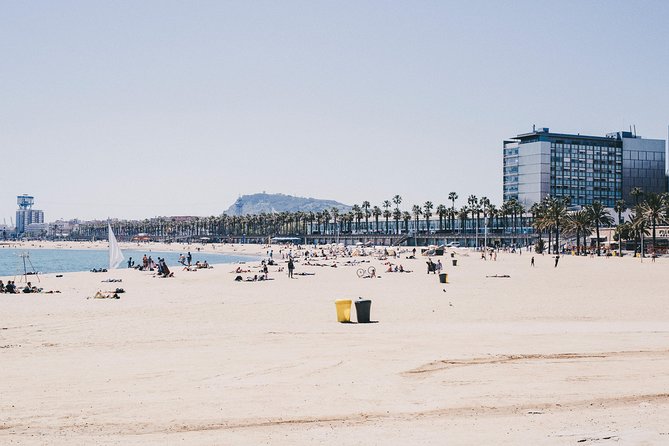
Somorrostro Beach and the skyline: seeing the present after the past
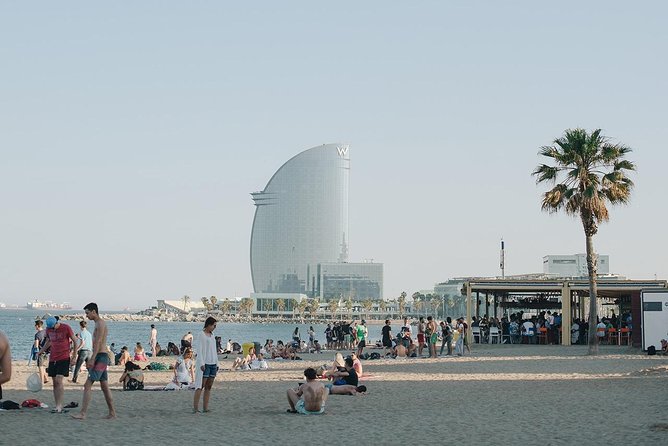
The walk brings you to Somorrostro Beach in Barceloneta, and then finishes with views toward the Barcelona skyline. This part is not only scenic. It’s interpretive.
By now, you’ve watched how the city’s relationship with the sea evolves, from Roman defense to church-centered community identity to waterfront public space and housing. Standing near the beach and then turning your attention to the skyline is like putting the last piece in place. You understand the shape of today’s city as a result, not as luck.
One reason I think this segment is worth the time is that it gives you a payoff for the earlier stops. If you’ve been taking notes, you’ll recognize the urban logic repeating. If you haven’t, you’ll still feel the shift. The sea is no longer just background. It’s part of how the city thinks.
The tour ends back at the meeting point, so you can finish, grab a snack, and keep exploring with a stronger sense of what you’re looking at.
Price and value: is $52.06 per person worth it?
At $52.06 per person for about 3 hours, you’re paying for two things that matter in Barcelona: expert guidance and a focused route. This is not a long sightseeing bus day. It’s a compact walking experience with professional architectural interpretation.
Here’s the value logic I’d use. If you love cities where the buildings have a story, this tour can save you hours of guesswork. The guide provides context for major sites you’d likely visit anyway, including Santa María del Mar, and it adds architectural stops tied to recognizable modern names like Manuel de Solà-Morales, Josep Miàs, and Jose Antonio Coderch.
Also, you’re in a small group (up to 20). That is a meaningful quality marker for a specialized tour. It makes Q and A feel possible, and it keeps the walk from becoming background noise.
One more plus: you get an architecture microguide. That’s small, but it boosts the payoff for your time.
If your idea of a tour is mostly free time and photo stops, you might prefer a different style. But if you want to understand what you’re seeing, this is strong value for the price.
Who should book Barcelona & the Sea, and what to bring
This walk is a great fit if you fall into any of these categories:
- You want architecture explanations you can connect to real streets and open areas.
- You like walking tours with clear structure and a theme you can follow from start to finish.
- You enjoy Barcelona neighborhoods beyond the obvious postcard zones, especially Barceloneta.
You’ll also get more out of it if you’re willing to look up, not just forward. The best moments often come when the guide points out details and you take a second look with new eyes.
What to bring:
- Comfortable walking shoes, because you’ll be on narrow streets and near beach and breakwater areas.
- A light layer for sea air, even in mild weather.
- A charged phone or camera for quick references. The tour has enough outdoor time for photos, but you’ll also want to listen, so keep it simple.
Weather matters here. The experience requires good weather, so plan for flexibility if skies are rough.
Should you book? My take on the decision
Book it if you want to understand Barcelona’s waterfront as a changing system, not just a pretty view. The combination of an architect and critic, a small group, and named stops like Santa María del Mar, Moll de la Fusta, Barceloneta Market, and Casa de la Marina makes the walk feel specific and worth your time.
Skip it only if you dislike guided walking or if you’re not interested in architecture connections. If you’re traveling with someone who just wants landmarks without explanations, you may end up nudging them to look up more than they’d like.
If you’re on the fence, the clincher is the style of teaching described in feedback: engaging, fun, and focused on how history still affects what you see today. That’s the kind of guide value that makes a tour feel like more than a route.
FAQ
What is the duration of the Barcelona & The Sea regular tour?
The tour is about 3 hours.
How much does the tour cost?
The price is $52.06 per person.
Where does the tour start?
The meeting point is Barcino Sculpture, Plaça Nova, 40, Ciutat Vella, 08002 Barcelona, Spain.
What time does the tour start?
The start time is 10:30 am.
Is the tour group small?
Yes. The maximum group size is 20 travelers.
What kinds of places will we see during the walk?
You’ll walk along narrow streets, parks, beaches, and breakwaters, and you’ll visit key architectural sites near the sea.
What are some of the specific sites included?
The tour includes the Roman defensive walls, the Temple of Augustus, Santa María del Mar, Moll de la Fusta Wharf by Manuel de Solà-Morales, Barceloneta Market by Josep Miàs, Casa de la Marina by Jose Antonio Coderch, and Somorrostro Beach.
Is a mobile ticket used?
Yes, the tour uses a mobile ticket.
What is the cancellation policy?
Free cancellation is available. You can cancel up to 24 hours in advance for a full refund, based on the experience’s local time.
Is the tour dependent on weather?
Yes. The experience requires good weather, and if it’s canceled due to poor weather, you’ll be offered a different date or a full refund.
Recently reviewed in Barcelona
- Barcelona: Citizen Segway Tour★ 5.0 · 53 reviews
- Cathedral of Barcelona Entrance Ticket – Optional Private Guide★ 4.0 · 114 reviews
- Sagrada Familia Private Tour in Barcelona★ 4.5 · 23 reviews
- Montjuïc Cemetery Walking Tour – Hidden Art, History & Views★ 5.0 · 62 reviews
- Barcelona Gracia Neighborhood Local Food & History Tour★ 5.0 · 92 reviews
- Castle of Montjuic- 3H Segway Tour★ 5.0 · 3 reviews
- Barcelona Old Town Tour With Optional Flamenco Show★ 5.0 · 42 reviews
- Guided private morning tour of La Pedrera with Casa Batlló ticket★ 5.0 · 14 reviews
Tours, compared.

Park Guell Guided Tour with Skip The Line Entry
Read our review →
Sagrada Familia Skip-the-Line Entry Ticket & Tour
Read our review →
FC Barcelona Museum “Barça Immersive Tour” Ticket
Read our review →