Reviewed · TOURS
Luca’s Hidden Old Barcelona: the Gothic and El Born Tour
Barcelona’s old streets are interesting on their own, but this tour makes them click into place. You connect power, religion, and conflict across centuries, starting in Placa de Sant Jaume and ending in the memorial story of El Fossar de les Moreres.
I love the way the route mixes big landmarks with smaller, easy-to-miss details, like the MUHBA Temple d’August columns and the Medieval Jewish Quarter, El Call. And I really like the small group feel, capped at 15, with Luca guiding in English at a pace that lets you ask questions.
One consideration: this is mostly an outdoor walking experience, so in hot or sunny weather you will want to plan for heat, water, and shade breaks. And if you want to go inside major buildings, note that the tour focuses on outside views for the cathedral.
Key things I’d circle before you go
- Small group size (up to 15) keeps the tour personal and question-friendly
- Mostly free admission stops means you spend time seeing, not paying extra
- A strong political thread, from ancient rule to modern tensions
- MUHBA sites with Roman and medieval context, not just pretty streets
- Sant Felip Neri and El Born stop together, so you see contrast fast
Why The Gothic and El Born Route Works So Well On Foot
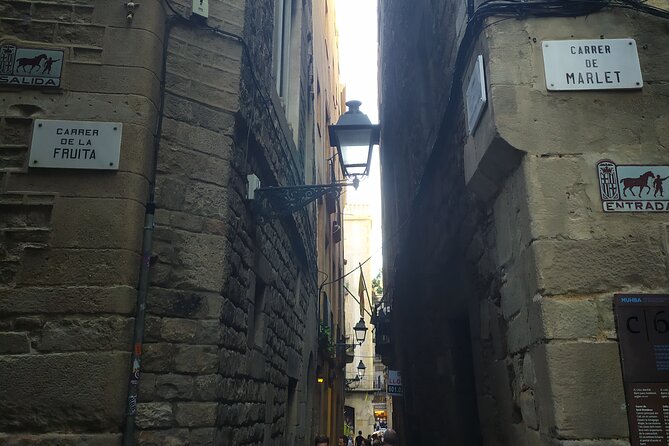
The Gothic Quarter and El Born are the kind of places where you can wander for hours and still miss the point. The streets curve, signage is inconsistent, and a lot of the most important history is written in layers, not in one big monument.
On this walk, you get the story in the order your feet naturally take you. That matters, because Barcelona’s old city is less about one era and more about what each era left behind. You’ll move from civic power, to Roman remnants, to medieval life, to a Jewish neighborhood, and then to churches and memorials tied to Catalan identity and conflict. It is history you can read while you walk.
This is also a good way to start your visit. The tour ends in El Born, where you are already in the thick of cafés, small streets, and evening energy, so it is easier to keep exploring right after.
More of Barcelona that reviewers rate highly:
- Barcelona: Park Güell Admission Ticket
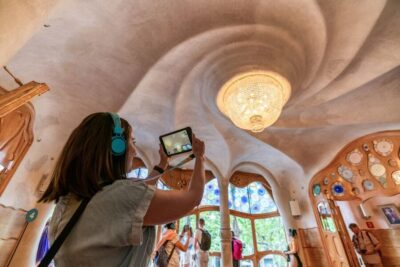
★ 4.4 · 76,534 reviews - Barcelona: Casa Batlló Entry with Self-Audioguide Tour
★ 4.7 · 25,359 reviews - Barcelona: 24 or 48-Hour Hop-On Hop-Off Bus Tour
★ 4.4 · 20,872 reviews
Entering Placa de Sant Jaume, Barcelona’s 2000 Year Center of Power
Your tour starts at Placa de Sant Jaume, the political and social center of Barcelona for around 2,000 years. Even if you know little Spanish or Catalan history, you can feel why this place matters. It is the kind of plaza where government buildings face each other, and the city’s identity shows up in stone and placement.
Here, you get the big framing first: how civic power shaped daily life and how Barcelona’s story has always been tied to who ruled and who resisted. You also get oriented fast. If you’ve ever gotten lost in the Old City, you know orientation is half the battle.
This stop is short, about 15 minutes, but it sets up what comes next. When you later stand near memorials and churches tied to Catalan conflict, the timeline makes more sense because you started at the center.
MUHBA Temple d’August: Roman Columns in a Modern City
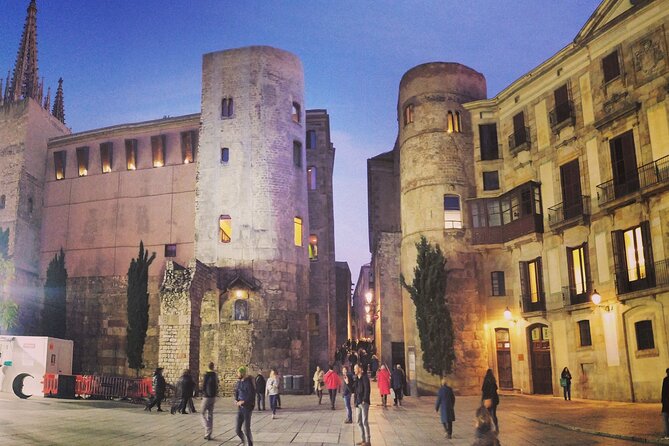
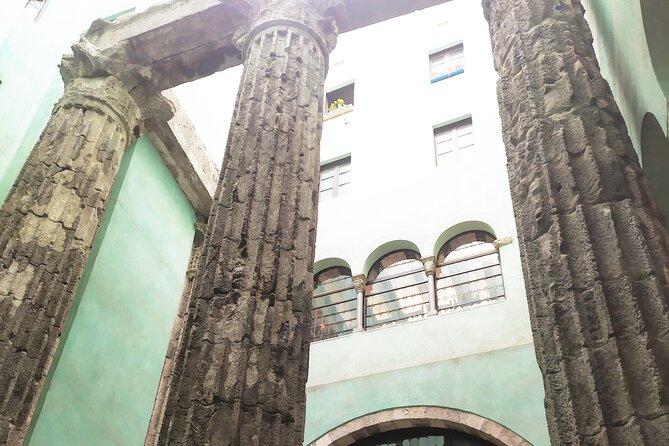
Next is MUHBA Temple d’August, where you’ll see some of the oldest physical objects in Barcelona. The highlight is simple and strong: four columns from the huge temple of Augustus that once stood right in this spot.
What I like about this stop is how it teaches you to look differently. You stop seeing ruins as random scraps and start seeing them as proof that the city’s current streets have been built on older decisions. In other words, you are standing where important people once worshipped and signaled authority.
It’s about 10 minutes, and the admission there is free. That makes it a low-cost, high-payoff moment for a first-time visitor. If you are the type who enjoys history but finds big museums overwhelming, this kind of outdoor archaeology is a good fit.
Outside the Catedral de Barcelona and the Gothic Quarter’s Signature Feel
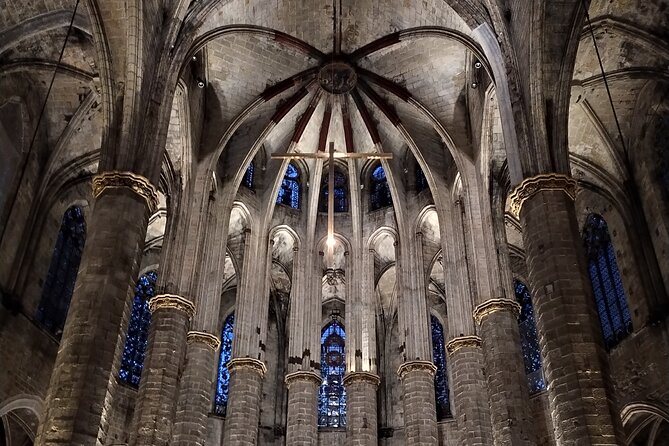
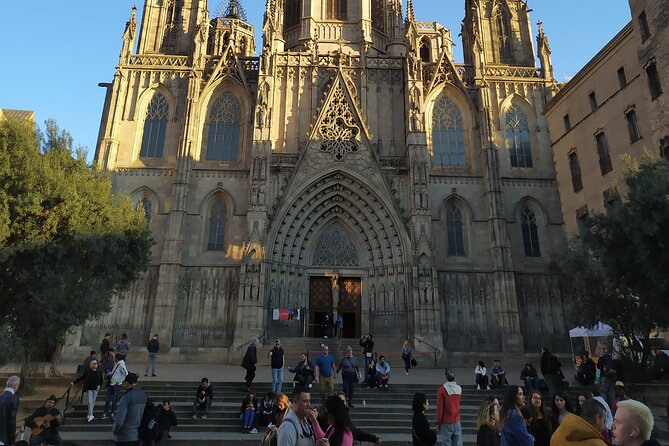
You then reach the Catedral de Barcelona, and the tour focuses on exploring the outside. Expect to slow down around the gothic lines, the facades, and the way the cathedral shapes the square and street views around it.
After that, you move through a core part of the Gothic Quarter that’s described as one of its main features. Even without going inside, the experience matters because the Gothic Quarter’s best details often live in sightlines: how streets bend, where shadows fall, where stonework is older than you expect.
A small caution: if your goal is cathedral interiors, this tour is not built around that. It is built around context and how the architecture connects to the city’s story. So you’ll get great exterior views, but you may still want separate plans later if you want interior access.
Another side of Barcelona worth booking on the same trip:
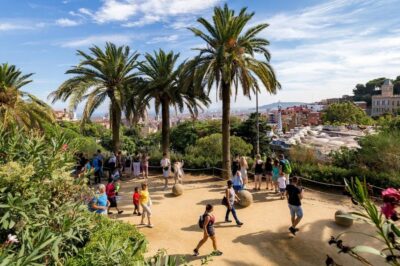
- Barcelona: Park Guell Guided Tour with Skip The Line Entry
★ 4.7 · 17,563 reviews - Barcelona in 1 Day: Sagrada Familia, Park Guell,Old Town & Pickup
★ 5.0 · 13,541 reviews - Barcelona Aquarium: Entry Ticket
★ 4.3 · 13,335 reviews - Barcelona: Sagrada Familia Skip-the-Line Entry Ticket & Tour
★ 4.8 · 12,789 reviews
El Call and Sant Felip Neri: Quiet Squares With Heavy Meaning
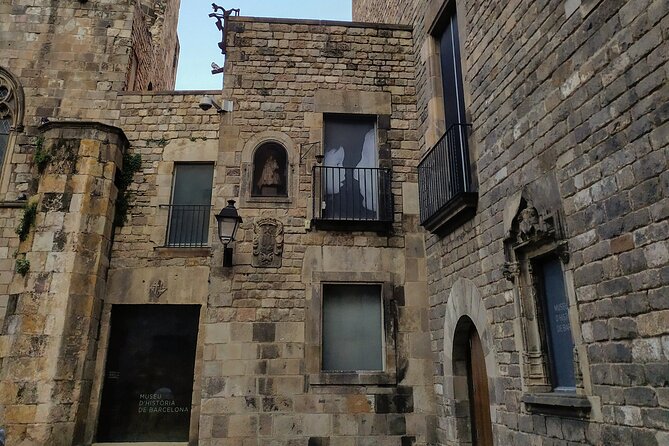
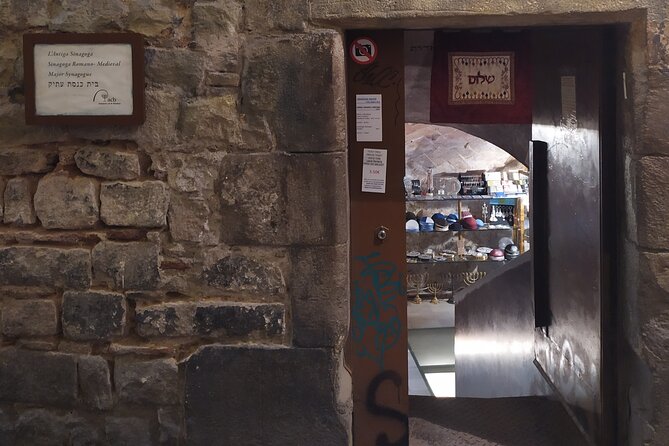
This is one of the tour’s most thought-provoking stretches. You visit MUHBA – El Call, the Medieval Jewish Neighborhood. The time here is about 15 minutes, and admission is free. The point is not only to see what remains, but to understand that medieval Barcelona was a patchwork of communities with their own institutions and daily lives.
Then you head to Esglesia de Sant Felip Neri, described as Gaudi’s favorite church during his lifetime. That detail alone makes the stop fun, because it ties a famous later artist to a place that feels small and intimate. But the church square also has a darker recent past, and you’ll talk about the Spanish Civil War here.
This pairing is smart. It keeps you from treating history as a timeline of random facts. Instead, you see how art, community, and conflict occupy the same narrow spaces.
The only practical drawback is that this is a compact area with lots of outdoor time. If you go in peak summer, bring a hat and water, and be ready for sun.
El Born and La Ribera: Medieval Streets, Then Santa Maria del Mar
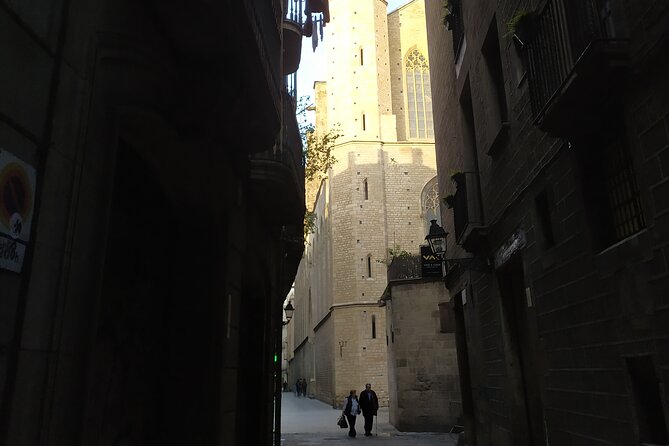
After the older civic and religious stops, you switch to a medieval neighborhood mood in El Born / La Ribera. This part runs about 30 minutes. It gives you room to walk, look, and feel how the neighborhood functioned before modern tourist pacing took over.
Then you visit Basilica de Santa Maria del Mar, often described as the most loved church in Barcelona. Your time is about 10 minutes, and admission is free. Even if you only see outside, the basilica’s reputation is earned through its presence. It’s the kind of church that looks built for real community life, not just grandeur.
This stop helps you connect identity across eras. You move from the medieval neighborhood feel to a church that stands as a landmark of local pride. It is a reminder that Barcelona’s story is not only about politics, it is also about who lived here and what mattered to them day to day.
El Fossar de les Moreres: Where Catalan Conflict Gets Real
If you remember one emotional stop from this walk, make it El Fossar de les Moreres. This is where you get a fundamental lesson on the political conflict between Madrid and Barcelona. Time here is about 15 minutes, admission is free.
What makes this part valuable is that it turns history from abstract arguments into specific places and memory. You do not just hear the names and dates. You learn why these stories still matter in how people talk about identity and self-determination today.
This is also where the walk can feel heavier. If you prefer light-and-fun history, plan for that mood shift. In my view, it is worth it, because the whole Gothic and Born area feels different after you understand what was at stake.
Passeig del Born: The Medieval Entertainment Square
After the memorial stop, you finish with Passeig del Born, described as the medieval entertainment square of Barcelona. It’s a short stop, about 5 minutes, and admission is free.
That quick wrap-up is useful because it helps you end in a place that still feels like a living part of the city. You are not left in a dead-end street. You are placed near where people linger, snack, and keep exploring.
Your tour ends near the Mercat del Born area at El Born Centre de Cultura i Memòria, so you are positioned well for what comes next. If you want to keep your day moving, this is a strong end point.
Price and Time: Does $13.27 Actually Make Sense?
At $13.27 per person for about 2 hours 15 minutes, this tour is priced like a practical city tool. You are paying for a guide, a structured route, and lots of context packed into walkable distances. You are not paying for a long museum day or a ticket-heavy itinerary.
Also, many of the stops in the route are listed with free admission, including MUHBA Temple d’August, MUHBA – El Call, Sant Felip Neri area, Santa Maria del Mar, and the memorial stop. The cathedral exterior view is noted as not included, so you are not getting a big paid attraction that might disappoint you if you were hoping for inside access.
Value depends on your travel style. If you like to wander without structure, you can do this on your own. But if you want the why behind what you see, the cost feels fair because you get a coherent storyline, not just a checklist of sights.
One more detail that matters for value: it’s a small group with a maximum of 15. That often means you get more interaction and less waiting.
Luca’s Guide Style: Energy, Humor, and the Photo Binder
The biggest reason this tour keeps coming up as a top choice is Luca’s delivery. He’s described as energetic and passionate, and he does more than read off a script. One standout detail is that he brings a binder with photos as reference material. That helps you connect architecture to history in a way that is easier to remember after the tour ends.
You’ll also notice his habit of explaining why things happened, not only what happened. That can be especially helpful in Barcelona, where the city’s past is tied to identity and power, and where it is easy to get the wrong impression if you only look at buildings.
A fun and useful approach from Luca is the use of humor and personal perspective about historical figures. It can make serious topics feel more human, and it also nudges you to question simple myths.
If you are choosing a tour on a short timeline, this is the type that gives you an orientation layer you can carry into the rest of your Barcelona wandering.
How to Enjoy the Walk Without Baking in the Sun
Because this is a walking tour, comfort is not optional. A review noted that on sunny days, the guide may choose the sunny side of the street at times. So I suggest you come ready to work with the weather, not against it.
Bring:
- Water
- Sunscreen
- A hat or cap
- Comfortable shoes for uneven old streets
Also, be ready for a bit of fast pacing in the narration. It’s not designed as a slow stroll with long pauses at every corner. If your English is solid, you’ll keep up and enjoy the fact that Luca talks fast while still answering questions.
Finally, arrive with a mindset of looking sideways. The best details in the Gothic Quarter are not always straight ahead.
Who Should Book This Tour, and Who Might Want Another Option
This walk is a great match if you want:
- A historical route you can follow on foot
- A small-group experience capped at 15
- Context for the Gothic Quarter and El Born, including El Call and Civil War memory
It may not be your best fit if you mainly want to go inside big monuments and museums. The focus is outside views, neighborhoods, and meaningful stops with mostly free admission. You can absolutely add interior visits later, but this tour will not replace those plans.
Accessibility matters too. The tour is open to everyone, and it can be adapted for people with reduced mobility to your pace. If that sounds relevant, you should check what adjustments can realistically be made. A private experience may be offered if needed.
Finally, if you want a super flexible free-form wander with no structure, you might prefer self-guided exploration. But if you want to understand what you are seeing, this tour does the job fast.
Should You Book Luca’s Hidden Old Barcelona Tour?
Yes, I’d book it if you are the kind of traveler who likes to learn as you walk and you want a coherent story across the Gothic Quarter and El Born. For the price, it’s an efficient way to cover major neighborhoods, plus MUHBA stops and the memorial sites that many people skip.
You should also book it early in your trip. This tour gives you the kind of context that makes later street wandering much more rewarding, because you can recognize what you are looking at.
Skip it only if you strongly prefer inside entrances, or if walking in heat is a major problem for you. In that case, you can still enjoy the area, but you may want a more flexible option.
FAQ
Where does the tour start?
It starts at Pl. de Sant Jaume, 3, Ciutat Vella, 08002 Barcelona, Spain.
Where does the tour end?
It ends at El Born Centre de Cultura i Memòria, Mercat del Born, Plaça Comercial, 12, Ciutat Vella, 08003 Barcelona, Spain.
How long is the tour?
The duration is about 2 hours 15 minutes.
What language is the tour offered in?
The tour is offered in English.
How much does it cost?
The price is $13.27 per person.
Is this tour a small group?
Yes. It has a maximum of 15 travelers.
Is admission included for all stops?
Many stops are listed as free admission. The Catedral de Barcelona is noted as admission not included since you explore the outside.
Is a mobile ticket used?
Yes. The tour includes a mobile ticket.
Can service animals join?
Yes, service animals are allowed.
Is there free cancellation?
Yes, you can cancel for a full refund up to 24 hours in advance.
Recently reviewed in Barcelona
- Barcelona: Citizen Segway Tour★ 5.0 · 53 reviews
- Cathedral of Barcelona Entrance Ticket – Optional Private Guide★ 4.0 · 114 reviews
- Sagrada Familia Private Tour in Barcelona★ 4.5 · 23 reviews
- Montjuïc Cemetery Walking Tour – Hidden Art, History & Views★ 5.0 · 62 reviews
- Barcelona Old Town Tour With Optional Flamenco Show★ 5.0 · 42 reviews
- Barcelona Gracia Neighborhood Local Food & History Tour★ 5.0 · 92 reviews
- Castle of Montjuic- 3H Segway Tour★ 5.0 · 3 reviews
- Guided private morning tour of La Pedrera with Casa Batlló ticket★ 5.0 · 14 reviews
Tours, compared.

Park Guell Guided Tour with Skip The Line Entry
Read our review →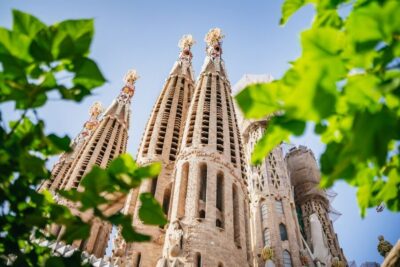
Sagrada Familia Skip-the-Line Entry Ticket & Tour
Read our review →
FC Barcelona Museum “Barça Immersive Tour” Ticket
Read our review →